Close Modal

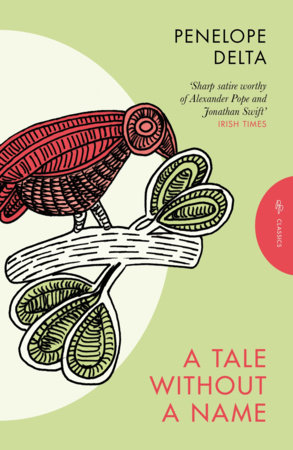
A Tale Without a Name

Translated by Mika Provata-Carlone
Paperback
5-1/16"W x 7-13/16"H | 13 oz | 24 per carton
On sale Nov 24, 2026 | 240 Pages | 9781805332107

An enduringly timely Greek fable of feckless leadership and rediscovered community, as enchanting as it is sharply satirical.

“Cleverly adapts the conventions of the European fairy tale with sharp satire worthy of Alexander Pope and Jonathan Swift.” —Irish Times

The kingdom used to be a place of paved roads and well-filled coffers, with joy and the good life all around. But the old king went the way of all flesh years ago, and now the kingdom is derelict, a land of wickedness and ruin. King Witless now sits on the throne; his advisers feed the royal family by robbing passersby of their dinners; the Army and Navy consist of one man each – and neither has quite enough limbs.

Then the young prince and his sister begin to see what must be done, and to explore the kingdom, meeting men and women who have held onto lost wisdom and trying—if they can—to restore what has been lost.

For a hundred years, A Tale Without a Name has been one of Greece's best-loved stories, combining the timeless rhythms of a fairy tale with a satirical account of a state fallen into chaos. First published in the aftermath of a coup and a war with Turkey, in the hopes of inspiring the Greeks to address the nation’s economic and military chaos, this playful, wise fable is enchanting for readers of any age, as meaningful and moving now as when it was first written.
Penelope S. Delta (1874-1941) was born in Alexandria, Egypt to Greek parents. Delta belonged to the Greek aristocracy and could easily have come out of a novel by E.M. Forster, Marcel Proust or Henry James. She wrote several children’s books, memoirs and historical works. She took her own life in April 1941, the day the Nazis entered Athens.

Mika Provata-Carlone is an independent scholar, translator, editor, photographer and illustrator. She is passionate about good books, old and new, for the young and for the old; also about old-fashioned presses, smelling of paper and ink.
Available for sale exclusive:
•     Anguilla
•     Antigua/Barbuda
•     Argentina
•     Aruba
•     Bahamas
•     Barbados
•     Belize
•     Bermuda
•     Bolivia
•     Bonaire, Saba
•     Bouvet Island
•     Brazil
•     Brit.Virgin Is.
•     Canada
•     Cayman Islands
•     Chile
•     Colombia
•     Costa Rica
•     Cuba
•     Curacao
•     Dominica
•     Dominican Rep.
•     Ecuador
•     El Salvador
•     Falkland Islnds
•     Grenada
•     Guadeloupe
•     Guam
•     Guatemala
•     Haiti
•     Honduras
•     Jamaica
•     Martinique
•     Mexico
•     Minor Outl.Ins.
•     Nicaragua
•     North Mariana
•     Panama
•     Paraguay
•     Peru
•     Puerto Rico
•     Saint Martin
•     Samoa,American
•     Sint Maarten
•     St Barthelemy
•     St. Lucia
•     St.Chr.,Nevis
•     St.Pier,Miquel.
•     Suriname
•     Trinidad,Tobago
•     Turks&Caicos Is
•     US Virgin Is.
•     USA
•     Uruguay
•     Venezuela
•     Wallis,Futuna

Not available for sale:
•     Afghanistan
•     Aland Islands
•     Albania
•     Algeria
•     Andorra
•     Angola
•     Antarctica
•     Armenia
•     Australia
•     Austria
•     Azerbaijan
•     Bahrain
•     Bangladesh
•     Belarus
•     Belgium
•     Benin
•     Bhutan
•     Bosnia Herzeg.
•     Botswana
•     Brit.Ind.Oc.Ter
•     Brunei
•     Bulgaria
•     Burkina Faso
•     Burundi
•     Cambodia
•     Cameroon
•     Cape Verde
•     Centr.Afr.Rep.
•     Chad
•     China
•     Christmas Islnd
•     Cocos Islands
•     Comoro Is.
•     Congo
•     Cook Islands
•     Croatia
•     Cyprus
•     Czech Republic
•     Dem. Rep. Congo
•     Denmark
•     Djibouti
•     Egypt
•     Equatorial Gui.
•     Eritrea
•     Estonia
•     Ethiopia
•     Faroe Islands
•     Fiji
•     Finland
•     France
•     Fren.Polynesia
•     French Guinea
•     Gabon
•     Gambia
•     Georgia
•     Germany
•     Ghana
•     Gibraltar
•     Greece
•     Greenland
•     Guernsey
•     Guinea Republic
•     Guinea-Bissau
•     Guyana
•     Heard/McDon.Isl
•     Hong Kong
•     Hungary
•     Iceland
•     India
•     Indonesia
•     Iran
•     Iraq
•     Ireland
•     Isle of Man
•     Israel
•     Italy
•     Ivory Coast
•     Japan
•     Jersey
•     Jordan
•     Kazakhstan
•     Kenya
•     Kiribati
•     Kuwait
•     Kyrgyzstan
•     Laos
•     Latvia
•     Lebanon
•     Lesotho
•     Liberia
•     Libya
•     Liechtenstein
•     Lithuania
•     Luxembourg
•     Macau
•     Macedonia
•     Madagascar
•     Malawi
•     Malaysia
•     Maldives
•     Mali
•     Malta
•     Marshall island
•     Mauritania
•     Mauritius
•     Mayotte
•     Micronesia
•     Moldavia
•     Monaco
•     Mongolia
•     Montenegro
•     Montserrat
•     Morocco
•     Mozambique
•     Myanmar
•     Namibia
•     Nauru
•     Nepal
•     Netherlands
•     New Caledonia
•     New Zealand
•     Niger
•     Nigeria
•     Niue
•     Norfolk Island
•     North Korea
•     Norway
•     Oman
•     Pakistan
•     Palau
•     Palestinian Ter
•     PapuaNewGuinea
•     Philippines
•     Pitcairn Islnds
•     Poland
•     Portugal
•     Qatar
•     Reunion Island
•     Romania
•     Russian Fed.
•     Rwanda
•     S. Sandwich Ins
•     San Marino
•     SaoTome Princip
•     Saudi Arabia
•     Senegal
•     Serbia
•     Seychelles
•     Sierra Leone
•     Singapore
•     Slovakia
•     Slovenia
•     Solomon Islands
•     Somalia
•     South Africa
•     South Korea
•     South Sudan
•     Spain
•     Sri Lanka
•     St. Helena
•     St. Vincent
•     Sth Terr. Franc
•     Sudan
•     Svalbard
•     Swaziland
•     Sweden
•     Switzerland
•     Syria
•     Tadschikistan
•     Taiwan
•     Tanzania
•     Thailand
•     Timor-Leste
•     Togo
•     Tokelau Islands
•     Tonga
•     Tunisia
•     Turkey
•     Turkmenistan
•     Tuvalu
•     Uganda
•     Ukraine
•     Unit.Arab Emir.
•     United Kingdom
•     Uzbekistan
•     Vanuatu
•     Vatican City
•     Vietnam
•     West Saharan
•     Western Samoa
•     Yemen
•     Zambia
•     Zimbabwe

When old king prudentius realized that he had little time left to live, he summoned his son, young Witless, and said to him:

“You’ve had your fill of frolics and amusements for long enough, my son. The time has come for you to marry, and to take in your hands the governance of the State. My time is over. It is now your turn to rule well and to be a good king.”

He therefore dispatched his High Chancellor to the neighbouring kingdom to seek the hand of the beautiful Princess Barmy, on behalf of Witless, son of Prudentius I, King of the Fatalists.
The wedding took place amidst great joy and sumptu-ous feasting, and a few days later, after he had given his blessing to his children, old Prudentius went the way of all flesh, and Witless was crowned king.

Everything seemed rosy and enviable for the young couple. The coffers of old Prudentius were filled to bursting point with gold florins; the kingdom was ringed and strong-walled by mighty citadels brimming with soldiers; the splendid palace, built high up on a densely wooded mountain, reigned supreme over the capital below, where its citizens lived in good prosperity; wide and well-paved thoroughfares linked the kingdom of the Fatalists with kingdoms nearby.
Everywhere one looked there was joy and good life.

And in whichever direction the new king might turn his eye, looking out from the high donjon tower of his palace, he could see endless sown fields, gorges and vales bursting with the lushest vegetation, cities and villages with neat and pretty dwellings, mountains thick with woods, and pastures of the greenest green. There were countless cows grazing in happy company with flocks of sheep and goats. And the farmers labouring the land were as busy and as numerous as ants, milking the cows, shearing the sheep, transporting grain and produce to the capital, where they would sell them.

Many years passed.

Time, which turned to white Witless’s hair, and caused it to moult, Time, which withered the fair beauty of Queen Barmy, also transformed the entire aspect of the kingdom of the Fatalists.
Everywhere was wasteland. Endless dales, barren and untilled, stretched to the farthest corners of the kingdom, and only some few, dilapidated ruins bore witness to the places where in the olden times there had stood proud and fearsome the formidable citadels of Prudentius I.

Here and there, a miserable, ramshackle hovel broke the monotony of the deserted valley. Weeds and rubble covered the hills; the neglected roads vanished beneath the thorn bushes that spread unchecked their spiny, tangled twigs in every direction.

Whistling shrilly among the rubble and the rocks, the wind bewailed the desolation of the land.
The great woods alone remained in their place, forgotten, unlaboured, concealing under their burgeoning foliage an entire universe of butterflies, beetles, weevils and bees, which enjoyed undisturbed the sweet-scented wild flowers. There were great hosts of wild strawberry plants, blossoming and bearing fruit in brotherly company with the brambles, their fruit rotting and dropping useless on the ground.

The footpaths, which in the olden days had led through the trees, these too had been long erased, for long had it been since the time when a human foot had walked on them. And the trees, the shrubs and the undergrowth had so forgotten what a human form looked like that they were all shocked and startled, they shivered and trembled, and murmured frightened whispers to one another when, one day, they saw a young boy, with dusky, dream-laden brown eyes, walking under their foliage, stopping at every step in order to look at a flower here, at an insect there, with amazement and surprise, as though he were seeing them for the very first time.
“Hark, what sort of thing is this that walks past?” asked a lentisk fearfully, drawing back its leaves, scared that the boy might see it.

“Who knows!” replied the pine. “Perhaps it could be a different kind of deer?”

A poplar, standing erect nearby, tilted its proud head ever so slightly to catch a glimpse of the passer-by.

“A deer?” it said in a burst of laughter, which caused all of its leaves to turn upside down, so that in an instant its colour changed from fresh green to shimmering silver. “You must be dreaming, my lad! A deer has four legs and this one only has two!”

“Well, what sort of animal is it then?” asked a bramble anxiously. “Could it be wicked? Will it eat up my new suit of clothes, so that summer should find me naked?”

“Do not torment your little heads, my children,” said the old plane tree, “for this is no animal, nor does it graze on leaves. It has been many years since one of them passed this way. Yet I remember that there was a time when our forest was teeming with others like him. Those were the good times, when people gathered the honey of the bees, and the strawberries of the strawberry shrub, the blackber-ries, and the ripe, fire-golden fruit of the arbutus tree.”

“What’s that?” exclaimed the wild strawberry, huddling close at the feet of the old plane tree.

“What are you saying, grandfather? Could this be… a man?”

“Yes, most certainly indeed, it is a man,” replied the old plane tree.
And the poplar muttered:

“But yes, of course, that’s what it is, a man! I remember now having seen others like him in my youth.”

The lentisk spread out its branches with vivid curiosity, so as to get a closer look at him.

“A man?” asked the haughty oak. “And what does he want in our realm, might I ask?”

And all the trees leant forward, to see the “man”, as he passed by.

He was a slender boy, no more than sixteen years old. His velvet clothes, woven with gold and silver, were now threadbare at the elbows and the knees and far too small for him, rugged and torn; the golden ribbons that held his sandals to his feet were all ripped and frayed, secured into place with clumsy, knobbly knots.

He lay down at the roots of the old plane tree, saw the wild strawberry shrub by his side, heavy with red-ripe fruit; he picked the berries and ate them. Then he folded his arms under his head to make a pillow, and fell asleep.

He slept such a deep sleep that he did not hear the whisperings of the trees, nor the gurgling of the brook which flowed nearby, nor even yet the whistling of the blackbird, which, hopping from branch to bough, was telling the most extraordinary tales.

“The King’s son!” exclaimed the old plane tree. “How can I possibly believe this, when I look at his bare legs and tattered clothes?”
“And yet believe it you must!” replied the blackbird with a caw. “Heed my words, I fly in and out of the palace windows, I know all that goes on in there.”

“But why doesn’t he change his clothes?” asked the pine, thoroughly appalled.

“Because he has no other clothes, of course!” came the blackbird’s reply.

“What’s that? The King’s son?” exclaimed the thyme, offering up its budding flowers to the buzzing bee, who was seeking a place to land and suck their honey.

“Hah! You seem surprised!” came the shrill skirling of the blackbird. “Perhaps you think that the King himself has greater riches than a humble shepherd or a bargeman?”

“What you are saying is strange indeed!” mur-mured the lentisk, which would not allow itself to be convinced.

“And yet believe you must,” said the bee, fluttering around it. “The blackbird is telling the truth. The King himself wears clothes just like these. And if you only saw the princesses, then you would be truly horrified!”

“Why?” enquired the strawberry shrub.

The blackbird leapt by its side, and whispered: “Because underneath their robes, they do not even have a shirt on!

And it burst into laughter, not realizing that it was standing right by the boy’s ear.

The Prince woke up with a jump, startled out of his sleep.
The blackbird took fright and flew away, the bee hid among the leaves of the lentisk, while the trees lifted up their heads, feigning indifference, as though they had neither seen nor heard a single thing.

Dusk had fallen. The Prince got up and started again on his way. He came out of the forest, crossed the arid, waterless vale, and, turning towards the palace with a quick step, went up the mountain, clambering up the rocks and dry earth as nimbly as a young kid goat.
"Delta cleverly adapts the conventions of the European fairy tale with sharp satire worthy of Alexander Pope and Jonathan Swift... very funny... It is a book that members of the current Irish Government should read... this book, after more than a century, continues to speak to all ages." - Eileen Battersby, Irish Times

"Constantly intrigues and excites... Like Animal Farm ... thirty or so years later, it's a political tract in thin but compelling disguise." - Books for Keeps

About

An enduringly timely Greek fable of feckless leadership and rediscovered community, as enchanting as it is sharply satirical.

“Cleverly adapts the conventions of the European fairy tale with sharp satire worthy of Alexander Pope and Jonathan Swift.” —Irish Times

The kingdom used to be a place of paved roads and well-filled coffers, with joy and the good life all around. But the old king went the way of all flesh years ago, and now the kingdom is derelict, a land of wickedness and ruin. King Witless now sits on the throne; his advisers feed the royal family by robbing passersby of their dinners; the Army and Navy consist of one man each – and neither has quite enough limbs.

Then the young prince and his sister begin to see what must be done, and to explore the kingdom, meeting men and women who have held onto lost wisdom and trying—if they can—to restore what has been lost.

For a hundred years, A Tale Without a Name has been one of Greece's best-loved stories, combining the timeless rhythms of a fairy tale with a satirical account of a state fallen into chaos. First published in the aftermath of a coup and a war with Turkey, in the hopes of inspiring the Greeks to address the nation’s economic and military chaos, this playful, wise fable is enchanting for readers of any age, as meaningful and moving now as when it was first written.

Creators

Penelope S. Delta (1874-1941) was born in Alexandria, Egypt to Greek parents. Delta belonged to the Greek aristocracy and could easily have come out of a novel by E.M. Forster, Marcel Proust or Henry James. She wrote several children’s books, memoirs and historical works. She took her own life in April 1941, the day the Nazis entered Athens.

Mika Provata-Carlone is an independent scholar, translator, editor, photographer and illustrator. She is passionate about good books, old and new, for the young and for the old; also about old-fashioned presses, smelling of paper and ink.

Excerpt

When old king prudentius realized that he had little time left to live, he summoned his son, young Witless, and said to him:

“You’ve had your fill of frolics and amusements for long enough, my son. The time has come for you to marry, and to take in your hands the governance of the State. My time is over. It is now your turn to rule well and to be a good king.”

He therefore dispatched his High Chancellor to the neighbouring kingdom to seek the hand of the beautiful Princess Barmy, on behalf of Witless, son of Prudentius I, King of the Fatalists.
The wedding took place amidst great joy and sumptu-ous feasting, and a few days later, after he had given his blessing to his children, old Prudentius went the way of all flesh, and Witless was crowned king.

Everything seemed rosy and enviable for the young couple. The coffers of old Prudentius were filled to bursting point with gold florins; the kingdom was ringed and strong-walled by mighty citadels brimming with soldiers; the splendid palace, built high up on a densely wooded mountain, reigned supreme over the capital below, where its citizens lived in good prosperity; wide and well-paved thoroughfares linked the kingdom of the Fatalists with kingdoms nearby.
Everywhere one looked there was joy and good life.

And in whichever direction the new king might turn his eye, looking out from the high donjon tower of his palace, he could see endless sown fields, gorges and vales bursting with the lushest vegetation, cities and villages with neat and pretty dwellings, mountains thick with woods, and pastures of the greenest green. There were countless cows grazing in happy company with flocks of sheep and goats. And the farmers labouring the land were as busy and as numerous as ants, milking the cows, shearing the sheep, transporting grain and produce to the capital, where they would sell them.

Many years passed.

Time, which turned to white Witless’s hair, and caused it to moult, Time, which withered the fair beauty of Queen Barmy, also transformed the entire aspect of the kingdom of the Fatalists.
Everywhere was wasteland. Endless dales, barren and untilled, stretched to the farthest corners of the kingdom, and only some few, dilapidated ruins bore witness to the places where in the olden times there had stood proud and fearsome the formidable citadels of Prudentius I.

Here and there, a miserable, ramshackle hovel broke the monotony of the deserted valley. Weeds and rubble covered the hills; the neglected roads vanished beneath the thorn bushes that spread unchecked their spiny, tangled twigs in every direction.

Whistling shrilly among the rubble and the rocks, the wind bewailed the desolation of the land.
The great woods alone remained in their place, forgotten, unlaboured, concealing under their burgeoning foliage an entire universe of butterflies, beetles, weevils and bees, which enjoyed undisturbed the sweet-scented wild flowers. There were great hosts of wild strawberry plants, blossoming and bearing fruit in brotherly company with the brambles, their fruit rotting and dropping useless on the ground.

The footpaths, which in the olden days had led through the trees, these too had been long erased, for long had it been since the time when a human foot had walked on them. And the trees, the shrubs and the undergrowth had so forgotten what a human form looked like that they were all shocked and startled, they shivered and trembled, and murmured frightened whispers to one another when, one day, they saw a young boy, with dusky, dream-laden brown eyes, walking under their foliage, stopping at every step in order to look at a flower here, at an insect there, with amazement and surprise, as though he were seeing them for the very first time.
“Hark, what sort of thing is this that walks past?” asked a lentisk fearfully, drawing back its leaves, scared that the boy might see it.

“Who knows!” replied the pine. “Perhaps it could be a different kind of deer?”

A poplar, standing erect nearby, tilted its proud head ever so slightly to catch a glimpse of the passer-by.

“A deer?” it said in a burst of laughter, which caused all of its leaves to turn upside down, so that in an instant its colour changed from fresh green to shimmering silver. “You must be dreaming, my lad! A deer has four legs and this one only has two!”

“Well, what sort of animal is it then?” asked a bramble anxiously. “Could it be wicked? Will it eat up my new suit of clothes, so that summer should find me naked?”

“Do not torment your little heads, my children,” said the old plane tree, “for this is no animal, nor does it graze on leaves. It has been many years since one of them passed this way. Yet I remember that there was a time when our forest was teeming with others like him. Those were the good times, when people gathered the honey of the bees, and the strawberries of the strawberry shrub, the blackber-ries, and the ripe, fire-golden fruit of the arbutus tree.”

“What’s that?” exclaimed the wild strawberry, huddling close at the feet of the old plane tree.

“What are you saying, grandfather? Could this be… a man?”

“Yes, most certainly indeed, it is a man,” replied the old plane tree.
And the poplar muttered:

“But yes, of course, that’s what it is, a man! I remember now having seen others like him in my youth.”

The lentisk spread out its branches with vivid curiosity, so as to get a closer look at him.

“A man?” asked the haughty oak. “And what does he want in our realm, might I ask?”

And all the trees leant forward, to see the “man”, as he passed by.

He was a slender boy, no more than sixteen years old. His velvet clothes, woven with gold and silver, were now threadbare at the elbows and the knees and far too small for him, rugged and torn; the golden ribbons that held his sandals to his feet were all ripped and frayed, secured into place with clumsy, knobbly knots.

He lay down at the roots of the old plane tree, saw the wild strawberry shrub by his side, heavy with red-ripe fruit; he picked the berries and ate them. Then he folded his arms under his head to make a pillow, and fell asleep.

He slept such a deep sleep that he did not hear the whisperings of the trees, nor the gurgling of the brook which flowed nearby, nor even yet the whistling of the blackbird, which, hopping from branch to bough, was telling the most extraordinary tales.

“The King’s son!” exclaimed the old plane tree. “How can I possibly believe this, when I look at his bare legs and tattered clothes?”
“And yet believe it you must!” replied the blackbird with a caw. “Heed my words, I fly in and out of the palace windows, I know all that goes on in there.”

“But why doesn’t he change his clothes?” asked the pine, thoroughly appalled.

“Because he has no other clothes, of course!” came the blackbird’s reply.

“What’s that? The King’s son?” exclaimed the thyme, offering up its budding flowers to the buzzing bee, who was seeking a place to land and suck their honey.

“Hah! You seem surprised!” came the shrill skirling of the blackbird. “Perhaps you think that the King himself has greater riches than a humble shepherd or a bargeman?”

“What you are saying is strange indeed!” mur-mured the lentisk, which would not allow itself to be convinced.

“And yet believe you must,” said the bee, fluttering around it. “The blackbird is telling the truth. The King himself wears clothes just like these. And if you only saw the princesses, then you would be truly horrified!”

“Why?” enquired the strawberry shrub.

The blackbird leapt by its side, and whispered: “Because underneath their robes, they do not even have a shirt on!

And it burst into laughter, not realizing that it was standing right by the boy’s ear.

The Prince woke up with a jump, startled out of his sleep.
The blackbird took fright and flew away, the bee hid among the leaves of the lentisk, while the trees lifted up their heads, feigning indifference, as though they had neither seen nor heard a single thing.

Dusk had fallen. The Prince got up and started again on his way. He came out of the forest, crossed the arid, waterless vale, and, turning towards the palace with a quick step, went up the mountain, clambering up the rocks and dry earth as nimbly as a young kid goat.

Praise

"Delta cleverly adapts the conventions of the European fairy tale with sharp satire worthy of Alexander Pope and Jonathan Swift... very funny... It is a book that members of the current Irish Government should read... this book, after more than a century, continues to speak to all ages." - Eileen Battersby, Irish Times

"Constantly intrigues and excites... Like Animal Farm ... thirty or so years later, it's a political tract in thin but compelling disguise." - Books for Keeps
Penguin Random House Comics Retail