"This book is broad and leisurely and important. Something like the river itself on which Wendell Berry lives. It is full of wide and flowing thoughts and one thing leads to another in the manner that nature intended―or used to. The language ranges from the grave and beautiful to the sharp and specific, depending on the need to express the vast variety of subjects he presents." —The Nation
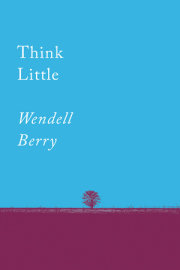
The title of this book is taken from an account by Thomas F. Hornbein on his travels in the Himalayas. "It seemed to me," Horenbein wrote, "that here man lived in continuous harmony with the land, as much as briefly a part of it as all its other occupants." Wendell Berry's second collection of essays, A Continuous Harmony was first published in 1972, and includes the seminal "Think Little," which was printed in The Last Whole Earth Catalogue and reprinted around the globe, and the splendid centerpiece, "Discipline and Hope," an insightful and articulate essay making a case for what he calls "a new middle."
WENDELL BERRY, an essayist, novelist, and poet, has been honored with the T. S. Eliot Prize, the Aiken Taylor Award for Modern American Poetry, the John Hay Award of the Orion Society, and the Dayton Literary Peace Prize Richard C. Holbrooke Distinguished Achievement Award, among other distinctions. In 2010, he was awarded the National Humanities Medal by President Barack Obama, and in 2016, he was the recipient of the Ivan Sandrof Life Achievement Award from the National Book Critics Circle. Berry lives with his wife, Tanya Berry, on their farm in Henry County, Kentucky.
"Berry continues to offer a compelling vision of the good and the true life." —The Boston Globe
"Berry is the prophetic American voice of our day." —The Christian Science Monitor
"Berry enjoins us to look at common parts of creation—trees, rivers, and birds—but meditates upon them with such grace and insight as to ensure that we will never see them as commonplace again." —Splendid Magazine
"This book is broad and leisurely and important. Something like the river itself on which Wendell Berry lives. It is full of wide and flowing thoughts and one thing leads to another in the manner that nature intended―or used to. The language ranges from the grave and beautiful to the sharp and specific, depending on the need to express the vast variety of subjects he presents." —The Nation
The title of this book is taken from an account by Thomas F. Hornbein on his travels in the Himalayas. "It seemed to me," Horenbein wrote, "that here man lived in continuous harmony with the land, as much as briefly a part of it as all its other occupants." Wendell Berry's second collection of essays, A Continuous Harmony was first published in 1972, and includes the seminal "Think Little," which was printed in The Last Whole Earth Catalogue and reprinted around the globe, and the splendid centerpiece, "Discipline and Hope," an insightful and articulate essay making a case for what he calls "a new middle."
Creators
WENDELL BERRY, an essayist, novelist, and poet, has been honored with the T. S. Eliot Prize, the Aiken Taylor Award for Modern American Poetry, the John Hay Award of the Orion Society, and the Dayton Literary Peace Prize Richard C. Holbrooke Distinguished Achievement Award, among other distinctions. In 2010, he was awarded the National Humanities Medal by President Barack Obama, and in 2016, he was the recipient of the Ivan Sandrof Life Achievement Award from the National Book Critics Circle. Berry lives with his wife, Tanya Berry, on their farm in Henry County, Kentucky.
"Berry continues to offer a compelling vision of the good and the true life." —The Boston Globe
"Berry is the prophetic American voice of our day." —The Christian Science Monitor
"Berry enjoins us to look at common parts of creation—trees, rivers, and birds—but meditates upon them with such grace and insight as to ensure that we will never see them as commonplace again." —Splendid Magazine