Close Modal

Understanding Beliefs

Look inside
Paperback
5"W x 6.94"H x 0.47"D   | 5 oz | 50 per carton
On sale Aug 15, 2014 | 168 Pages | 9780262526432

What beliefs are, what they do for us, how we come to hold them, and how to evaluate them.

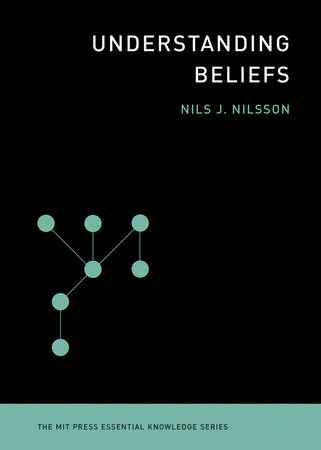
Our beliefs constitute a large part of our knowledge of the world. We have beliefs about objects, about culture, about the past, and about the future. We have beliefs about other people, and we believe that they have beliefs as well. We use beliefs to predict, to explain, to create, to console, to entertain. Some of our beliefs we call theories, and we are extraordinarily creative at constructing them. Theories of quantum mechanics, evolution, and relativity are examples. But so are theories about astrology, alien abduction, guardian angels, and reincarnation. All are products (with varying degrees of credibility) of fertile minds trying to find explanations for observed phenomena. In this book, Nils Nilsson examines beliefs: what they do for us, how we come to hold them, and how to evaluate them. We should evaluate our beliefs carefully, Nilsson points out, because they influence so many of our actions and decisions.

Some of our beliefs are more strongly held than others, but all should be considered tentative and changeable. Nilsson shows that beliefs can be quantified by probability, and he describes networks of beliefs in which the probabilities of some beliefs affect the probabilities of others. He argues that we can evaluate our beliefs by adapting some of the practices of the scientific method and by consulting expert opinion. And he warns us about “belief traps”—holding onto beliefs that wouldn't survive critical evaluation. The best way to escape belief traps, he writes, is to expose our beliefs to the reasoned criticism of others.


Nils J. Nilsson is Kumagai Professor of Engineering, Emeritus, in the Department of Computer Science at Stanford University. He is the author of The Quest for Artificial Intelligence: A History of Ideas and Achievements and other books. He lives in Oregon.
Available for sale exclusive:
•     Afghanistan
•     Aland Islands
•     Albania
•     Algeria
•     Andorra
•     Angola
•     Anguilla
•     Antarctica
•     Antigua/Barbuda
•     Argentina
•     Armenia
•     Aruba
•     Australia
•     Austria
•     Azerbaijan
•     Bahamas
•     Bahrain
•     Bangladesh
•     Barbados
•     Belarus
•     Belgium
•     Belize
•     Benin
•     Bermuda
•     Bhutan
•     Bolivia
•     Bonaire, Saba
•     Bosnia Herzeg.
•     Botswana
•     Bouvet Island
•     Brazil
•     Brit.Ind.Oc.Ter
•     Brit.Virgin Is.
•     Brunei
•     Bulgaria
•     Burkina Faso
•     Burundi
•     Cambodia
•     Cameroon
•     Canada
•     Cape Verde
•     Cayman Islands
•     Centr.Afr.Rep.
•     Chad
•     Chile
•     China
•     Christmas Islnd
•     Cocos Islands
•     Colombia
•     Comoro Is.
•     Congo
•     Cook Islands
•     Costa Rica
•     Croatia
•     Cuba
•     Curacao
•     Cyprus
•     Czech Republic
•     Dem. Rep. Congo
•     Denmark
•     Djibouti
•     Dominica
•     Dominican Rep.
•     Ecuador
•     Egypt
•     El Salvador
•     Equatorial Gui.
•     Eritrea
•     Estonia
•     Ethiopia
•     Falkland Islnds
•     Faroe Islands
•     Fiji
•     Finland
•     France
•     Fren.Polynesia
•     French Guinea
•     Gabon
•     Gambia
•     Georgia
•     Germany
•     Ghana
•     Gibraltar
•     Greece
•     Greenland
•     Grenada
•     Guadeloupe
•     Guam
•     Guatemala
•     Guernsey
•     Guinea Republic
•     Guinea-Bissau
•     Guyana
•     Haiti
•     Heard/McDon.Isl
•     Honduras
•     Hong Kong
•     Hungary
•     Iceland
•     India
•     Indonesia
•     Iran
•     Iraq
•     Ireland
•     Isle of Man
•     Israel
•     Italy
•     Ivory Coast
•     Jamaica
•     Japan
•     Jersey
•     Jordan
•     Kazakhstan
•     Kenya
•     Kiribati
•     Kuwait
•     Kyrgyzstan
•     Laos
•     Latvia
•     Lebanon
•     Lesotho
•     Liberia
•     Libya
•     Liechtenstein
•     Lithuania
•     Luxembourg
•     Macau
•     Macedonia
•     Madagascar
•     Malawi
•     Malaysia
•     Maldives
•     Mali
•     Malta
•     Marshall island
•     Martinique
•     Mauritania
•     Mauritius
•     Mayotte
•     Mexico
•     Micronesia
•     Minor Outl.Ins.
•     Moldavia
•     Monaco
•     Mongolia
•     Montenegro
•     Montserrat
•     Morocco
•     Mozambique
•     Myanmar
•     Namibia
•     Nauru
•     Nepal
•     Netherlands
•     New Caledonia
•     New Zealand
•     Nicaragua
•     Niger
•     Nigeria
•     Niue
•     Norfolk Island
•     North Korea
•     North Mariana
•     Norway
•     Oman
•     Pakistan
•     Palau
•     Palestinian Ter
•     Panama
•     PapuaNewGuinea
•     Paraguay
•     Peru
•     Philippines
•     Pitcairn Islnds
•     Poland
•     Portugal
•     Puerto Rico
•     Qatar
•     Reunion Island
•     Romania
•     Russian Fed.
•     Rwanda
•     S. Sandwich Ins
•     Saint Martin
•     Samoa,American
•     San Marino
•     SaoTome Princip
•     Saudi Arabia
•     Senegal
•     Serbia
•     Seychelles
•     Sierra Leone
•     Singapore
•     Sint Maarten
•     Slovakia
•     Slovenia
•     Solomon Islands
•     Somalia
•     South Africa
•     South Korea
•     South Sudan
•     Spain
•     Sri Lanka
•     St Barthelemy
•     St. Helena
•     St. Lucia
•     St. Vincent
•     St.Chr.,Nevis
•     St.Pier,Miquel.
•     Sth Terr. Franc
•     Sudan
•     Suriname
•     Svalbard
•     Swaziland
•     Sweden
•     Switzerland
•     Syria
•     Tadschikistan
•     Taiwan
•     Tanzania
•     Thailand
•     Timor-Leste
•     Togo
•     Tokelau Islands
•     Tonga
•     Trinidad,Tobago
•     Tunisia
•     Turkey
•     Turkmenistan
•     Turks&Caicos Is
•     Tuvalu
•     US Virgin Is.
•     USA
•     Uganda
•     Ukraine
•     Unit.Arab Emir.
•     United Kingdom
•     Uruguay
•     Uzbekistan
•     Vanuatu
•     Vatican City
•     Venezuela
•     Vietnam
•     Wallis,Futuna
•     West Saharan
•     Western Samoa
•     Yemen
•     Zambia
•     Zimbabwe

In summary, Understanding Beliefs offers an intriguing and compelling account of some of the aspects of belief formation, maintenance and evaluation. Although the overall aim of the book is to introduce the reader to the topic and therefore is not very in depth in terms of technical details, the arguments Nilsson puts forward are very persuasive and will likely affect if not alter the thinking styles of his readers.—Cognitive Neuropsychiatry

About

What beliefs are, what they do for us, how we come to hold them, and how to evaluate them.

Our beliefs constitute a large part of our knowledge of the world. We have beliefs about objects, about culture, about the past, and about the future. We have beliefs about other people, and we believe that they have beliefs as well. We use beliefs to predict, to explain, to create, to console, to entertain. Some of our beliefs we call theories, and we are extraordinarily creative at constructing them. Theories of quantum mechanics, evolution, and relativity are examples. But so are theories about astrology, alien abduction, guardian angels, and reincarnation. All are products (with varying degrees of credibility) of fertile minds trying to find explanations for observed phenomena. In this book, Nils Nilsson examines beliefs: what they do for us, how we come to hold them, and how to evaluate them. We should evaluate our beliefs carefully, Nilsson points out, because they influence so many of our actions and decisions.

Some of our beliefs are more strongly held than others, but all should be considered tentative and changeable. Nilsson shows that beliefs can be quantified by probability, and he describes networks of beliefs in which the probabilities of some beliefs affect the probabilities of others. He argues that we can evaluate our beliefs by adapting some of the practices of the scientific method and by consulting expert opinion. And he warns us about “belief traps”—holding onto beliefs that wouldn't survive critical evaluation. The best way to escape belief traps, he writes, is to expose our beliefs to the reasoned criticism of others.

Creators

Nils J. Nilsson is Kumagai Professor of Engineering, Emeritus, in the Department of Computer Science at Stanford University. He is the author of The Quest for Artificial Intelligence: A History of Ideas and Achievements and other books. He lives in Oregon.
Praise

In summary, Understanding Beliefs offers an intriguing and compelling account of some of the aspects of belief formation, maintenance and evaluation. Although the overall aim of the book is to introduce the reader to the topic and therefore is not very in depth in terms of technical details, the arguments Nilsson puts forward are very persuasive and will likely affect if not alter the thinking styles of his readers.—Cognitive Neuropsychiatry
Penguin Random House Comics Retail