Close Modal

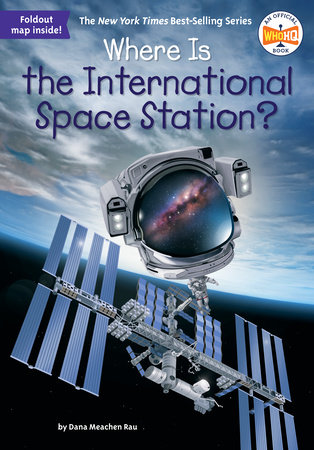
Where Is the International Space Station?

Part of Where Is?

Illustrated by Dede Putra
Paperback
5-5/16"W x 7-5/8"H | 5 oz | 72 per carton
On sale May 19, 2026 | 112 Pages | 9798217051342
Age 8-12 years

Learn how the International Space Station has helped scientists from all over the world research outer space, natural disasters, the human body, and more since its construction in 1998—featuring a full-color foldout map!

From the #1 New York Times bestselling Who Was? series comes Where Is?, a series that tells the stories of world-famous landmarks and natural wonders.


In 1998, the United States, Canada, Japan, Russia, and ten other European countries collaborated to create the International Space Station. Modules were created by experts from all over the world and then launched into space, where they were assembled into a functioning research laboratory and living space for astronauts. Thanks to the station, humans have been able to conduct experiments and collect data in a way that they had never done before. Today, over 280 astronauts from over twenty countries have visited the International Space Station. The contributions to STEM and space exploration aboard the ISS are far-reaching and ongoing for space programs around the world.
© Dana Meachen Rau
Dana Meachen Rau has written more than 300 books for children, including picture books, early readers, nonfiction, and biographies. View titles by Dana Meachen Rau
Who HQ is your headquarters for history. The Who HQ team is always working to provide simple and clear answers to some of our biggest questions. From Who Was George Washington? to Who Is Michelle Obama?, and What Was the Battle of Gettysburg? to Where Is the Great Barrier Reef?, we strive to give you all the facts. Visit us at WhoHQ.com View titles by Who HQ
Available for sale exclusive:
•     Afghanistan
•     Aland Islands
•     Albania
•     Algeria
•     Andorra
•     Angola
•     Anguilla
•     Antarctica
•     Antigua/Barbuda
•     Argentina
•     Armenia
•     Aruba
•     Australia
•     Austria
•     Azerbaijan
•     Bahamas
•     Bahrain
•     Bangladesh
•     Barbados
•     Belarus
•     Belgium
•     Belize
•     Benin
•     Bermuda
•     Bhutan
•     Bolivia
•     Bonaire, Saba
•     Bosnia Herzeg.
•     Botswana
•     Bouvet Island
•     Brazil
•     Brit.Ind.Oc.Ter
•     Brit.Virgin Is.
•     Brunei
•     Bulgaria
•     Burkina Faso
•     Burundi
•     Cambodia
•     Cameroon
•     Canada
•     Cape Verde
•     Cayman Islands
•     Centr.Afr.Rep.
•     Chad
•     Chile
•     China
•     Christmas Islnd
•     Cocos Islands
•     Colombia
•     Comoro Is.
•     Congo
•     Cook Islands
•     Costa Rica
•     Croatia
•     Cuba
•     Curacao
•     Cyprus
•     Czech Republic
•     Dem. Rep. Congo
•     Denmark
•     Djibouti
•     Dominica
•     Dominican Rep.
•     Ecuador
•     Egypt
•     El Salvador
•     Equatorial Gui.
•     Eritrea
•     Estonia
•     Ethiopia
•     Falkland Islnds
•     Faroe Islands
•     Fiji
•     Finland
•     France
•     Fren.Polynesia
•     French Guinea
•     Gabon
•     Gambia
•     Georgia
•     Germany
•     Ghana
•     Gibraltar
•     Greece
•     Greenland
•     Grenada
•     Guadeloupe
•     Guam
•     Guatemala
•     Guernsey
•     Guinea Republic
•     Guinea-Bissau
•     Guyana
•     Haiti
•     Heard/McDon.Isl
•     Honduras
•     Hong Kong
•     Hungary
•     Iceland
•     India
•     Indonesia
•     Iran
•     Iraq
•     Ireland
•     Isle of Man
•     Israel
•     Italy
•     Ivory Coast
•     Jamaica
•     Japan
•     Jersey
•     Jordan
•     Kazakhstan
•     Kenya
•     Kiribati
•     Kuwait
•     Kyrgyzstan
•     Laos
•     Latvia
•     Lebanon
•     Lesotho
•     Liberia
•     Libya
•     Liechtenstein
•     Lithuania
•     Luxembourg
•     Macau
•     Macedonia
•     Madagascar
•     Malawi
•     Malaysia
•     Maldives
•     Mali
•     Malta
•     Marshall island
•     Martinique
•     Mauritania
•     Mauritius
•     Mayotte
•     Mexico
•     Micronesia
•     Minor Outl.Ins.
•     Moldavia
•     Monaco
•     Mongolia
•     Montenegro
•     Montserrat
•     Morocco
•     Mozambique
•     Myanmar
•     Namibia
•     Nauru
•     Nepal
•     Netherlands
•     New Caledonia
•     New Zealand
•     Nicaragua
•     Niger
•     Nigeria
•     Niue
•     Norfolk Island
•     North Korea
•     North Mariana
•     Norway
•     Oman
•     Pakistan
•     Palau
•     Palestinian Ter
•     Panama
•     PapuaNewGuinea
•     Paraguay
•     Peru
•     Philippines
•     Pitcairn Islnds
•     Poland
•     Portugal
•     Puerto Rico
•     Qatar
•     Reunion Island
•     Romania
•     Russian Fed.
•     Rwanda
•     S. Sandwich Ins
•     Saint Martin
•     Samoa,American
•     San Marino
•     SaoTome Princip
•     Saudi Arabia
•     Senegal
•     Serbia
•     Seychelles
•     Sierra Leone
•     Singapore
•     Sint Maarten
•     Slovakia
•     Slovenia
•     Solomon Islands
•     Somalia
•     South Africa
•     South Korea
•     South Sudan
•     Spain
•     Sri Lanka
•     St Barthelemy
•     St. Helena
•     St. Lucia
•     St. Vincent
•     St.Chr.,Nevis
•     St.Pier,Miquel.
•     Sth Terr. Franc
•     Sudan
•     Suriname
•     Svalbard
•     Swaziland
•     Sweden
•     Switzerland
•     Syria
•     Tadschikistan
•     Taiwan
•     Tanzania
•     Thailand
•     Timor-Leste
•     Togo
•     Tokelau Islands
•     Tonga
•     Trinidad,Tobago
•     Tunisia
•     Turkey
•     Turkmenistan
•     Turks&Caicos Is
•     Tuvalu
•     US Virgin Is.
•     USA
•     Uganda
•     Ukraine
•     Unit.Arab Emir.
•     United Kingdom
•     Uruguay
•     Uzbekistan
•     Vanuatu
•     Vatican City
•     Venezuela
•     Vietnam
•     Wallis,Futuna
•     West Saharan
•     Western Samoa
•     Yemen
•     Zambia
•     Zimbabwe

Where Is the International Space Station? On December 6, 1998, a construction crew began working on a huge building project. But it wasn’t a usual construction site with bulldozers, dump trucks, traffic cones, or workers in hard hats. This crew was made up of astronauts. They were putting together pieces of the International Space Station (ISS), and they were doing it about 250 miles above Earth!

A Russian spacecraft had delivered the first piece, called Zarya, into Earth’s orbit on November 20, 1998. This module had been waiting more than two weeks for the United States’ space shuttle Endeavour to arrive with another module called Unity.

Endeavour opened the doors of its large payload bay (an area that holds the cargo of the spaceship). Unity was carefully nestled inside with little room to spare. Docking two huge modules together in space would not be a simple job. And they were all traveling 17,500 miles per hour. That’s five miles per second!

Shuttle astronaut Nancy Currie controlled the shuttle’s robotic arm. She was nervous, even though she had been training for two and a half years for this moment. She sat at the controls. Her view out the window was blocked, so Nancy had to rely on monitors to line up the modules. Very carefully, she moved the arm to reach out and grab Zarya. She pulled the module closer to Unity, where it was still connected to the shuttle’s payload bay. She also used some of the thrusters on Endeavour to better line the pieces up. Even though the modules were designed to fit together, they had been built in different countries by different teams. Everyone hoped they would connect as planned.

All of Currie’s training paid off! The two pieces locked together. She could finally breathe again. The first step in the construction of the International Space Station was a success!
Piece by piece, modules and other parts would be brought up and assembled in orbit. Within a few years, crews would be living and working on the ISS. By 2011, with the help of fifteen nations, construction was finally complete. After that, even more pieces were added.

Since it was first occupied more than twenty years ago, the ISS has been a scientific laboratory orbiting around Earth. Inside its many modules, crews of astronauts perform experiments. These astronauts have come from the United States, Russia, and many other countries. They have made amazing discoveries about space, our planet, and even the human body. The hard work done on the ISS benefits everyone on Earth.

Discoveries from the International Space Station will help us in the future, too. Scientists and engineers plan to travel beyond our orbit. All we have learned from the ISS has prepared them to venture to other planets and deeper into space to discover even more about the universe we call home.

About

Learn how the International Space Station has helped scientists from all over the world research outer space, natural disasters, the human body, and more since its construction in 1998—featuring a full-color foldout map!

From the #1 New York Times bestselling Who Was? series comes Where Is?, a series that tells the stories of world-famous landmarks and natural wonders.


In 1998, the United States, Canada, Japan, Russia, and ten other European countries collaborated to create the International Space Station. Modules were created by experts from all over the world and then launched into space, where they were assembled into a functioning research laboratory and living space for astronauts. Thanks to the station, humans have been able to conduct experiments and collect data in a way that they had never done before. Today, over 280 astronauts from over twenty countries have visited the International Space Station. The contributions to STEM and space exploration aboard the ISS are far-reaching and ongoing for space programs around the world.

Creators

© Dana Meachen Rau
Dana Meachen Rau has written more than 300 books for children, including picture books, early readers, nonfiction, and biographies. View titles by Dana Meachen Rau
Who HQ is your headquarters for history. The Who HQ team is always working to provide simple and clear answers to some of our biggest questions. From Who Was George Washington? to Who Is Michelle Obama?, and What Was the Battle of Gettysburg? to Where Is the Great Barrier Reef?, we strive to give you all the facts. Visit us at WhoHQ.com View titles by Who HQ

Excerpt

Where Is the International Space Station? On December 6, 1998, a construction crew began working on a huge building project. But it wasn’t a usual construction site with bulldozers, dump trucks, traffic cones, or workers in hard hats. This crew was made up of astronauts. They were putting together pieces of the International Space Station (ISS), and they were doing it about 250 miles above Earth!

A Russian spacecraft had delivered the first piece, called Zarya, into Earth’s orbit on November 20, 1998. This module had been waiting more than two weeks for the United States’ space shuttle Endeavour to arrive with another module called Unity.

Endeavour opened the doors of its large payload bay (an area that holds the cargo of the spaceship). Unity was carefully nestled inside with little room to spare. Docking two huge modules together in space would not be a simple job. And they were all traveling 17,500 miles per hour. That’s five miles per second!

Shuttle astronaut Nancy Currie controlled the shuttle’s robotic arm. She was nervous, even though she had been training for two and a half years for this moment. She sat at the controls. Her view out the window was blocked, so Nancy had to rely on monitors to line up the modules. Very carefully, she moved the arm to reach out and grab Zarya. She pulled the module closer to Unity, where it was still connected to the shuttle’s payload bay. She also used some of the thrusters on Endeavour to better line the pieces up. Even though the modules were designed to fit together, they had been built in different countries by different teams. Everyone hoped they would connect as planned.

All of Currie’s training paid off! The two pieces locked together. She could finally breathe again. The first step in the construction of the International Space Station was a success!
Piece by piece, modules and other parts would be brought up and assembled in orbit. Within a few years, crews would be living and working on the ISS. By 2011, with the help of fifteen nations, construction was finally complete. After that, even more pieces were added.
Since it was first occupied more than twenty years ago, the ISS has been a scientific laboratory orbiting around Earth. Inside its many modules, crews of astronauts perform experiments. These astronauts have come from the United States, Russia, and many other countries. They have made amazing discoveries about space, our planet, and even the human body. The hard work done on the ISS benefits everyone on Earth.

Discoveries from the International Space Station will help us in the future, too. Scientists and engineers plan to travel beyond our orbit. All we have learned from the ISS has prepared them to venture to other planets and deeper into space to discover even more about the universe we call home.
Penguin Random House Comics Retail