Close Modal

The Fatal Unpleasantness at Netherfield

A Novel

Paperback
5-3/16"W x 8"H | 9 oz | 24 per carton
On sale Jun 16, 2026 | 320 Pages | 9798217008070

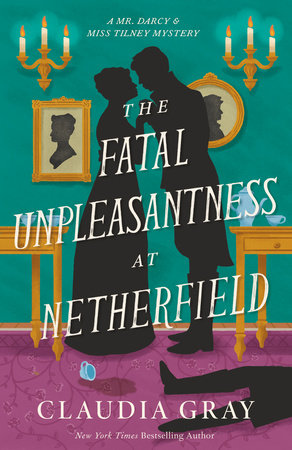
The fifth book in New York Times bestselling author Claudia Gray’s Jane Austen sequel series, which finds amateur sleuths Jonathan Darcy and Juliet Tilney investigating a suspicious murder at Netherfield Park

Jonathan Darcy has recovered from the wound he received in a duel three months prior, during a disastrous London Season. But his parents aren’t over the shock, and they remain convinced that, no matter how many murderers have been caught via their investigations, Jonathan must end his association with Miss Juliet Tilney—particularly now that she is a young lady of ruined reputation. He prays for some opportunity to be with her again, but unfortunately, the answer to those prayers comes in the form of murder: his uncle Charles Bingley’s brother-in-law, Mr. Hurst, is found dead from poisoning at Netherfield Park. Aunt Jane is desperate for answers, which means Miss Tilney must be invited to Netherfield to investigate! 

 
Juliet, still reeling from her newfound ruination, is happy to be back in the thick of an investigation. The reunion with Mr. Darcy is difficult—Juliet has missed Jonathan terribly, but she is tormented by the knowledge that his parents will never approve their match. Adding to her troubles are the scheming Caroline Bingley Allerdyce and her daughter Priscilla, whose machinations threaten any hope Juliet might have of societal rehabilitation, much less an engagement. Then, Mr. Hurst proves to be only the first victim at Netherfield, casting a pall of danger—and worse, scandal—over the Bingleys' household. Jonathan and Juliet must find the culprit, and will ultimately be called to make a final choice between respectability…and love.
© Stephanie Knapp
CLAUDIA GRAY is the pseudonym of Amy Vincent. She is the writer of multiple young adult novels, including the Evernight series, the Firebird trilogy, and the Constellation trilogy. In addition, she’s written several Star Wars novels, such as Lost Stars and Bloodline. She makes her home in New Orleans with her husband Paul and assorted small dogs. View titles by Claudia Gray
Available for sale exclusive:
•     Afghanistan
•     Aland Islands
•     Albania
•     Algeria
•     Andorra
•     Angola
•     Anguilla
•     Antarctica
•     Antigua/Barbuda
•     Argentina
•     Armenia
•     Aruba
•     Australia
•     Austria
•     Azerbaijan
•     Bahamas
•     Bahrain
•     Bangladesh
•     Barbados
•     Belarus
•     Belgium
•     Belize
•     Benin
•     Bermuda
•     Bhutan
•     Bolivia
•     Bonaire, Saba
•     Bosnia Herzeg.
•     Botswana
•     Bouvet Island
•     Brazil
•     Brit.Ind.Oc.Ter
•     Brit.Virgin Is.
•     Brunei
•     Bulgaria
•     Burkina Faso
•     Burundi
•     Cambodia
•     Cameroon
•     Cape Verde
•     Cayman Islands
•     Centr.Afr.Rep.
•     Chad
•     Chile
•     China
•     Christmas Islnd
•     Cocos Islands
•     Colombia
•     Comoro Is.
•     Congo
•     Cook Islands
•     Costa Rica
•     Croatia
•     Cuba
•     Curacao
•     Cyprus
•     Czech Republic
•     Dem. Rep. Congo
•     Denmark
•     Djibouti
•     Dominica
•     Dominican Rep.
•     Ecuador
•     Egypt
•     El Salvador
•     Equatorial Gui.
•     Eritrea
•     Estonia
•     Ethiopia
•     Falkland Islnds
•     Faroe Islands
•     Fiji
•     Finland
•     France
•     Fren.Polynesia
•     French Guinea
•     Gabon
•     Gambia
•     Georgia
•     Germany
•     Ghana
•     Gibraltar
•     Greece
•     Greenland
•     Grenada
•     Guadeloupe
•     Guam
•     Guatemala
•     Guernsey
•     Guinea Republic
•     Guinea-Bissau
•     Guyana
•     Haiti
•     Heard/McDon.Isl
•     Honduras
•     Hong Kong
•     Hungary
•     Iceland
•     India
•     Indonesia
•     Iran
•     Iraq
•     Ireland
•     Isle of Man
•     Israel
•     Italy
•     Ivory Coast
•     Jamaica
•     Japan
•     Jersey
•     Jordan
•     Kazakhstan
•     Kenya
•     Kiribati
•     Kuwait
•     Kyrgyzstan
•     Laos
•     Latvia
•     Lebanon
•     Lesotho
•     Liberia
•     Libya
•     Liechtenstein
•     Lithuania
•     Luxembourg
•     Macau
•     Macedonia
•     Madagascar
•     Malawi
•     Malaysia
•     Maldives
•     Mali
•     Malta
•     Marshall island
•     Martinique
•     Mauritania
•     Mauritius
•     Mayotte
•     Mexico
•     Micronesia
•     Minor Outl.Ins.
•     Moldavia
•     Monaco
•     Mongolia
•     Montenegro
•     Montserrat
•     Morocco
•     Mozambique
•     Myanmar
•     Namibia
•     Nauru
•     Nepal
•     Netherlands
•     New Caledonia
•     New Zealand
•     Nicaragua
•     Niger
•     Nigeria
•     Niue
•     Norfolk Island
•     North Korea
•     North Mariana
•     Norway
•     Oman
•     Pakistan
•     Palau
•     Palestinian Ter
•     Panama
•     PapuaNewGuinea
•     Paraguay
•     Peru
•     Philippines
•     Pitcairn Islnds
•     Poland
•     Portugal
•     Puerto Rico
•     Qatar
•     Reunion Island
•     Romania
•     Russian Fed.
•     Rwanda
•     S. Sandwich Ins
•     Saint Martin
•     Samoa,American
•     San Marino
•     SaoTome Princip
•     Saudi Arabia
•     Senegal
•     Serbia
•     Seychelles
•     Sierra Leone
•     Singapore
•     Sint Maarten
•     Slovakia
•     Slovenia
•     Solomon Islands
•     Somalia
•     South Africa
•     South Korea
•     South Sudan
•     Spain
•     Sri Lanka
•     St Barthelemy
•     St. Helena
•     St. Lucia
•     St. Vincent
•     St.Chr.,Nevis
•     St.Pier,Miquel.
•     Sth Terr. Franc
•     Sudan
•     Suriname
•     Svalbard
•     Swaziland
•     Sweden
•     Switzerland
•     Syria
•     Tadschikistan
•     Taiwan
•     Tanzania
•     Thailand
•     Timor-Leste
•     Togo
•     Tokelau Islands
•     Tonga
•     Trinidad,Tobago
•     Tunisia
•     Turkey
•     Turkmenistan
•     Turks&Caicos Is
•     Tuvalu
•     US Virgin Is.
•     USA
•     Uganda
•     Ukraine
•     Unit.Arab Emir.
•     United Kingdom
•     Uruguay
•     Uzbekistan
•     Vanuatu
•     Vatican City
•     Venezuela
•     Vietnam
•     Wallis,Futuna
•     West Saharan
•     Western Samoa
•     Yemen
•     Zambia
•     Zimbabwe

Not available for sale:
•     Canada

Chapter One

September 1823

Netherfield Park, a fine estate near the town of Meryton, had nearly twenty-­five years prior been let to a most desirable tenant: one Mr. Charles Bingley, a gentleman of means, and possessed of an open and amiable character. Although some among his family and friends found Meryton and its environs appallingly backward, Mr. Bingley made himself so very much at home that he eventually wedded the loveliest of the local young women, Miss Jane Bennet. As her temperament was as obliging as his own, they were well-­liked by all their neighbors, and it seemed as though the Bingleys would long reign over Meryton as its foremost citizens. This prospect displeased no one—­not even the former holders of that position, the Lucas family, as Sir William’s good nature eclipsed even his considerable pride in his knighthood. Indeed, the ascendance of the Bingleys seemed to give delight to nearly everyone.

However, rather too much delight in this matter was taken by Jane’s mother. Mrs. Bennet possessed little sense and less tact. She could not be made to see that, while her daughter’s new place in society enhanced Mrs. Bennet’s own, the two were not the same. Nor could Mrs. Bennet perceive that her position could only be harmed by such pride and ostentation as she began to regularly display. Most husbands would have spoken with their wives in an effort to curb the worst excesses, but Mr. Bennet was not one to much trouble himself with the concerns of his town or his family, nor to deny himself such amusement as his wife’s behavior afforded. He thus limited his remarks to a few dry jokes over the evening meal. As she lacked the wit to comprehend his humor, Mrs. Bennet continued unchecked.

Therefore it was not long into the Bingleys’ marriage that Jane began to wonder whether she might not be happier dwelling farther from her parents. The very notion filled her with guilt, for Jane’s first desire in life was to promote the happiness of those around her. Embarrassing though Mrs. Bennet’s behavior might be, there could be no denying how happy her mother had been made by Jane’s marriage.

Yet soon, other reasons for a change presented themselves. The Bingleys became aware of a fine house for sale in Staffordshire, an easy distance from Derbyshire and the great estate of Pemberley, where Jane’s sister Elizabeth lived with her husband and Charles Bingley’s good friend, Fitzwilliam Darcy. This information was swiftly followed by a gentle suggestion in a letter from Elizabeth to Jane, which hinted that within a few months, she would have need of a sister living near. No more was required. Charles and Jane Bingley had quitted Netherfield for their new home swiftly enough that Jane was able to attend her sister Elizabeth in her confinement and to be present at the birth of her first nephew, Jonathan.

Mrs. Bennet was gratified enough by her new status as the grandmother to the heir of Pemberley to recover from the loss of Jane’s society. In truth, the Bingleys served her purpose nearly as well from afar. Rarely did Mrs. Bennet fail to brag upon the great marriages her two eldest daughters had made—­nor the rather good one her middle child, Mary, unexpectedly entered into some years later—­or even the misbegotten match of her youngest daughter, Lydia, whose shameful elopement and subsequent penury were blithely ignored. (The fifth daughter, Kitty, had simply married the local clergyman, Mr. Brooks, who, though wholly respectable, was too ordinary for even Mrs. Bennet to expound upon.) Whenever Netherfield Park gained a new tenant, Mrs. Bennet could compare them to the Bingleys and find them not nearly so elegant nor so worthy. She had the opportunity to do so often, for the house found no long-­enduring residents for nearly another two decades.

Yet Jane was to learn that, no matter how far we may travel, we are never beyond the reach of that which has the power to call us home.

First, Mr. Bennet took a fall from his horse, and though his leg healed well enough, he was henceforth obliged to walk with a stick. Then Mrs. Bennet’s health, long complained of, began at last to deserve her descriptions. Although their daughter Kitty strove to help them, she had young children that required much of her time, and more was needed.

So it was that Netherfield Park was let once more, and the Bingleys had returned five years prior to the night our narrative begins.

“As long as you were obliged to live here once again, I wonder that you have not done more with the place,” opined Mrs. Hurst, the eldest sister of Mr. Bingley, between hands of whist.

“You might add some modern furnishings or some fringe to the drapes,” added Mrs. Lofton, the youngest sister of the Bingley family. “The new style is not so plain, you know.” She brushed one finger along the extra row of ruffles upon her sleeve.

Jane, unable to see any blemish in a home she shared with her husband, defended it with her usual gentleness. “We have added a few little tables in the rooms and halls, you see, and a bit of ornament here and there. The longcase clock, too.”

“Well, it is better than nothing, but that is all it is better than,” Mrs. Hurst said. It might have been wondered why she cared about the decoration of a place in which she heeded little beyond the card table. Not once did she look up from it as she continued: “One could never call a house so isolated truly fashionable, of course, but it could be made so much more fit to be seen!”

“It is fit for our purposes,” said Charles Bingley, not for the first time. He was an exceedingly patient man, both for good and for ill. “I have always found Netherfield a most charming and comfortable place and do not plan to change it one jot. You must like it well enough, sister, to have come to stay again!” He did not intend this remark to be pointed, though Mrs. Hurst might have taken it as such had she not been distracted by the dealing of the next hand.

“Really I suppose there is little point to spending too much on matters of style when one lives in the country,” said Mrs. Lofton. “City life is for fashion, flirtation, all that is bright and lively. Country life should be more sober and respectable. Do you not agree, Mr. Lofton?”

“I would not presume to dispute any lady on a matter of fashion. That is a fool’s errand.” Her husband never glanced away from his cards; Mr. Lofton was not nearly so avid a player as Mrs. Hurst, but a cleverer one, so he did not allow himself to be so easily distracted.

“An errand? What? At this hour?” This came from Mr. Hurst, who sat on the nearby divan with a cup of wine. His hearing had worsened over the years, and his comprehension had never been strong. “Late for any errand. Cannot a servant be sent?”

“Do not trouble yourself,” Charles said kindly. “All is well. Is that not correct, Mrs. Bingley?”

“Of course. Do not be bothered, Mr. Hurst.” Before Jane had done speaking the words, Mr. Hurst had already slumped back down upon the divan, paying her no more heed than he ever had. The players remained with their cards, and Jane sat at the writing desk quite alone.

She did not mind this, for she was a faithful correspondent with her two grown daughters, as well as her two sisters who lived afar. (Kitty and Mr. Brooks visited nearly every evening of late, and often in the day as well, though on this night they remained at home.) Jane also honored her husband’s desire to visit often with his sisters and their husbands, even those whose company she found less congenial. Yet the prospect of housing both the Hursts and the Loftons for another two months—­and being soon joined by the Allerdyces as well—­could daunt even the sunniest of spirits. In previous years, Jane had borne such lengthy visits by devoting herself even more fully to her adored children. However, her two eldest daughters were both married women now and a county away in either direction, Thomas had just left to rejoin his tutor’s household in Berkshire for the autumn, and young Martha Elizabeth was learning dancing and comportment at a girls’ boarding school in Surrey. To Jane, Netherfield felt at once far too full and very empty.
“Gray peoples her tale with so many lively, complex, and vividly drawn characters, and involves them in such a variety of intrigues, that the reader’s attention will never flag. A new generation of heroes and heroines is bound to delight a new generation of Austen fans.”
Kirkus Reviews

About

The fifth book in New York Times bestselling author Claudia Gray’s Jane Austen sequel series, which finds amateur sleuths Jonathan Darcy and Juliet Tilney investigating a suspicious murder at Netherfield Park

Jonathan Darcy has recovered from the wound he received in a duel three months prior, during a disastrous London Season. But his parents aren’t over the shock, and they remain convinced that, no matter how many murderers have been caught via their investigations, Jonathan must end his association with Miss Juliet Tilney—particularly now that she is a young lady of ruined reputation. He prays for some opportunity to be with her again, but unfortunately, the answer to those prayers comes in the form of murder: his uncle Charles Bingley’s brother-in-law, Mr. Hurst, is found dead from poisoning at Netherfield Park. Aunt Jane is desperate for answers, which means Miss Tilney must be invited to Netherfield to investigate! 

 
Juliet, still reeling from her newfound ruination, is happy to be back in the thick of an investigation. The reunion with Mr. Darcy is difficult—Juliet has missed Jonathan terribly, but she is tormented by the knowledge that his parents will never approve their match. Adding to her troubles are the scheming Caroline Bingley Allerdyce and her daughter Priscilla, whose machinations threaten any hope Juliet might have of societal rehabilitation, much less an engagement. Then, Mr. Hurst proves to be only the first victim at Netherfield, casting a pall of danger—and worse, scandal—over the Bingleys' household. Jonathan and Juliet must find the culprit, and will ultimately be called to make a final choice between respectability…and love.

Creators

© Stephanie Knapp
CLAUDIA GRAY is the pseudonym of Amy Vincent. She is the writer of multiple young adult novels, including the Evernight series, the Firebird trilogy, and the Constellation trilogy. In addition, she’s written several Star Wars novels, such as Lost Stars and Bloodline. She makes her home in New Orleans with her husband Paul and assorted small dogs. View titles by Claudia Gray

Excerpt

Chapter One

September 1823

Netherfield Park, a fine estate near the town of Meryton, had nearly twenty-­five years prior been let to a most desirable tenant: one Mr. Charles Bingley, a gentleman of means, and possessed of an open and amiable character. Although some among his family and friends found Meryton and its environs appallingly backward, Mr. Bingley made himself so very much at home that he eventually wedded the loveliest of the local young women, Miss Jane Bennet. As her temperament was as obliging as his own, they were well-­liked by all their neighbors, and it seemed as though the Bingleys would long reign over Meryton as its foremost citizens. This prospect displeased no one—­not even the former holders of that position, the Lucas family, as Sir William’s good nature eclipsed even his considerable pride in his knighthood. Indeed, the ascendance of the Bingleys seemed to give delight to nearly everyone.

However, rather too much delight in this matter was taken by Jane’s mother. Mrs. Bennet possessed little sense and less tact. She could not be made to see that, while her daughter’s new place in society enhanced Mrs. Bennet’s own, the two were not the same. Nor could Mrs. Bennet perceive that her position could only be harmed by such pride and ostentation as she began to regularly display. Most husbands would have spoken with their wives in an effort to curb the worst excesses, but Mr. Bennet was not one to much trouble himself with the concerns of his town or his family, nor to deny himself such amusement as his wife’s behavior afforded. He thus limited his remarks to a few dry jokes over the evening meal. As she lacked the wit to comprehend his humor, Mrs. Bennet continued unchecked.

Therefore it was not long into the Bingleys’ marriage that Jane began to wonder whether she might not be happier dwelling farther from her parents. The very notion filled her with guilt, for Jane’s first desire in life was to promote the happiness of those around her. Embarrassing though Mrs. Bennet’s behavior might be, there could be no denying how happy her mother had been made by Jane’s marriage.

Yet soon, other reasons for a change presented themselves. The Bingleys became aware of a fine house for sale in Staffordshire, an easy distance from Derbyshire and the great estate of Pemberley, where Jane’s sister Elizabeth lived with her husband and Charles Bingley’s good friend, Fitzwilliam Darcy. This information was swiftly followed by a gentle suggestion in a letter from Elizabeth to Jane, which hinted that within a few months, she would have need of a sister living near. No more was required. Charles and Jane Bingley had quitted Netherfield for their new home swiftly enough that Jane was able to attend her sister Elizabeth in her confinement and to be present at the birth of her first nephew, Jonathan.

Mrs. Bennet was gratified enough by her new status as the grandmother to the heir of Pemberley to recover from the loss of Jane’s society. In truth, the Bingleys served her purpose nearly as well from afar. Rarely did Mrs. Bennet fail to brag upon the great marriages her two eldest daughters had made—­nor the rather good one her middle child, Mary, unexpectedly entered into some years later—­or even the misbegotten match of her youngest daughter, Lydia, whose shameful elopement and subsequent penury were blithely ignored. (The fifth daughter, Kitty, had simply married the local clergyman, Mr. Brooks, who, though wholly respectable, was too ordinary for even Mrs. Bennet to expound upon.) Whenever Netherfield Park gained a new tenant, Mrs. Bennet could compare them to the Bingleys and find them not nearly so elegant nor so worthy. She had the opportunity to do so often, for the house found no long-­enduring residents for nearly another two decades.

Yet Jane was to learn that, no matter how far we may travel, we are never beyond the reach of that which has the power to call us home.

First, Mr. Bennet took a fall from his horse, and though his leg healed well enough, he was henceforth obliged to walk with a stick. Then Mrs. Bennet’s health, long complained of, began at last to deserve her descriptions. Although their daughter Kitty strove to help them, she had young children that required much of her time, and more was needed.

So it was that Netherfield Park was let once more, and the Bingleys had returned five years prior to the night our narrative begins.

“As long as you were obliged to live here once again, I wonder that you have not done more with the place,” opined Mrs. Hurst, the eldest sister of Mr. Bingley, between hands of whist.

“You might add some modern furnishings or some fringe to the drapes,” added Mrs. Lofton, the youngest sister of the Bingley family. “The new style is not so plain, you know.” She brushed one finger along the extra row of ruffles upon her sleeve.

Jane, unable to see any blemish in a home she shared with her husband, defended it with her usual gentleness. “We have added a few little tables in the rooms and halls, you see, and a bit of ornament here and there. The longcase clock, too.”

“Well, it is better than nothing, but that is all it is better than,” Mrs. Hurst said. It might have been wondered why she cared about the decoration of a place in which she heeded little beyond the card table. Not once did she look up from it as she continued: “One could never call a house so isolated truly fashionable, of course, but it could be made so much more fit to be seen!”

“It is fit for our purposes,” said Charles Bingley, not for the first time. He was an exceedingly patient man, both for good and for ill. “I have always found Netherfield a most charming and comfortable place and do not plan to change it one jot. You must like it well enough, sister, to have come to stay again!” He did not intend this remark to be pointed, though Mrs. Hurst might have taken it as such had she not been distracted by the dealing of the next hand.

“Really I suppose there is little point to spending too much on matters of style when one lives in the country,” said Mrs. Lofton. “City life is for fashion, flirtation, all that is bright and lively. Country life should be more sober and respectable. Do you not agree, Mr. Lofton?”

“I would not presume to dispute any lady on a matter of fashion. That is a fool’s errand.” Her husband never glanced away from his cards; Mr. Lofton was not nearly so avid a player as Mrs. Hurst, but a cleverer one, so he did not allow himself to be so easily distracted.

“An errand? What? At this hour?” This came from Mr. Hurst, who sat on the nearby divan with a cup of wine. His hearing had worsened over the years, and his comprehension had never been strong. “Late for any errand. Cannot a servant be sent?”

“Do not trouble yourself,” Charles said kindly. “All is well. Is that not correct, Mrs. Bingley?”

“Of course. Do not be bothered, Mr. Hurst.” Before Jane had done speaking the words, Mr. Hurst had already slumped back down upon the divan, paying her no more heed than he ever had. The players remained with their cards, and Jane sat at the writing desk quite alone.

She did not mind this, for she was a faithful correspondent with her two grown daughters, as well as her two sisters who lived afar. (Kitty and Mr. Brooks visited nearly every evening of late, and often in the day as well, though on this night they remained at home.) Jane also honored her husband’s desire to visit often with his sisters and their husbands, even those whose company she found less congenial. Yet the prospect of housing both the Hursts and the Loftons for another two months—­and being soon joined by the Allerdyces as well—­could daunt even the sunniest of spirits. In previous years, Jane had borne such lengthy visits by devoting herself even more fully to her adored children. However, her two eldest daughters were both married women now and a county away in either direction, Thomas had just left to rejoin his tutor’s household in Berkshire for the autumn, and young Martha Elizabeth was learning dancing and comportment at a girls’ boarding school in Surrey. To Jane, Netherfield felt at once far too full and very empty.

Praise

“Gray peoples her tale with so many lively, complex, and vividly drawn characters, and involves them in such a variety of intrigues, that the reader’s attention will never flag. A new generation of heroes and heroines is bound to delight a new generation of Austen fans.”
Kirkus Reviews
Penguin Random House Comics Retail