Close Modal

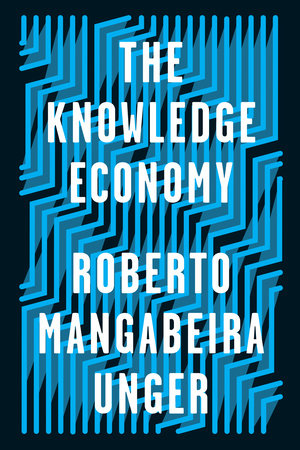
The Knowledge Economy

Look inside
Paperback
5.51"W x 8.25"H x 0.75"D   | 10 oz | 40 per carton
On sale Jun 28, 2022 | 304 Pages | 9781788734981

See Additional Formats
Revolutionary account of the transformative potential of the knowledge economy

Adam Smith and Karl Marx recognized that the best way to understand the economy is to study the most advanced practice of production. Today that practice is no longer conventional manufacturing: it is the radically innovative vanguard known as the knowledge economy. In every part of the production system it remains a fringe excluding the vast majority of workers and businesses. This book explores the hidden nature of the knowledge economy and its possible futures.

The confinement of the knowledge economy to these insular vanguards has become a driver of economic stagnation and inequality throughout the world. Traditional mass production has stopped working as a shortcut to economic growth. But the alternative—a deepened and socially inclusive form of the knowledge economy—continues to lie beyond reach in even the richest countries. The shape of contemporary politics on both the left and the right reflects a failure to come to terms with this dilemma and to overcome it.

Unger explains the knowledge economy in the truncated and confined form that it has today and proposes the way to a knowledge economy for the many: changes not just in economic institutions but also in education, culture, and politics. Just as Smith and Marx did in their time, he uses an understanding of the most advanced practice of production to rethink both economics and the economy as a whole.
Roberto Mangabeira Unger is one of the leading philosophers and social thinkers of the present. Verso has published much of his work, including False Necessity, Democracy Realized, The Left Alternative, and most recently The Religion of the Future.
Roberto Mangabeira Unger View titles by Roberto Mangabeira Unger
Available for sale exclusive:
•     Canada
•     Guam
•     Minor Outl.Ins.
•     North Mariana
•     Puerto Rico
•     Samoa,American
•     US Virgin Is.
•     USA

Not available for sale:
•     Afghanistan
•     Aland Islands
•     Albania
•     Algeria
•     Andorra
•     Angola
•     Anguilla
•     Antarctica
•     Antigua/Barbuda
•     Argentina
•     Armenia
•     Aruba
•     Australia
•     Austria
•     Azerbaijan
•     Bahamas
•     Bahrain
•     Bangladesh
•     Barbados
•     Belarus
•     Belgium
•     Belize
•     Benin
•     Bermuda
•     Bhutan
•     Bolivia
•     Bonaire, Saba
•     Bosnia Herzeg.
•     Botswana
•     Bouvet Island
•     Brazil
•     Brit.Ind.Oc.Ter
•     Brit.Virgin Is.
•     Brunei
•     Bulgaria
•     Burkina Faso
•     Burundi
•     Cambodia
•     Cameroon
•     Cape Verde
•     Cayman Islands
•     Centr.Afr.Rep.
•     Chad
•     Chile
•     China
•     Christmas Islnd
•     Cocos Islands
•     Colombia
•     Comoro Is.
•     Congo
•     Cook Islands
•     Costa Rica
•     Croatia
•     Cuba
•     Curacao
•     Cyprus
•     Czech Republic
•     Dem. Rep. Congo
•     Denmark
•     Djibouti
•     Dominica
•     Dominican Rep.
•     Ecuador
•     Egypt
•     El Salvador
•     Equatorial Gui.
•     Eritrea
•     Estonia
•     Ethiopia
•     Falkland Islnds
•     Faroe Islands
•     Fiji
•     Finland
•     France
•     Fren.Polynesia
•     French Guinea
•     Gabon
•     Gambia
•     Georgia
•     Germany
•     Ghana
•     Gibraltar
•     Greece
•     Greenland
•     Grenada
•     Guadeloupe
•     Guatemala
•     Guernsey
•     Guinea Republic
•     Guinea-Bissau
•     Guyana
•     Haiti
•     Heard/McDon.Isl
•     Honduras
•     Hong Kong
•     Hungary
•     Iceland
•     India
•     Indonesia
•     Iran
•     Iraq
•     Ireland
•     Isle of Man
•     Israel
•     Italy
•     Ivory Coast
•     Jamaica
•     Japan
•     Jersey
•     Jordan
•     Kazakhstan
•     Kenya
•     Kiribati
•     Kuwait
•     Kyrgyzstan
•     Laos
•     Latvia
•     Lebanon
•     Lesotho
•     Liberia
•     Libya
•     Liechtenstein
•     Lithuania
•     Luxembourg
•     Macau
•     Macedonia
•     Madagascar
•     Malawi
•     Malaysia
•     Maldives
•     Mali
•     Malta
•     Marshall island
•     Martinique
•     Mauritania
•     Mauritius
•     Mayotte
•     Mexico
•     Micronesia
•     Moldavia
•     Monaco
•     Mongolia
•     Montenegro
•     Montserrat
•     Morocco
•     Mozambique
•     Myanmar
•     Namibia
•     Nauru
•     Nepal
•     Netherlands
•     New Caledonia
•     New Zealand
•     Nicaragua
•     Niger
•     Nigeria
•     Niue
•     Norfolk Island
•     North Korea
•     Norway
•     Oman
•     Pakistan
•     Palau
•     Palestinian Ter
•     Panama
•     PapuaNewGuinea
•     Paraguay
•     Peru
•     Philippines
•     Pitcairn Islnds
•     Poland
•     Portugal
•     Qatar
•     Reunion Island
•     Romania
•     Russian Fed.
•     Rwanda
•     S. Sandwich Ins
•     Saint Martin
•     San Marino
•     SaoTome Princip
•     Saudi Arabia
•     Senegal
•     Serbia
•     Seychelles
•     Sierra Leone
•     Singapore
•     Sint Maarten
•     Slovakia
•     Slovenia
•     Solomon Islands
•     Somalia
•     South Africa
•     South Korea
•     South Sudan
•     Spain
•     Sri Lanka
•     St Barthelemy
•     St. Helena
•     St. Lucia
•     St. Vincent
•     St.Chr.,Nevis
•     St.Pier,Miquel.
•     Sth Terr. Franc
•     Sudan
•     Suriname
•     Svalbard
•     Swaziland
•     Sweden
•     Switzerland
•     Syria
•     Tadschikistan
•     Taiwan
•     Tanzania
•     Thailand
•     Timor-Leste
•     Togo
•     Tokelau Islands
•     Tonga
•     Trinidad,Tobago
•     Tunisia
•     Turkey
•     Turkmenistan
•     Turks&Caicos Is
•     Tuvalu
•     Uganda
•     Ukraine
•     Unit.Arab Emir.
•     United Kingdom
•     Uruguay
•     Uzbekistan
•     Vanuatu
•     Vatican City
•     Venezuela
•     Vietnam
•     Wallis,Futuna
•     West Saharan
•     Western Samoa
•     Yemen
•     Zambia
•     Zimbabwe

“A restless visionary.”
New York Times

“One of the few living philosophers whose thinking has the range of the great philosophers of the past.”
Times Higher Education

“A philosophical mind out of the Third World turning the tables, to become a synoptist and seer of the First.”
Perry Anderson

“The visionary program this new book sets out for universalizing the knowledge economy is not just a nice-to-have, but necessary. The Knowledge Economy is indispensable as a study of how to remedy the political polarization inequality has brought.”
—Martin Sandbu, Financial Times

“An intelligent examination of policy ideas which dare to challenge economic norms.”
—Ruth F. Hunt, Morning Star

“Unger’s work can offer progressives key resources for exposing the false necessity of the American liberal status quo and thinking constructively about a different progressive vision for the United States.”
—Daniel Steinmetz-Jenkins, The Nation

About

Revolutionary account of the transformative potential of the knowledge economy

Adam Smith and Karl Marx recognized that the best way to understand the economy is to study the most advanced practice of production. Today that practice is no longer conventional manufacturing: it is the radically innovative vanguard known as the knowledge economy. In every part of the production system it remains a fringe excluding the vast majority of workers and businesses. This book explores the hidden nature of the knowledge economy and its possible futures.

The confinement of the knowledge economy to these insular vanguards has become a driver of economic stagnation and inequality throughout the world. Traditional mass production has stopped working as a shortcut to economic growth. But the alternative—a deepened and socially inclusive form of the knowledge economy—continues to lie beyond reach in even the richest countries. The shape of contemporary politics on both the left and the right reflects a failure to come to terms with this dilemma and to overcome it.

Unger explains the knowledge economy in the truncated and confined form that it has today and proposes the way to a knowledge economy for the many: changes not just in economic institutions but also in education, culture, and politics. Just as Smith and Marx did in their time, he uses an understanding of the most advanced practice of production to rethink both economics and the economy as a whole.
Creators

Roberto Mangabeira Unger is one of the leading philosophers and social thinkers of the present. Verso has published much of his work, including False Necessity, Democracy Realized, The Left Alternative, and most recently The Religion of the Future.
Roberto Mangabeira Unger View titles by Roberto Mangabeira Unger

Praise

“A restless visionary.”
New York Times

“One of the few living philosophers whose thinking has the range of the great philosophers of the past.”
Times Higher Education

“A philosophical mind out of the Third World turning the tables, to become a synoptist and seer of the First.”
Perry Anderson

“The visionary program this new book sets out for universalizing the knowledge economy is not just a nice-to-have, but necessary. The Knowledge Economy is indispensable as a study of how to remedy the political polarization inequality has brought.”
—Martin Sandbu, Financial Times

“An intelligent examination of policy ideas which dare to challenge economic norms.”
—Ruth F. Hunt, Morning Star

“Unger’s work can offer progressives key resources for exposing the false necessity of the American liberal status quo and thinking constructively about a different progressive vision for the United States.”
—Daniel Steinmetz-Jenkins, The Nation
Penguin Random House Comics Retail