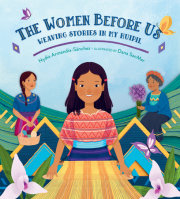
What lies behind the brilliant colors and intricate patterns of a traditional Mayan tunic? A Guatemalan girl reveals the ways a handwoven garment connects her to generations of women before her.
Together, the threads in my huipil hold a message, tell a story of who we are.
Of who I am.
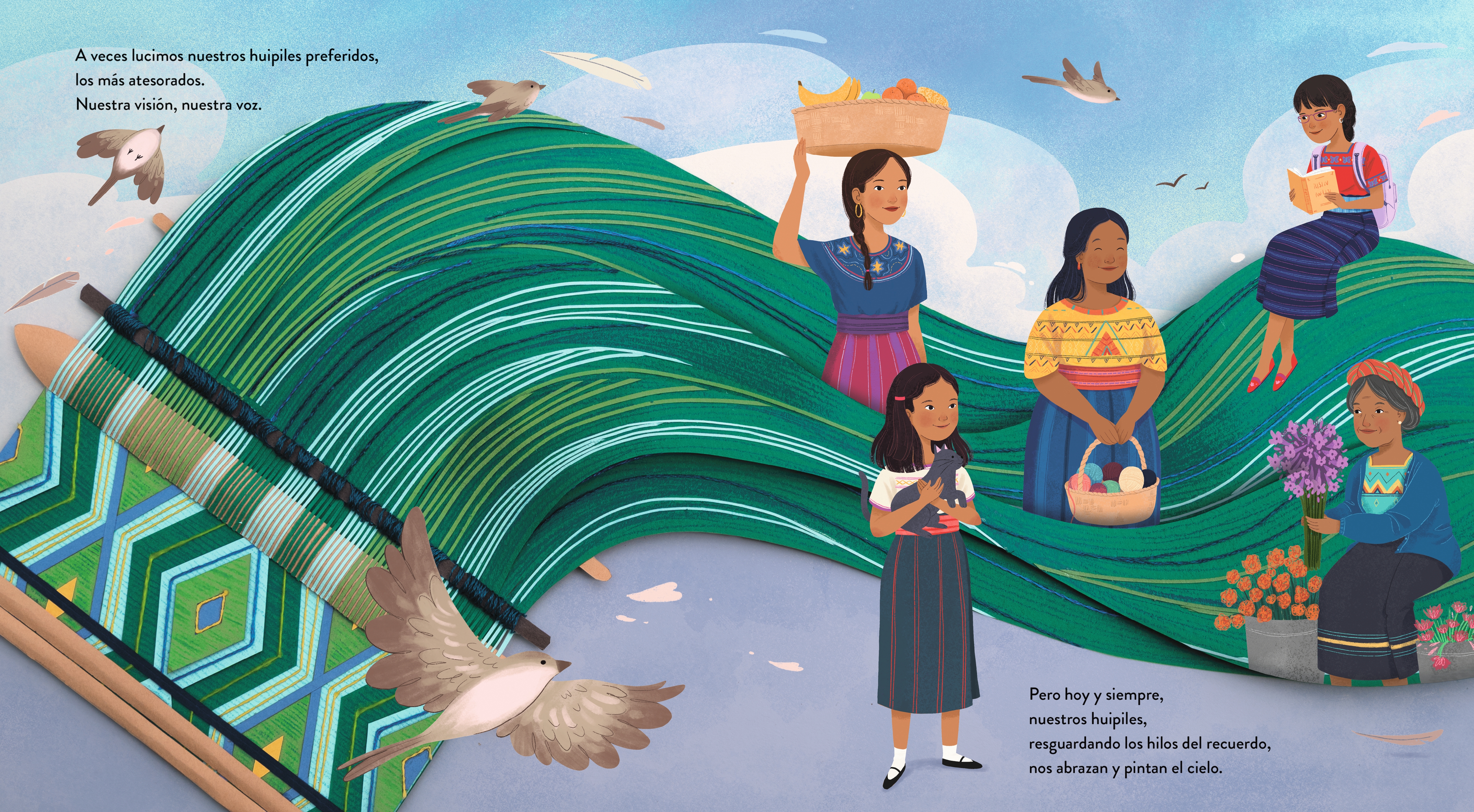
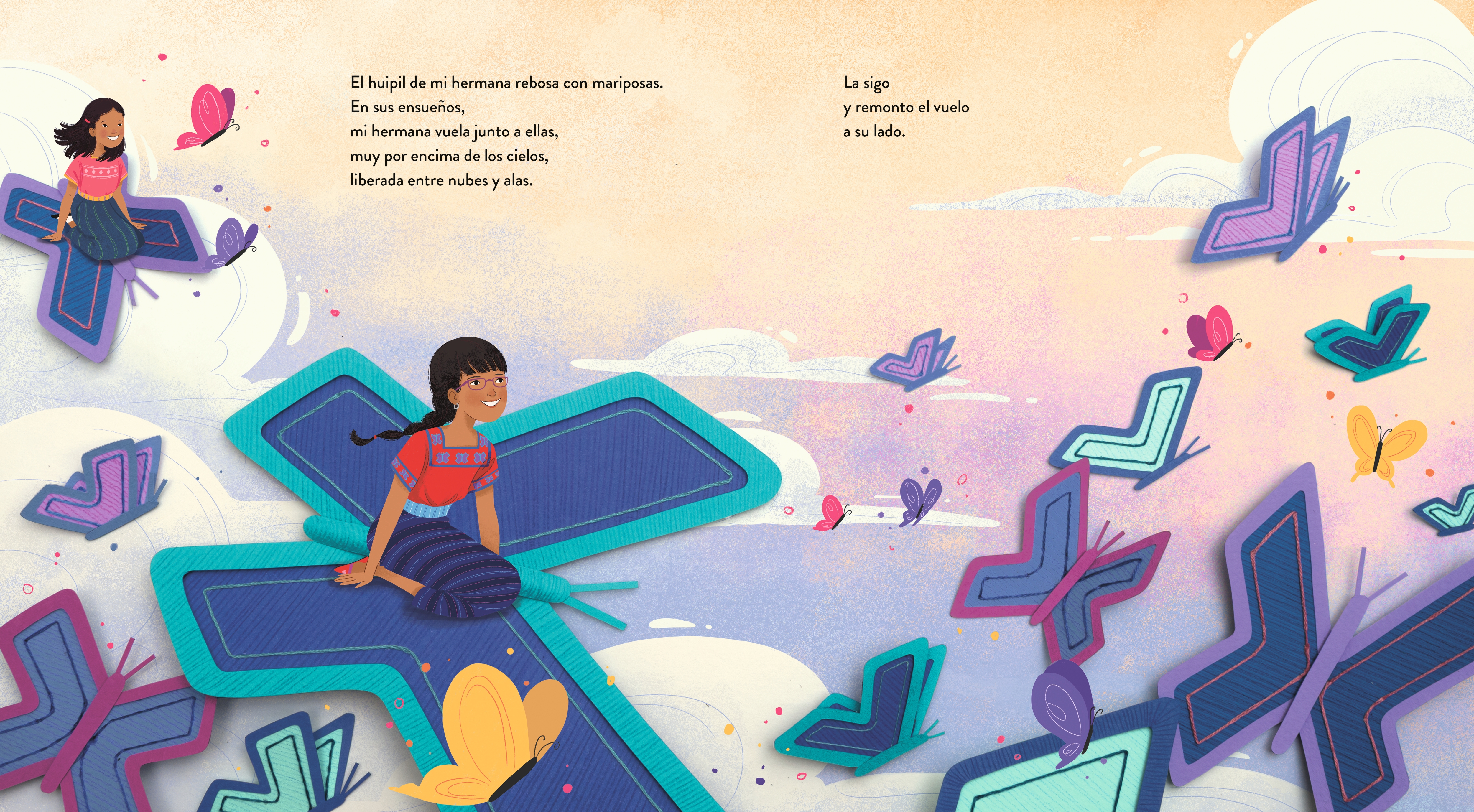
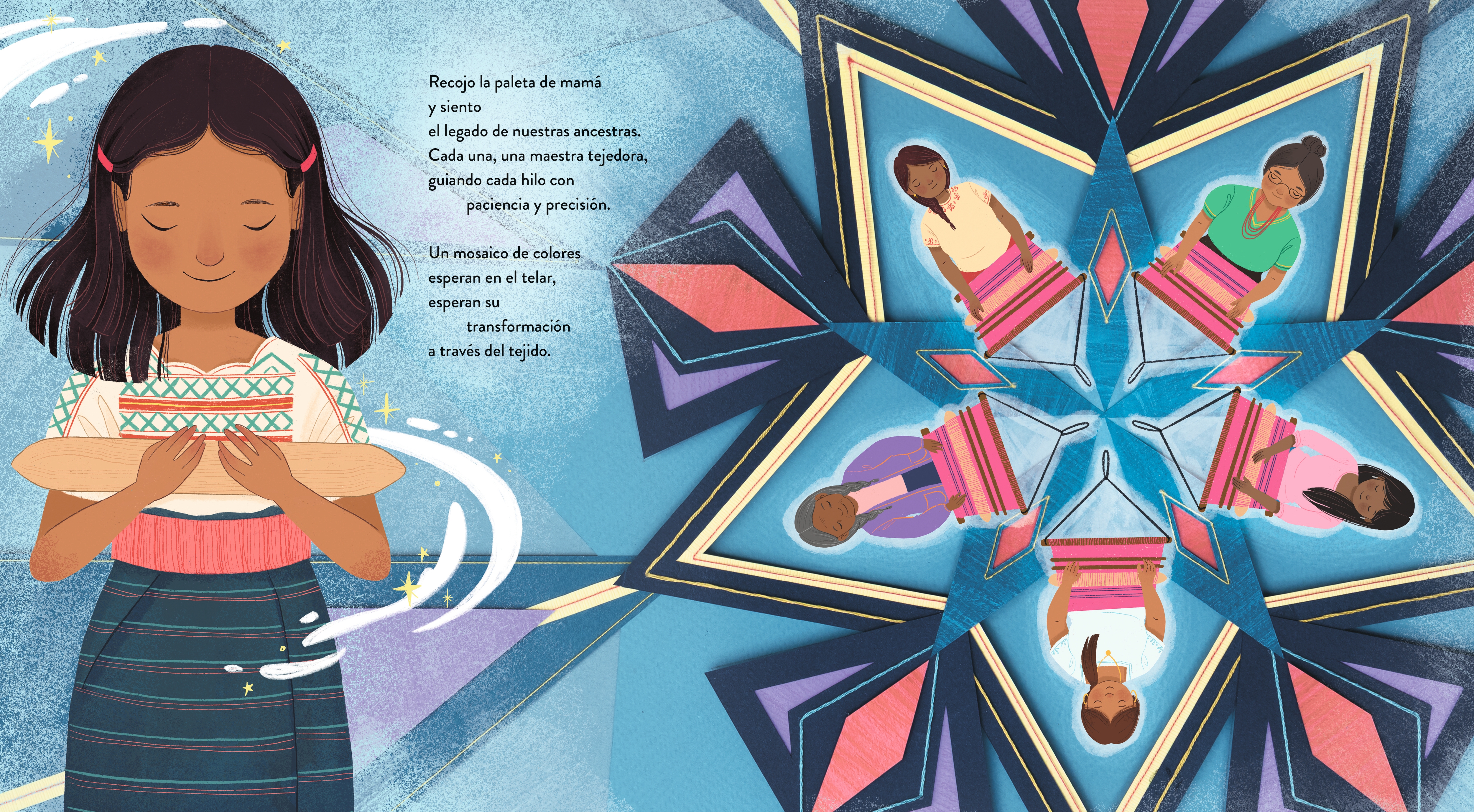
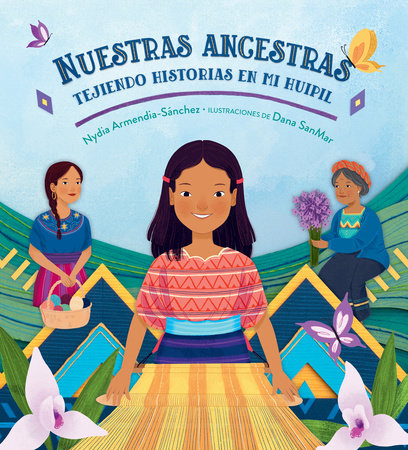
A young girl proudly wears a colorful tunic, or huipil, that features the sun’s reflection. It symbolizes the lake she lives on, a design she sometimes embellishes with shimmering sequins and beads. Her abuela’s huipil highlights zigzag mountains to stand for her home of origin, while her sister’s boasts butterflies like the ones that she rides in her daydreams. Indigenous to Mesoamerica, huipils use colors, imagery, symbols, and motifs to evoke everything from the wearer’s village to her social status, from her cultural heritage to the things that she loves. Combining a poetic text with vivid cut paper and digitally painted illustrations, interwoven with patterns from the huipils, this captivating book ends with an author’s note exploring the history and process of this rich tradition, and the challenges of keeping it alive.
Nydia Armendia-Sánchez is the author of Not Far from Here,illustrated by Devon Holzwarth, and Frida Kahlo’s Flower Crown, illustrated by Loris Lora. A We Need Diverse Books Walter Grant finalist, she strives for inclusivity and diversity in all her creative endeavors and draws inspiration for her libros from her children as well as her Guatemalan and Basque heritage. Nydia Armendia-Sánchez lives in California.
Dana Sanmar is a Colombian illustrator who primarily uses a combination of cut paper and digital painting as her medium. She is the illustrator of I Know Who I Am by Dorena Williamson and has illustrated numerous book covers, including for the middle-grade novel Lotería by Karla Arenas Valenti. Originally from Colombia, Dana Sanmar lives in Atlanta.
What lies behind the brilliant colors and intricate patterns of a traditional Mayan tunic? A Guatemalan girl reveals the ways a handwoven garment connects her to generations of women before her.
Together, the threads in my huipil hold a message, tell a story of who we are.
Of who I am.
A young girl proudly wears a colorful tunic, or huipil, that features the sun’s reflection. It symbolizes the lake she lives on, a design she sometimes embellishes with shimmering sequins and beads. Her abuela’s huipil highlights zigzag mountains to stand for her home of origin, while her sister’s boasts butterflies like the ones that she rides in her daydreams. Indigenous to Mesoamerica, huipils use colors, imagery, symbols, and motifs to evoke everything from the wearer’s village to her social status, from her cultural heritage to the things that she loves. Combining a poetic text with vivid cut paper and digitally painted illustrations, interwoven with patterns from the huipils, this captivating book ends with an author’s note exploring the history and process of this rich tradition, and the challenges of keeping it alive.
Creators
Nydia Armendia-Sánchez is the author of Not Far from Here,illustrated by Devon Holzwarth, and Frida Kahlo’s Flower Crown, illustrated by Loris Lora. A We Need Diverse Books Walter Grant finalist, she strives for inclusivity and diversity in all her creative endeavors and draws inspiration for her libros from her children as well as her Guatemalan and Basque heritage. Nydia Armendia-Sánchez lives in California.
Dana Sanmar is a Colombian illustrator who primarily uses a combination of cut paper and digital painting as her medium. She is the illustrator of I Know Who I Am by Dorena Williamson and has illustrated numerous book covers, including for the middle-grade novel Lotería by Karla Arenas Valenti. Originally from Colombia, Dana Sanmar lives in Atlanta.