Close Modal

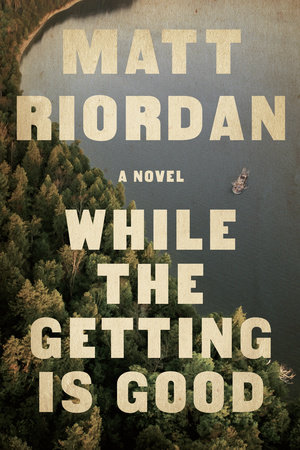
While The Getting Is Good

Look inside
Hardcover
6.26"W x 9.29"H x 1.1"D   | 18 oz | 20 per carton
On sale Aug 26, 2025 | 336 Pages | 9781368101455

Amid the gangland wars of Prohibition, one fisherman’s long-shot play to secure his family’s future brings disaster to everyone he loves.

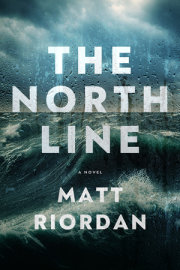
Based partly on family lore, Matt Riordan’s follow-up to The North Line is for readers of Jeannette Wall’s Hang the Moon and S.A. Cosby’s All the Sinners Bleed.


Eld should’ve known better. Hell, he did know better. But watching lesser men hit big paydays—men who didn’t fight in Europe—grew unbearable. So, when the opportunity arises, he reaches for a little something extra for his family, and even more for himself. With Prohibition expiring in a matter of months, his turn from fisherman to rumrunner was supposed to be temporary. It seemed the perfect plan. Even Maggie, Eld’s normally sensible wife, is on board.

Things don’t go to plan. Amid the region’s players battle to capture the biggest piece of a shrinking pie, Eld’s tiny family operation is caught in the crossfire. One bitterly cold night packing whiskey across Lake Huron costs Eld dearly, and his family even more. 

Hunted by gangsters and squeezed by the Depression, Eld, Maggie, and the children are scattered: Eld to Canada on a doomed quest, Maggie and her daughter forced into finding sanctuary in a faith more cult than religion. When they finally reunite, they may not even recognize each other as the same people who crossed their fingers and threw the dice for a shot at a better life.
Matt Riordan grew up in Michigan but spent his early twenties working on commercial fishing boats in Alaska. After college, Matt drifted from commercial fishing through a variety of jobs before landing in law school. He then became a litigator in New York City, where he practiced for twenty years. He now lives with his family in Australia.
Available for sale exclusive:
•     Afghanistan
•     Aland Islands
•     Albania
•     Algeria
•     Andorra
•     Angola
•     Anguilla
•     Antarctica
•     Antigua/Barbuda
•     Argentina
•     Armenia
•     Aruba
•     Australia
•     Austria
•     Azerbaijan
•     Bahamas
•     Bahrain
•     Bangladesh
•     Barbados
•     Belarus
•     Belgium
•     Belize
•     Benin
•     Bermuda
•     Bhutan
•     Bolivia
•     Bonaire, Saba
•     Bosnia Herzeg.
•     Botswana
•     Bouvet Island
•     Brazil
•     Brit.Ind.Oc.Ter
•     Brit.Virgin Is.
•     Brunei
•     Bulgaria
•     Burkina Faso
•     Burundi
•     Cambodia
•     Cameroon
•     Canada
•     Cape Verde
•     Cayman Islands
•     Centr.Afr.Rep.
•     Chad
•     Chile
•     China
•     Christmas Islnd
•     Cocos Islands
•     Colombia
•     Comoro Is.
•     Congo
•     Cook Islands
•     Costa Rica
•     Croatia
•     Cuba
•     Curacao
•     Cyprus
•     Czech Republic
•     Dem. Rep. Congo
•     Denmark
•     Djibouti
•     Dominica
•     Dominican Rep.
•     Ecuador
•     Egypt
•     El Salvador
•     Equatorial Gui.
•     Eritrea
•     Estonia
•     Ethiopia
•     Falkland Islnds
•     Faroe Islands
•     Fiji
•     Finland
•     France
•     Fren.Polynesia
•     French Guinea
•     Gabon
•     Gambia
•     Georgia
•     Germany
•     Ghana
•     Gibraltar
•     Greece
•     Greenland
•     Grenada
•     Guadeloupe
•     Guam
•     Guatemala
•     Guernsey
•     Guinea Republic
•     Guinea-Bissau
•     Guyana
•     Haiti
•     Heard/McDon.Isl
•     Honduras
•     Hong Kong
•     Hungary
•     Iceland
•     India
•     Indonesia
•     Iran
•     Iraq
•     Ireland
•     Isle of Man
•     Israel
•     Italy
•     Ivory Coast
•     Jamaica
•     Japan
•     Jersey
•     Jordan
•     Kazakhstan
•     Kenya
•     Kiribati
•     Kuwait
•     Kyrgyzstan
•     Laos
•     Latvia
•     Lebanon
•     Lesotho
•     Liberia
•     Libya
•     Liechtenstein
•     Lithuania
•     Luxembourg
•     Macau
•     Macedonia
•     Madagascar
•     Malawi
•     Malaysia
•     Maldives
•     Mali
•     Malta
•     Marshall island
•     Martinique
•     Mauritania
•     Mauritius
•     Mayotte
•     Mexico
•     Micronesia
•     Minor Outl.Ins.
•     Moldavia
•     Monaco
•     Mongolia
•     Montenegro
•     Montserrat
•     Morocco
•     Mozambique
•     Myanmar
•     Namibia
•     Nauru
•     Nepal
•     Netherlands
•     New Caledonia
•     New Zealand
•     Nicaragua
•     Niger
•     Nigeria
•     Niue
•     Norfolk Island
•     North Korea
•     North Mariana
•     Norway
•     Oman
•     Pakistan
•     Palau
•     Palestinian Ter
•     Panama
•     PapuaNewGuinea
•     Paraguay
•     Peru
•     Philippines
•     Pitcairn Islnds
•     Poland
•     Portugal
•     Puerto Rico
•     Qatar
•     Reunion Island
•     Romania
•     Russian Fed.
•     Rwanda
•     S. Sandwich Ins
•     Saint Martin
•     Samoa,American
•     San Marino
•     SaoTome Princip
•     Saudi Arabia
•     Senegal
•     Serbia
•     Seychelles
•     Sierra Leone
•     Singapore
•     Sint Maarten
•     Slovakia
•     Slovenia
•     Solomon Islands
•     Somalia
•     South Africa
•     South Korea
•     South Sudan
•     Spain
•     Sri Lanka
•     St Barthelemy
•     St. Helena
•     St. Lucia
•     St. Vincent
•     St.Chr.,Nevis
•     St.Pier,Miquel.
•     Sth Terr. Franc
•     Sudan
•     Suriname
•     Svalbard
•     Swaziland
•     Sweden
•     Switzerland
•     Syria
•     Tadschikistan
•     Taiwan
•     Tanzania
•     Thailand
•     Timor-Leste
•     Togo
•     Tokelau Islands
•     Tonga
•     Trinidad,Tobago
•     Tunisia
•     Turkey
•     Turkmenistan
•     Turks&Caicos Is
•     Tuvalu
•     US Virgin Is.
•     USA
•     Uganda
•     Ukraine
•     Unit.Arab Emir.
•     United Kingdom
•     Uruguay
•     Uzbekistan
•     Vanuatu
•     Vatican City
•     Venezuela
•     Vietnam
•     Wallis,Futuna
•     West Saharan
•     Western Samoa
•     Yemen
•     Zambia
•     Zimbabwe

One


Eld watched his son raise the binoculars to his eyes. The boy didn’t put the strap around his neck, and Eld almost said something in the way of a warning about the about the binoculars finding their way overboard. He opened his mouth but thought better of it and said nothing. The boy had arrived at the age where telling him things wasn’t so much teaching as nagging, and a flash of annoyance was getting to be a familiar look on the boy’s face. Besides, Eld had picked up those binoculars in France.

Eld never said “war.” He always said “in France.” Even to himself. They were good binoculars, too expensive to replace, but they weren’t French. Eld had plucked them from the mud near the body of an almost dead English horse. If those binoculars went to the bottom of Lake Huron it would be one less thing Eld had from France, which was fine by him.

“Yup,” Doc said, “that’s Charlie McCallister’s boat.” The boy held the binoculars one-handed and rolled at the hips with the swell. “He’s painted the old scow, blue of all things, but that’s his, all right.”

Doc turned and moved toward Eld, each step across the yawing deck light and certain. Eld watched him and knew how the world seemed an easy place to a young man, more so for a young man like Doc. There was no point in telling him otherwise. Doc would just stare at him, and anyway that information would reveal itself soon enough. Eld smiled at his son and took back the binoculars. He put the strap around his neck before sweeping the rolling blue for Charlie’s boat. It hadn’t been half an hour since the rain quit, but the sun was sparkling down the slope of the bigger rollers, forcing Eld to squint. It was indeed Charlie’s boat, and Doc was right. He’d repainted it. Blue. If some dark November night Charlie didn’t come back on time, and his wife sounded the alarm, Eld and the rest of the fishermen in town would be out here looking for the upturned blue hull of his boat, in all that blue water. Charlie knew that.

“I don’t see any gear out,” said Doc.

Eld focused on the stern. Doc was right again. No nets were visible and no cork lines trailed from the stern. Charlie was nowhere in evidence either.

“He’s just drifting,” said Doc. “We in Canada? Close?” The boy looked at his father and cocked an eyebrow. “’Course, little thing like an international border, that wouldn’t stop Charlie from fishing.”

Doc had been out on deck when Eld dead reckoned their course on the chart table in the wheelhouse. Eld figured them at a couple miles over the Ontario line. He didn’t have the papers to fish here any more than Charlie did, but there was less competition than on the Michigan side. Fishing over the line was illegal, but Eld didn’t feel wrong about it. The fish didn’t know they were Canadians.

Eld put the binoculars down. “Let’s go take a look. Might be he needs help.”

Doc followed his father into the wheelhouse.

“That fool Charlie needs a tow, he’s gonna have to wait till we’re full up. We don’t have the fuel or the time to run him back twenty miles.”

“There’s been days I needed help,” said Eld, but he didn’t counter his son.

Lately Doc was given to expressing some unchristian sentiments, and when he did, Eld could hear those same words coming from Doc’s mother. He saw that thought for the poison it was and chose instead to think of Doc’s sentiments as a symptom of a youthful impatience. Anyway, they could sort out what to do when they talked to Charlie. Eld bumped the throttle arm twice with the palm of his hand and the engine clatter made further conversation impossible.

If Charlie needed help, he should be out on deck looking for it, but he wasn’t there. Eld weighed the possibility that Charlie was working alone, and that he had gone over. He’d be floating somewhere, on his back probably, in the twenty miles of open water between here and land, and there’d be almost no point in looking for him. Eld knew he would look anyway, until he had to run back for fuel. A whole tank of fuel burned and no fish to show for it would put his month in the red. That would make two out of the last three, and that would mean a conversation with Maggie. Like her son, Maggie would say Charlie was a damned fool and Eld didn’t need to make his family go hungry for every fool who got it in his head to be a fisherman. All of that was true, and reasonable, and just the same, Eld, if need be, would go looking for Charlie.

At a hundred feet out Charlie’s head appeared over the rail, but only his head. He was sitting on the deck. Another head popped up. The second head had a fedora on top of it and a face on the front that Eld didn’t recognize. Charlie and the other man stood.

You don’t need a rifle to catch herring. That’s a plain fact. All the same, the second man held a rifle.

“Aw hell,” said Eld, and he backed off the throttle. As the distance between the two boats closed Charlie turned to the second man and spoke a few words. The second man peered at Eld and Doc for a moment before disappearing into the wheelhouse.

“What’s that about, you think?” asked Doc. “Maybe he’s worried about the Canadians?”

“Maybe,” said Eld, but he doubted the rifle was for the Canadians. In Eld’s experience the Canadians were not a particularly warlike race. Certainly, the Canadians he had met were not the kind of people who might initiate gunplay over a few herring.

When they were twenty feet away the man with the fedora reappeared without the rifle and put a foot up on the rail. He was wearing leather street shoes. Charlie waved and smiled but said nothing. Eld knocked the engine into neutral and they drifted closer. Inside of ten feet Eld saw that Charlie didn’t have any nets aboard. If Eld asked him about fishing, Charlie would have to say something, something like maybe he forgot to bring a net, so Eld was out of things to say before he opened his mouth. He nodded at the man in the fedora, but that man looked like he had never been so bored as he was just then, encountering Eld and Doc.

“Everything okay, Charlie?” Eld knew it was Doc’s voice, but it sounded deeper, older. There was nothing of fear in that voice, so Eld was afraid for both of them. Doc was standing at the rail. Eld wanted right then to get his son as far from this situation as possible.

“Yeah,” said Charlie. Grinning. He started to say something else and then stopped. His face was frozen for a second, his lips forming the half word he had uttered. “You?” he asked, although the word came out without the Y sound at the front of it, so that it sounded like oo.

For a second or two there was silence. The blue lake water made gentle lapping noises on the sides of the hulls. Then Charlie spoke again. “How ’bout you?”

“Good,” said Eld. He was watching the man in street clothes. “Scouting. You know.”

“Sure,” Charlie said. “See you in town.”

“Guess so,” said Eld. He knocked the throttle into reverse and backed twenty yards without taking his eyes from the man in street clothes. He didn’t speak to Doc until they were out of rifle range, and then he asked if there was any coffee left.

Doc went below and reappeared shaking the thermos. “There’s a swallow in there yet, maybe two,” he said as he handed it to his father. “So you figure the guy with Charlie, the guy with the rifle, he was a Canadian. Maybe he had an Ontario permit so they could fish that side of the border?”

“Maybe,” said Eld, “but he didn’t look Canadian.”

“How does a Canadian look?”

Eld swallowed cold coffee and looked at his son. The boy should get some other kind of a job. This job, it was an honest living, but you were at the mercy of everything. Weather, accidents, some bank, they all had you, and you never got very far ahead of them. Then maybe some depression or a war popped up and you couldn’t get out of the way. Eld was old enough to know he couldn’t change those things, that they came down the pike at you no matter what, but he believed that with a little luck, and a lot of moxie, you might put yourself in a position to get the hell out of the way. Making it so Doc could get out of the way, Eld figured that for his job.

“No,” said Eld. “I don’t think it was Canadians that got Charlie to paint his boat blue, or send him out here drifting over the border with no fishing gear. Somebody down in Detroit put Charlie up to this. Somebody in Detroit or maybe even Chicago, and that somebody, or somebodies, they sent along the guy with the street shoes and the rifle to watch over their investment.”

Eld didn’t say the word “whiskey.” He knew he didn’t have to. Doc was fourteen, old enough to know that the shiny new trucks popping up around town came from running whiskey over from the Canadians. They were still making it to beat the band over there, for export to the States, Prohibition be damned. Old Man Seagram didn’t give a fiddler’s fuck who they were exporting it to, and it had to get to Detroit somehow. What Doc understood without being told, that worried Eld.

It was break-even fishing that day, with just enough herring to keep Doc occupied while Eld thought on the cost of fuel and what they had seen. That operation they had stumbled on, it was the kind of plan Charlie would come up with. A half-assed plan. Meeting out in the middle of the damn lake with no nets on board. Anything other than a clear day—hardly a reliable occurrence even in summer—and the boats wouldn’t be able to find each other. More, moving cargo from one boat to another in open water was a questionable proposition even in the best of weather. Eld knew it to be difficult with fish, and fish didn’t come in bottles that shattered when dropped. Charlie hadn’t done anything to hide his tracks either. Without a net on board, the purpose of the trip was obvious. Even the laziest police would know at a glance what they were up to, and the load was right there for anybody to see. Charlie was an indifferent fisherman, and it seemed that his work ethic for smuggling was the same. If Charlie lost a load, or got himself pinched, the whiskey would find another route and any opportunity would be gone.

The smart play would be to take on extra fuel and run all the way over to Grand Bend on the Ontario side. Then you could pick up a load and run it back in the dark with the running lights off. If you fished a little on the way home you might catch enough to cover the load with fish. There were better ways to run whiskey, and men more reliable than Charlie McCallister.

Eld heard a shout and looked up to see Doc jumping from the rail and cannonballing into the water. His clothes and boots were in a pile on the deck. Walking to the rail, he saw Doc floating on his back, his toes breaking the surface.

“How’s the water?” asked Eld.

“Wet,” said Doc.

Eld hung a thick hawser line over the side before stripping off his clothes.

“How were you going to get back up?” said Eld. He climbed up on the rail.

“You mean, if I hadn’t brought you along?”

“What if I wasn’t able to help?”

“Like maybe you had a stroke in the ten minutes I was swimming and couldn’t throw me a line?”

Eld didn’t answer. He stood on the rail for a minute and looked down into the water. He didn’t know how deep it was. Hundreds of feet, anyway. He didn’t know what was down there, but he had a fisherman’s sense that it wasn’t a friendly place. Nothing in the lake died of old age. Doc had his eyes closed, as if he were about to nap, drifting with his back turned on all that darkness. Eld didn’t know if he admired that about the boy, but he did know that it didn’t come from him. The boy was brave. Eld knew what happened to the brave. He had seen it. At that thought he dove, and before he touched the water he decided to look up Charlie when they got back to town.

There was no sound, knifing down into the dark. He kicked and swam deeper.

Money. Money would protect his brave son. Enough money might even protect Doc from himself. Eld stopped swimming and opened his eyes. Below him the blue turned black, and above him he could see Doc and the white hull of the boat. He was between the dark and Doc floating up on the surface, but he could stay there only so long as he could hold his breath. He paused as long as he could and then started for the surface.

The sun on his face and his lungs full of new air, he thought he had a plan by the ankle. He would get more money. Enough so that his little family could get the hell out of the way. He climbed the hawser and swung a leg over the rail. The nets on the deck, the boat, the fuel in the tanks: The bank had put up the money and the bank held the note. There was a mortgage on the house too. They weren’t hungry, and there were lots of folks worse off, but fishing lake herring was a working man’s life, start to finish.

Running whiskey wasn’t safe, and it wasn’t legal, but it wasn’t really work either.

Eld smiled and dove again.
“A modern day tragedy so believable that I asked the author, Matt Riordan, if it had been based upon a family history […] his prose style [conveys] a sense of lives caught up in the Great Depression.”
—The Historical Novel Society


Praise for Matt Riordan's debut THE NORTH LINE:


“[A]n irresistible portrait of commercial fishermen fighting for survival in the early 1990s Alaska. […] The novel’s colorful dialogue and relentless pacing evoke the uncompromising headwinds in [the main character’s] path. This is a triumph of gritty realism. “
—Publishers Weekly (Starred)

“[I]n an atmosphere worthy of a Jack London rock’n’roll, Matt Riordan has written a ruthless coming-of-age novel that leaves you breathless.”
—Rolling Stone [France]

"Riordan is a superb storyteller, and The North Line is an all-engrossing, never-dull depiction of Alaska’s ‘wild west’ and those drawn to it. Sentence by sentence, Riordan’s dazzling language will transport readers into a world both challenging and packed with beauty and possibility."
Anchorage Daily News

"Riordan writes about both labor and the natural world with an equally keen eye, bringing out the inner torment of a complex character coming to terms with his place in the world."
CrimeReads, a Best Debut pick

The North Line is a ruggedly erudite story that combines the best of the individualism of Jack London with the introspective ruminations of Raymond Carver . . . not to be missed.”
—S.A. Cosby New York Times bestselling author of All the Sinners Bleed

“A frightening story of tough men pushed to the brink. The novel is captivating, occasionally funny, and startling. I couldn’t put it down.”
—David Sedaris

“This coming-of- age novel relates the story of a young man among old sea wolves. It is said that man is a wolf to man. In the Bering Sea, man is like a shark.”
—Ouest France

The North Line is one of those rare books that you feel as much as read. The world and its details are so real, so intimate, and so lived-in and that I had to check my fingertips for fish scales once I finished reading."
—Craig Davidson, author of Rust and Bone

“Riordan is summoning demons in this grimy wilderness saga that might hit entirely too close to home for those who know. Magnificent."
—Laird Barron, author of The Wind Began to Howl

“A rough, virile, and exciting novel.”
—Tribune de Genève

“A novel that smells of the sea, of mustiness and fuel oil…. A dirty, dark, immersive novel.”
—Voile Magazine

About

Amid the gangland wars of Prohibition, one fisherman’s long-shot play to secure his family’s future brings disaster to everyone he loves.

Based partly on family lore, Matt Riordan’s follow-up to The North Line is for readers of Jeannette Wall’s Hang the Moon and S.A. Cosby’s All the Sinners Bleed.


Eld should’ve known better. Hell, he did know better. But watching lesser men hit big paydays—men who didn’t fight in Europe—grew unbearable. So, when the opportunity arises, he reaches for a little something extra for his family, and even more for himself. With Prohibition expiring in a matter of months, his turn from fisherman to rumrunner was supposed to be temporary. It seemed the perfect plan. Even Maggie, Eld’s normally sensible wife, is on board.

Things don’t go to plan. Amid the region’s players battle to capture the biggest piece of a shrinking pie, Eld’s tiny family operation is caught in the crossfire. One bitterly cold night packing whiskey across Lake Huron costs Eld dearly, and his family even more. 

Hunted by gangsters and squeezed by the Depression, Eld, Maggie, and the children are scattered: Eld to Canada on a doomed quest, Maggie and her daughter forced into finding sanctuary in a faith more cult than religion. When they finally reunite, they may not even recognize each other as the same people who crossed their fingers and threw the dice for a shot at a better life.

Creators

Matt Riordan grew up in Michigan but spent his early twenties working on commercial fishing boats in Alaska. After college, Matt drifted from commercial fishing through a variety of jobs before landing in law school. He then became a litigator in New York City, where he practiced for twenty years. He now lives with his family in Australia.

Excerpt

One


Eld watched his son raise the binoculars to his eyes. The boy didn’t put the strap around his neck, and Eld almost said something in the way of a warning about the about the binoculars finding their way overboard. He opened his mouth but thought better of it and said nothing. The boy had arrived at the age where telling him things wasn’t so much teaching as nagging, and a flash of annoyance was getting to be a familiar look on the boy’s face. Besides, Eld had picked up those binoculars in France.

Eld never said “war.” He always said “in France.” Even to himself. They were good binoculars, too expensive to replace, but they weren’t French. Eld had plucked them from the mud near the body of an almost dead English horse. If those binoculars went to the bottom of Lake Huron it would be one less thing Eld had from France, which was fine by him.

“Yup,” Doc said, “that’s Charlie McCallister’s boat.” The boy held the binoculars one-handed and rolled at the hips with the swell. “He’s painted the old scow, blue of all things, but that’s his, all right.”

Doc turned and moved toward Eld, each step across the yawing deck light and certain. Eld watched him and knew how the world seemed an easy place to a young man, more so for a young man like Doc. There was no point in telling him otherwise. Doc would just stare at him, and anyway that information would reveal itself soon enough. Eld smiled at his son and took back the binoculars. He put the strap around his neck before sweeping the rolling blue for Charlie’s boat. It hadn’t been half an hour since the rain quit, but the sun was sparkling down the slope of the bigger rollers, forcing Eld to squint. It was indeed Charlie’s boat, and Doc was right. He’d repainted it. Blue. If some dark November night Charlie didn’t come back on time, and his wife sounded the alarm, Eld and the rest of the fishermen in town would be out here looking for the upturned blue hull of his boat, in all that blue water. Charlie knew that.

“I don’t see any gear out,” said Doc.

Eld focused on the stern. Doc was right again. No nets were visible and no cork lines trailed from the stern. Charlie was nowhere in evidence either.

“He’s just drifting,” said Doc. “We in Canada? Close?” The boy looked at his father and cocked an eyebrow. “’Course, little thing like an international border, that wouldn’t stop Charlie from fishing.”

Doc had been out on deck when Eld dead reckoned their course on the chart table in the wheelhouse. Eld figured them at a couple miles over the Ontario line. He didn’t have the papers to fish here any more than Charlie did, but there was less competition than on the Michigan side. Fishing over the line was illegal, but Eld didn’t feel wrong about it. The fish didn’t know they were Canadians.

Eld put the binoculars down. “Let’s go take a look. Might be he needs help.”

Doc followed his father into the wheelhouse.

“That fool Charlie needs a tow, he’s gonna have to wait till we’re full up. We don’t have the fuel or the time to run him back twenty miles.”

“There’s been days I needed help,” said Eld, but he didn’t counter his son.

Lately Doc was given to expressing some unchristian sentiments, and when he did, Eld could hear those same words coming from Doc’s mother. He saw that thought for the poison it was and chose instead to think of Doc’s sentiments as a symptom of a youthful impatience. Anyway, they could sort out what to do when they talked to Charlie. Eld bumped the throttle arm twice with the palm of his hand and the engine clatter made further conversation impossible.

If Charlie needed help, he should be out on deck looking for it, but he wasn’t there. Eld weighed the possibility that Charlie was working alone, and that he had gone over. He’d be floating somewhere, on his back probably, in the twenty miles of open water between here and land, and there’d be almost no point in looking for him. Eld knew he would look anyway, until he had to run back for fuel. A whole tank of fuel burned and no fish to show for it would put his month in the red. That would make two out of the last three, and that would mean a conversation with Maggie. Like her son, Maggie would say Charlie was a damned fool and Eld didn’t need to make his family go hungry for every fool who got it in his head to be a fisherman. All of that was true, and reasonable, and just the same, Eld, if need be, would go looking for Charlie.

At a hundred feet out Charlie’s head appeared over the rail, but only his head. He was sitting on the deck. Another head popped up. The second head had a fedora on top of it and a face on the front that Eld didn’t recognize. Charlie and the other man stood.

You don’t need a rifle to catch herring. That’s a plain fact. All the same, the second man held a rifle.

“Aw hell,” said Eld, and he backed off the throttle. As the distance between the two boats closed Charlie turned to the second man and spoke a few words. The second man peered at Eld and Doc for a moment before disappearing into the wheelhouse.

“What’s that about, you think?” asked Doc. “Maybe he’s worried about the Canadians?”

“Maybe,” said Eld, but he doubted the rifle was for the Canadians. In Eld’s experience the Canadians were not a particularly warlike race. Certainly, the Canadians he had met were not the kind of people who might initiate gunplay over a few herring.

When they were twenty feet away the man with the fedora reappeared without the rifle and put a foot up on the rail. He was wearing leather street shoes. Charlie waved and smiled but said nothing. Eld knocked the engine into neutral and they drifted closer. Inside of ten feet Eld saw that Charlie didn’t have any nets aboard. If Eld asked him about fishing, Charlie would have to say something, something like maybe he forgot to bring a net, so Eld was out of things to say before he opened his mouth. He nodded at the man in the fedora, but that man looked like he had never been so bored as he was just then, encountering Eld and Doc.

“Everything okay, Charlie?” Eld knew it was Doc’s voice, but it sounded deeper, older. There was nothing of fear in that voice, so Eld was afraid for both of them. Doc was standing at the rail. Eld wanted right then to get his son as far from this situation as possible.

“Yeah,” said Charlie. Grinning. He started to say something else and then stopped. His face was frozen for a second, his lips forming the half word he had uttered. “You?” he asked, although the word came out without the Y sound at the front of it, so that it sounded like oo.

For a second or two there was silence. The blue lake water made gentle lapping noises on the sides of the hulls. Then Charlie spoke again. “How ’bout you?”

“Good,” said Eld. He was watching the man in street clothes. “Scouting. You know.”

“Sure,” Charlie said. “See you in town.”

“Guess so,” said Eld. He knocked the throttle into reverse and backed twenty yards without taking his eyes from the man in street clothes. He didn’t speak to Doc until they were out of rifle range, and then he asked if there was any coffee left.

Doc went below and reappeared shaking the thermos. “There’s a swallow in there yet, maybe two,” he said as he handed it to his father. “So you figure the guy with Charlie, the guy with the rifle, he was a Canadian. Maybe he had an Ontario permit so they could fish that side of the border?”

“Maybe,” said Eld, “but he didn’t look Canadian.”

“How does a Canadian look?”

Eld swallowed cold coffee and looked at his son. The boy should get some other kind of a job. This job, it was an honest living, but you were at the mercy of everything. Weather, accidents, some bank, they all had you, and you never got very far ahead of them. Then maybe some depression or a war popped up and you couldn’t get out of the way. Eld was old enough to know he couldn’t change those things, that they came down the pike at you no matter what, but he believed that with a little luck, and a lot of moxie, you might put yourself in a position to get the hell out of the way. Making it so Doc could get out of the way, Eld figured that for his job.

“No,” said Eld. “I don’t think it was Canadians that got Charlie to paint his boat blue, or send him out here drifting over the border with no fishing gear. Somebody down in Detroit put Charlie up to this. Somebody in Detroit or maybe even Chicago, and that somebody, or somebodies, they sent along the guy with the street shoes and the rifle to watch over their investment.”

Eld didn’t say the word “whiskey.” He knew he didn’t have to. Doc was fourteen, old enough to know that the shiny new trucks popping up around town came from running whiskey over from the Canadians. They were still making it to beat the band over there, for export to the States, Prohibition be damned. Old Man Seagram didn’t give a fiddler’s fuck who they were exporting it to, and it had to get to Detroit somehow. What Doc understood without being told, that worried Eld.

It was break-even fishing that day, with just enough herring to keep Doc occupied while Eld thought on the cost of fuel and what they had seen. That operation they had stumbled on, it was the kind of plan Charlie would come up with. A half-assed plan. Meeting out in the middle of the damn lake with no nets on board. Anything other than a clear day—hardly a reliable occurrence even in summer—and the boats wouldn’t be able to find each other. More, moving cargo from one boat to another in open water was a questionable proposition even in the best of weather. Eld knew it to be difficult with fish, and fish didn’t come in bottles that shattered when dropped. Charlie hadn’t done anything to hide his tracks either. Without a net on board, the purpose of the trip was obvious. Even the laziest police would know at a glance what they were up to, and the load was right there for anybody to see. Charlie was an indifferent fisherman, and it seemed that his work ethic for smuggling was the same. If Charlie lost a load, or got himself pinched, the whiskey would find another route and any opportunity would be gone.

The smart play would be to take on extra fuel and run all the way over to Grand Bend on the Ontario side. Then you could pick up a load and run it back in the dark with the running lights off. If you fished a little on the way home you might catch enough to cover the load with fish. There were better ways to run whiskey, and men more reliable than Charlie McCallister.

Eld heard a shout and looked up to see Doc jumping from the rail and cannonballing into the water. His clothes and boots were in a pile on the deck. Walking to the rail, he saw Doc floating on his back, his toes breaking the surface.

“How’s the water?” asked Eld.

“Wet,” said Doc.

Eld hung a thick hawser line over the side before stripping off his clothes.

“How were you going to get back up?” said Eld. He climbed up on the rail.

“You mean, if I hadn’t brought you along?”

“What if I wasn’t able to help?”

“Like maybe you had a stroke in the ten minutes I was swimming and couldn’t throw me a line?”

Eld didn’t answer. He stood on the rail for a minute and looked down into the water. He didn’t know how deep it was. Hundreds of feet, anyway. He didn’t know what was down there, but he had a fisherman’s sense that it wasn’t a friendly place. Nothing in the lake died of old age. Doc had his eyes closed, as if he were about to nap, drifting with his back turned on all that darkness. Eld didn’t know if he admired that about the boy, but he did know that it didn’t come from him. The boy was brave. Eld knew what happened to the brave. He had seen it. At that thought he dove, and before he touched the water he decided to look up Charlie when they got back to town.

There was no sound, knifing down into the dark. He kicked and swam deeper.

Money. Money would protect his brave son. Enough money might even protect Doc from himself. Eld stopped swimming and opened his eyes. Below him the blue turned black, and above him he could see Doc and the white hull of the boat. He was between the dark and Doc floating up on the surface, but he could stay there only so long as he could hold his breath. He paused as long as he could and then started for the surface.

The sun on his face and his lungs full of new air, he thought he had a plan by the ankle. He would get more money. Enough so that his little family could get the hell out of the way. He climbed the hawser and swung a leg over the rail. The nets on the deck, the boat, the fuel in the tanks: The bank had put up the money and the bank held the note. There was a mortgage on the house too. They weren’t hungry, and there were lots of folks worse off, but fishing lake herring was a working man’s life, start to finish.

Running whiskey wasn’t safe, and it wasn’t legal, but it wasn’t really work either.

Eld smiled and dove again.

Praise

“A modern day tragedy so believable that I asked the author, Matt Riordan, if it had been based upon a family history […] his prose style [conveys] a sense of lives caught up in the Great Depression.”
—The Historical Novel Society


Praise for Matt Riordan's debut THE NORTH LINE:


“[A]n irresistible portrait of commercial fishermen fighting for survival in the early 1990s Alaska. […] The novel’s colorful dialogue and relentless pacing evoke the uncompromising headwinds in [the main character’s] path. This is a triumph of gritty realism. “
—Publishers Weekly (Starred)

“[I]n an atmosphere worthy of a Jack London rock’n’roll, Matt Riordan has written a ruthless coming-of-age novel that leaves you breathless.”
—Rolling Stone [France]

"Riordan is a superb storyteller, and The North Line is an all-engrossing, never-dull depiction of Alaska’s ‘wild west’ and those drawn to it. Sentence by sentence, Riordan’s dazzling language will transport readers into a world both challenging and packed with beauty and possibility."
Anchorage Daily News

"Riordan writes about both labor and the natural world with an equally keen eye, bringing out the inner torment of a complex character coming to terms with his place in the world."
CrimeReads, a Best Debut pick

The North Line is a ruggedly erudite story that combines the best of the individualism of Jack London with the introspective ruminations of Raymond Carver . . . not to be missed.”
—S.A. Cosby New York Times bestselling author of All the Sinners Bleed

“A frightening story of tough men pushed to the brink. The novel is captivating, occasionally funny, and startling. I couldn’t put it down.”
—David Sedaris

“This coming-of- age novel relates the story of a young man among old sea wolves. It is said that man is a wolf to man. In the Bering Sea, man is like a shark.”
—Ouest France

The North Line is one of those rare books that you feel as much as read. The world and its details are so real, so intimate, and so lived-in and that I had to check my fingertips for fish scales once I finished reading."
—Craig Davidson, author of Rust and Bone

“Riordan is summoning demons in this grimy wilderness saga that might hit entirely too close to home for those who know. Magnificent."
—Laird Barron, author of The Wind Began to Howl

“A rough, virile, and exciting novel.”
—Tribune de Genève

“A novel that smells of the sea, of mustiness and fuel oil…. A dirty, dark, immersive novel.”
—Voile Magazine
Penguin Random House Comics Retail