Close Modal

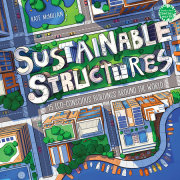
Sustainable Structures

15 Eco-Conscious Buildings Around the World

Paperback
10.02"W x 10.02"H x 0.21"D   | 13 oz | 36 per carton
On sale Aug 11, 2026 | 80 Pages | 9780823463992
Age 8-12 years
Reading Level: Fountas & Pinnell X

See Additional Formats
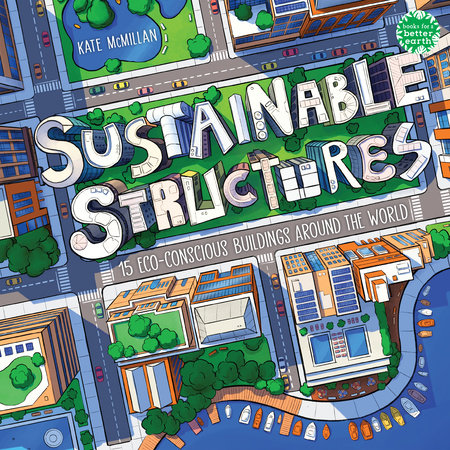
A stunning illustrated overview of "green" architecture on every continent, packed full of cool STEAM facts and fascinating details.

From a waste collection site built entirely from recycled materials, to a school designed to float during flood season in Bangladesh, this dazzling book highlights innovative and sustainably built structures around the world.

Did you know that "woodscrapers," or skyscrapers made of wood, can reduce construction waste? How about that termite mounds have served as inspiration for temperature control systems? And believe it or not. . . there's a research station built on skis in Antarctica.

Pairing a kid friendly, conversational approach with spectacularly detailed art, Kate McMillan dissects the design of 15 eco-friendly buildings worldwide. The extraordinary structures fall into five categories, each emphasizing a key element of sustainable design: 1) local materials, 2) adaptability, 3) sustainable construction, 4) clean energy, and 5) optimized space.

Readers of all ages will love poring over the precise, colorful illustrations and informative close ups featured on eye catching double-page spreads. Perfect for budding architects and engineers, this book is a work of art!

Books for a Better Earth™ are designed to inspire children to become active, knowledgeable participants in caring for the planet they live on.
Kate McMillan studied architecture at Yale and Norwegian boat building through the Mortimer Hayes-Brandeis Fellowship. Eventually, she made her way out to Los Angeles where she is a visual development artist for DreamWorks TV. In her free time, she enjoys building furniture and strange instruments, writing, and drawing wobbly buildings that look like they might fall down. This is her debut book for children. Find her on Instagram @katemcmillanart
Available for sale exclusive:
•     Afghanistan
•     Aland Islands
•     Albania
•     Algeria
•     Andorra
•     Angola
•     Anguilla
•     Antarctica
•     Antigua/Barbuda
•     Argentina
•     Armenia
•     Aruba
•     Australia
•     Austria
•     Azerbaijan
•     Bahamas
•     Bahrain
•     Bangladesh
•     Barbados
•     Belarus
•     Belgium
•     Belize
•     Benin
•     Bermuda
•     Bhutan
•     Bolivia
•     Bonaire, Saba
•     Bosnia Herzeg.
•     Botswana
•     Bouvet Island
•     Brazil
•     Brit.Ind.Oc.Ter
•     Brit.Virgin Is.
•     Brunei
•     Bulgaria
•     Burkina Faso
•     Burundi
•     Cambodia
•     Cameroon
•     Canada
•     Cape Verde
•     Cayman Islands
•     Centr.Afr.Rep.
•     Chad
•     Chile
•     China
•     Christmas Islnd
•     Cocos Islands
•     Colombia
•     Comoro Is.
•     Congo
•     Cook Islands
•     Costa Rica
•     Croatia
•     Cuba
•     Curacao
•     Cyprus
•     Czech Republic
•     Dem. Rep. Congo
•     Denmark
•     Djibouti
•     Dominica
•     Dominican Rep.
•     Ecuador
•     Egypt
•     El Salvador
•     Equatorial Gui.
•     Eritrea
•     Estonia
•     Ethiopia
•     Falkland Islnds
•     Faroe Islands
•     Fiji
•     Finland
•     France
•     Fren.Polynesia
•     French Guinea
•     Gabon
•     Gambia
•     Georgia
•     Germany
•     Ghana
•     Gibraltar
•     Greece
•     Greenland
•     Grenada
•     Guadeloupe
•     Guam
•     Guatemala
•     Guernsey
•     Guinea Republic
•     Guinea-Bissau
•     Guyana
•     Haiti
•     Heard/McDon.Isl
•     Honduras
•     Hong Kong
•     Hungary
•     Iceland
•     India
•     Indonesia
•     Iran
•     Iraq
•     Ireland
•     Isle of Man
•     Israel
•     Italy
•     Ivory Coast
•     Jamaica
•     Japan
•     Jersey
•     Jordan
•     Kazakhstan
•     Kenya
•     Kiribati
•     Kuwait
•     Kyrgyzstan
•     Laos
•     Latvia
•     Lebanon
•     Lesotho
•     Liberia
•     Libya
•     Liechtenstein
•     Lithuania
•     Luxembourg
•     Macau
•     Macedonia
•     Madagascar
•     Malawi
•     Malaysia
•     Maldives
•     Mali
•     Malta
•     Marshall island
•     Martinique
•     Mauritania
•     Mauritius
•     Mayotte
•     Mexico
•     Micronesia
•     Minor Outl.Ins.
•     Moldavia
•     Monaco
•     Mongolia
•     Montenegro
•     Montserrat
•     Morocco
•     Mozambique
•     Myanmar
•     Namibia
•     Nauru
•     Nepal
•     Netherlands
•     New Caledonia
•     New Zealand
•     Nicaragua
•     Niger
•     Nigeria
•     Niue
•     Norfolk Island
•     North Korea
•     North Mariana
•     Norway
•     Oman
•     Pakistan
•     Palau
•     Palestinian Ter
•     Panama
•     PapuaNewGuinea
•     Paraguay
•     Peru
•     Philippines
•     Pitcairn Islnds
•     Poland
•     Portugal
•     Puerto Rico
•     Qatar
•     Reunion Island
•     Romania
•     Russian Fed.
•     Rwanda
•     S. Sandwich Ins
•     Saint Martin
•     Samoa,American
•     San Marino
•     SaoTome Princip
•     Saudi Arabia
•     Senegal
•     Serbia
•     Seychelles
•     Sierra Leone
•     Singapore
•     Sint Maarten
•     Slovakia
•     Slovenia
•     Solomon Islands
•     Somalia
•     South Africa
•     South Korea
•     South Sudan
•     Spain
•     Sri Lanka
•     St Barthelemy
•     St. Helena
•     St. Lucia
•     St. Vincent
•     St.Chr.,Nevis
•     St.Pier,Miquel.
•     Sth Terr. Franc
•     Sudan
•     Suriname
•     Svalbard
•     Swaziland
•     Sweden
•     Switzerland
•     Syria
•     Tadschikistan
•     Taiwan
•     Tanzania
•     Thailand
•     Timor-Leste
•     Togo
•     Tokelau Islands
•     Tonga
•     Trinidad,Tobago
•     Tunisia
•     Turkey
•     Turkmenistan
•     Turks&Caicos Is
•     Tuvalu
•     US Virgin Is.
•     USA
•     Uganda
•     Ukraine
•     Unit.Arab Emir.
•     United Kingdom
•     Uruguay
•     Uzbekistan
•     Vanuatu
•     Vatican City
•     Venezuela
•     Vietnam
•     Wallis,Futuna
•     West Saharan
•     Western Samoa
•     Yemen
•     Zambia
•     Zimbabwe

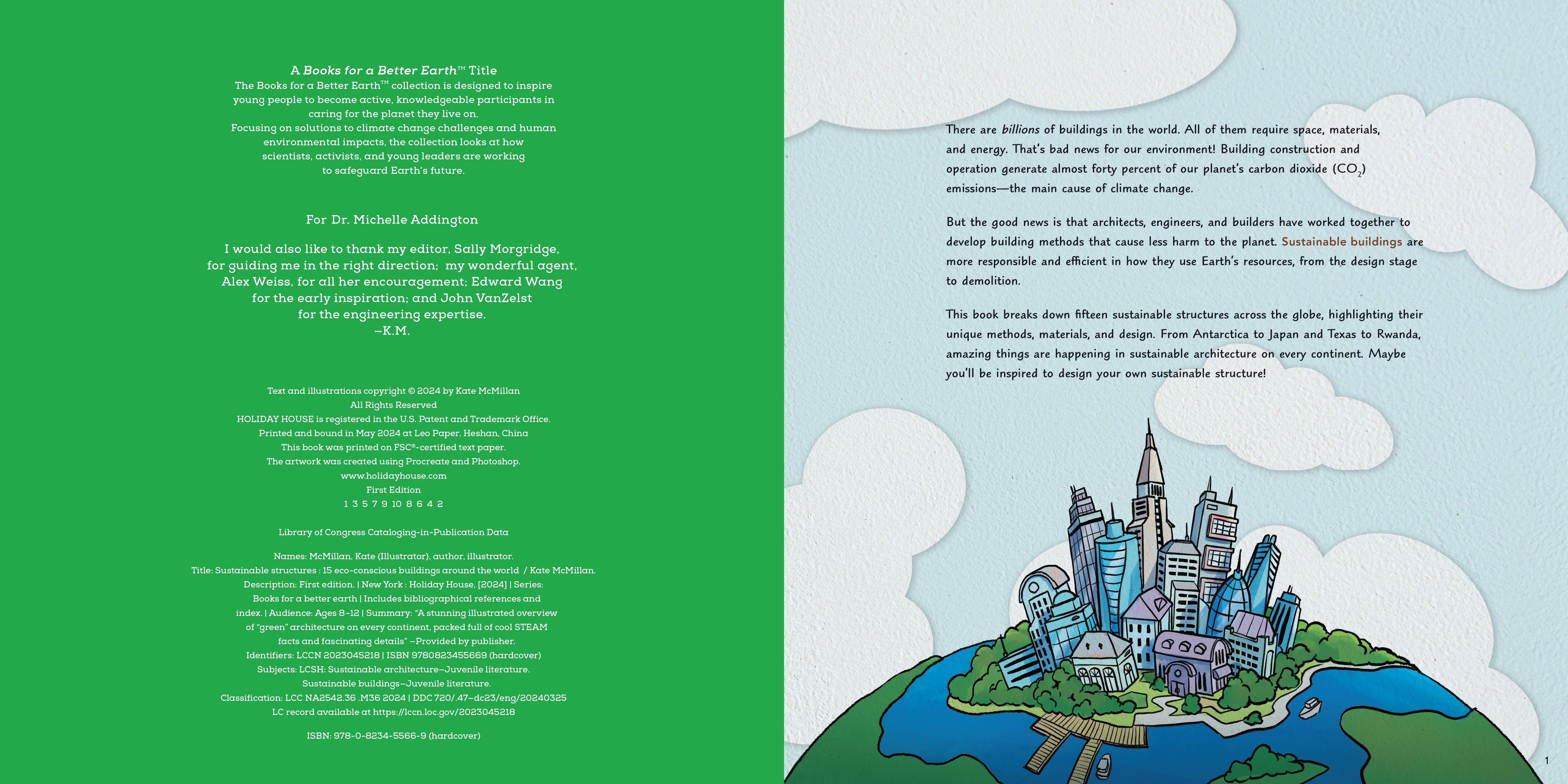
There are billions of buildings in the world. All of them require space, materials, and energy. That’s bad news for our environment! Building construction and operation generate almost forty percent of our planet’s carbon dioxide (CO2) emissions—the main cause of climate change.

But the good news is that architects, engineers, and builders have worked together to develop building methods that cause less harm to the planet. Sustainable buildings are more responsible and efficient in how they use Earth’s resources, from the design stage to demolition.

This book breaks down fifteen sustainable structures across the globe, highlighting their unique methods, materials, and design. From Antarctica to Japan and Texas to Rwanda, amazing things are happening in sustainable architecture on every continent. Maybe you’ll be inspired to design your own sustainable structure!

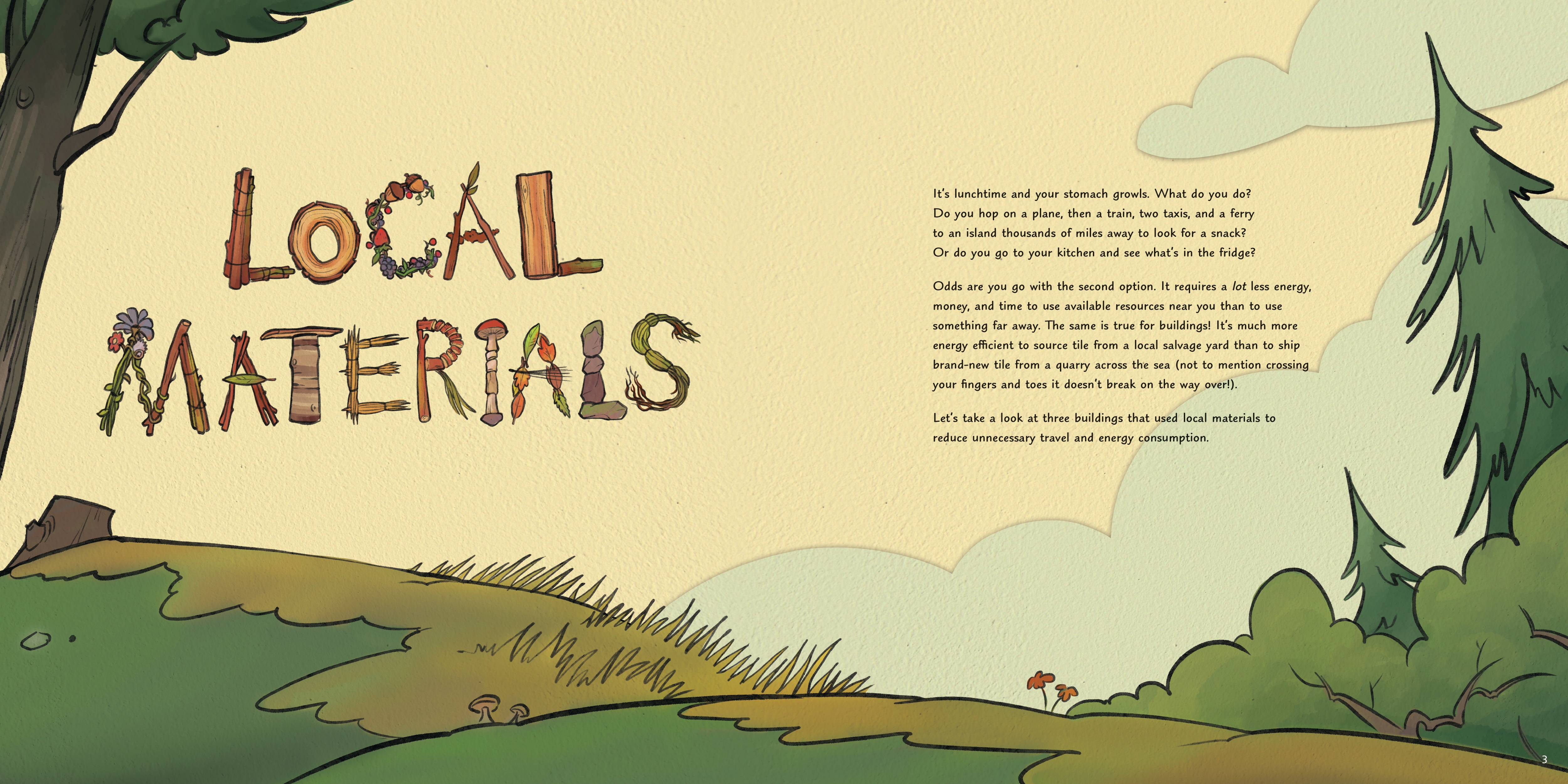
It’s lunchtime and your stomach growls. What do you do? Do you hop on a plane, then a train, two taxis, and a ferry to an island thousands of miles away to look for a snack? Or do you go to your kitchen and see what’s in the fridge?

Odds are you go with the second option. It requires a lot less energy, money, and time to use available resources near you than to use something far away. The same is true for buildings! It’s much more energy efficient to source tile from a local salvage yard than to ship brand-new tile from a quarry across the sea (not to mention crossing your fingers and toes it doesn’t break on the way over!).

Let’s take a look at three buildings that used local materials to reduce unnecessary travel and energy consumption.
additional book photo
"This attractive offering will enhance public and school library STEAM collections."Booklist

About

A stunning illustrated overview of "green" architecture on every continent, packed full of cool STEAM facts and fascinating details.

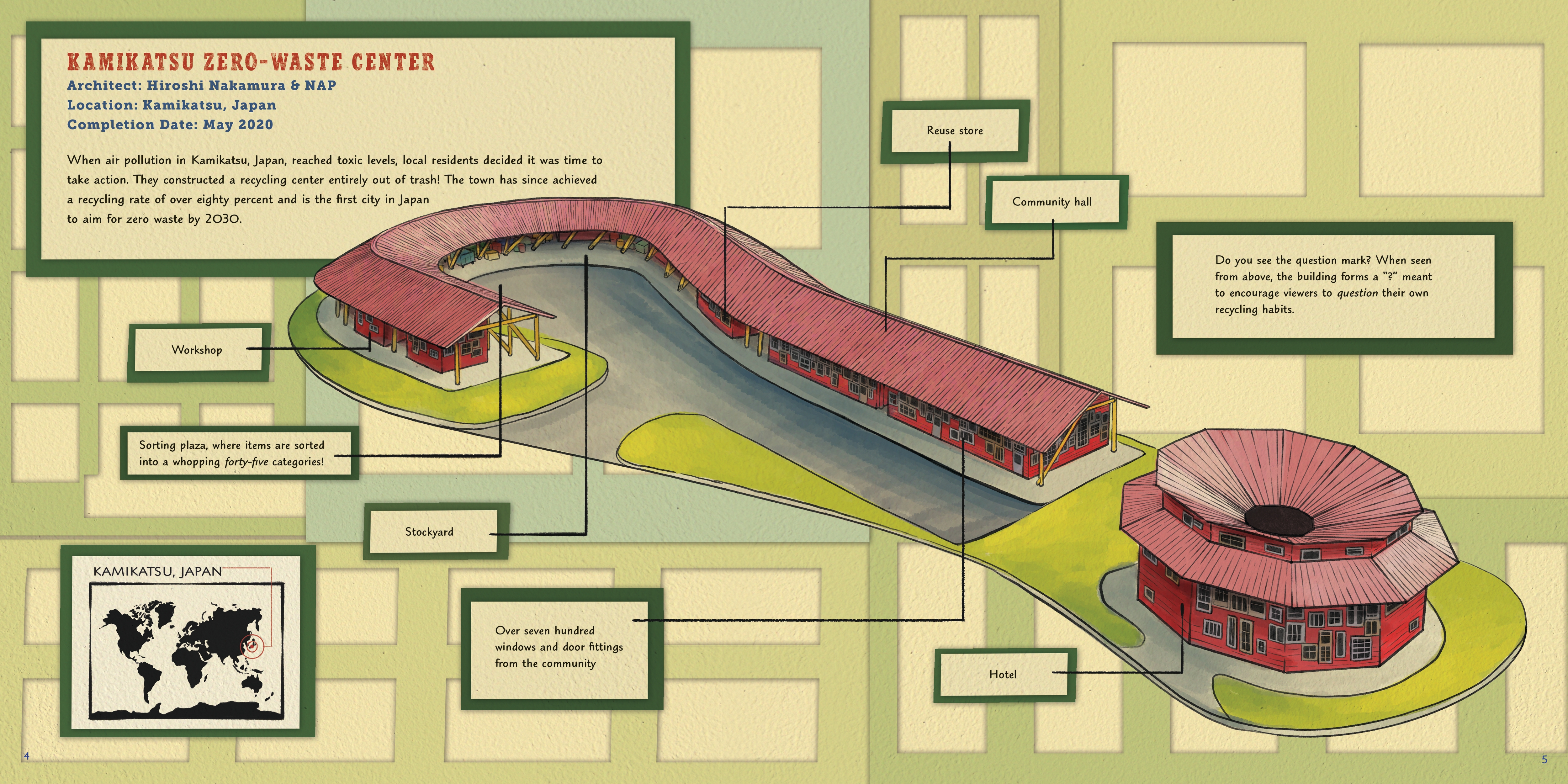
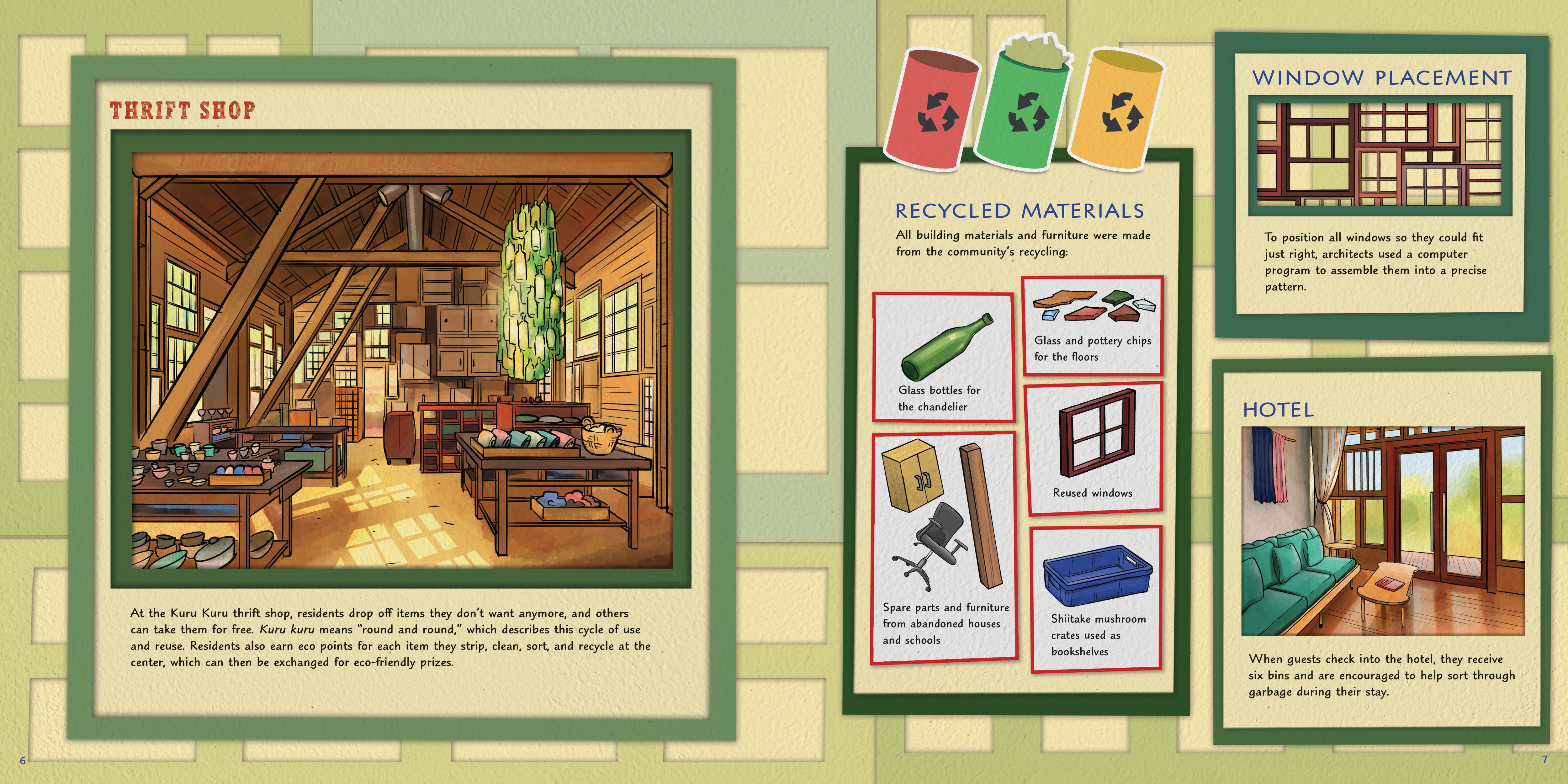
From a waste collection site built entirely from recycled materials, to a school designed to float during flood season in Bangladesh, this dazzling book highlights innovative and sustainably built structures around the world.

Did you know that "woodscrapers," or skyscrapers made of wood, can reduce construction waste? How about that termite mounds have served as inspiration for temperature control systems? And believe it or not. . . there's a research station built on skis in Antarctica.

Pairing a kid friendly, conversational approach with spectacularly detailed art, Kate McMillan dissects the design of 15 eco-friendly buildings worldwide. The extraordinary structures fall into five categories, each emphasizing a key element of sustainable design: 1) local materials, 2) adaptability, 3) sustainable construction, 4) clean energy, and 5) optimized space.

Readers of all ages will love poring over the precise, colorful illustrations and informative close ups featured on eye catching double-page spreads. Perfect for budding architects and engineers, this book is a work of art!

Books for a Better Earth™ are designed to inspire children to become active, knowledgeable participants in caring for the planet they live on.

Creators

Kate McMillan studied architecture at Yale and Norwegian boat building through the Mortimer Hayes-Brandeis Fellowship. Eventually, she made her way out to Los Angeles where she is a visual development artist for DreamWorks TV. In her free time, she enjoys building furniture and strange instruments, writing, and drawing wobbly buildings that look like they might fall down. This is her debut book for children. Find her on Instagram @katemcmillanart

Excerpt

There are billions of buildings in the world. All of them require space, materials, and energy. That’s bad news for our environment! Building construction and operation generate almost forty percent of our planet’s carbon dioxide (CO2) emissions—the main cause of climate change.

But the good news is that architects, engineers, and builders have worked together to develop building methods that cause less harm to the planet. Sustainable buildings are more responsible and efficient in how they use Earth’s resources, from the design stage to demolition.

This book breaks down fifteen sustainable structures across the globe, highlighting their unique methods, materials, and design. From Antarctica to Japan and Texas to Rwanda, amazing things are happening in sustainable architecture on every continent. Maybe you’ll be inspired to design your own sustainable structure!

It’s lunchtime and your stomach growls. What do you do? Do you hop on a plane, then a train, two taxis, and a ferry to an island thousands of miles away to look for a snack? Or do you go to your kitchen and see what’s in the fridge?

Odds are you go with the second option. It requires a lot less energy, money, and time to use available resources near you than to use something far away. The same is true for buildings! It’s much more energy efficient to source tile from a local salvage yard than to ship brand-new tile from a quarry across the sea (not to mention crossing your fingers and toes it doesn’t break on the way over!).

Let’s take a look at three buildings that used local materials to reduce unnecessary travel and energy consumption.

Photos

additional book photo

Praise

"This attractive offering will enhance public and school library STEAM collections."Booklist
Penguin Random House Comics Retail