Close Modal

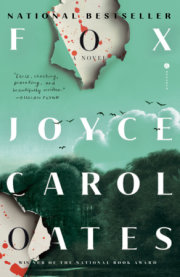
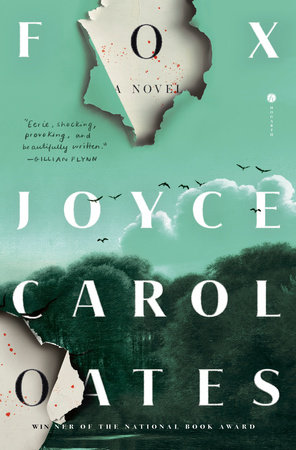
Fox

A Novel

Look inside
Hardcover
6.36"W x 9.53"H x 1.36"D   | 33 oz | 12 per carton
On sale Jun 17, 2025 | 672 Pages | 9780593978085

See Additional Formats
NATIONAL BESTSELLER • An “enthralling” (Los Angeles Times) and “remarkably engrossing” (The New York Times Book Review, Editors’ Choice) novel of literary and psychological suspense about the dark secrets that surface after the shocking disappearance of a charismatic, mercurial teacher at an elite boarding school—by legendary author Joyce Carol Oates

“Eerie, shocking, provoking, and beautifully written.”—Gillian Flynn
“I found it mesmerizing front to back.”—Michael Connelly
“I can’t remember the last time I read something so (darkly, disconcertingly) addictive.”—Rebecca Makkai
“An extraordinary novel . . . unlike any other mystery I’ve read.”—Joseph Finder
“Tom Ripley, eat your heart out.”—NPR

“A classic psychological suspense.”—People
“A dark, daring plunge into literary suspense . . . Oates dissects the predator-prey dynamic with merciless precision.”—The Seattle Times

A HARPER’S BAZAAR AND PUBLISHERS WEEKLY BEST BOOK OF THE YEAR

Who is Francis Fox? A charming English teacher new to the idyllic Langhorne Academy, Fox beguiles many of his students, their parents, and his colleagues at the elite boarding school, while leaving others wondering where he came from and why his biography is so enigmatic. When two brothers discover Fox’s car half-submerged in a pond in a local nature preserve and parts of an unidentified body strewn about the nearby woods, the entire community, including Detective Horace Zwender and his deputy, begins to ask disturbing questions about Francis Fox and who he might really be.

A hypnotic, galloping tale of crime and complicity, revenge and restitution, victim vs. predator, Joyce Carol Oates’s Fox illuminates the darkest corners of the human psyche while asking profound moral questions about justice and the response evil demands. A character as magnetically diabolical as Patricia Highsmith’s Tom Ripley and Vladimir Nabokov’s Humbert Humbert, Francis Fox enchants and manipulates nearly everyone around him, until at last he meets someone he can’t outfox. Written in Oates’s trademark intimate, sweeping style, and interweaving multiple points of view, Fox is a triumph of craftsmanship and artistry, a novel as profound as it is propulsive, as moving as it is full of mystery.
© Emily Soto / Trunk Archive
Joyce Carol Oates is a recipient of a National Humanities Medal awarded by President Barack Obama, the National Book Critics Circle’s Ivan Sandrof Life Achievement Award, the National Book Award in Fiction, the Jerusalem Prize, the Prix Femina, the Cino Del Duca World Prize, and is a five-time finalist for the Pulitzer Prize. She has written some of the most enduring fiction of our time, including the bestsellers Blonde and We Were the Mulvaneys. She is the Roger S. Berlind ’52 Distinguished Professor of the Humanities Emerita at Princeton University and a member of the American Academy of Arts and Letters. In 2024 she won the Raymond Chandler Lifetime Achievement Award given to "a master of the thriller and noir literary genre." View titles by Joyce Carol Oates
Available for sale exclusive:
•     Canada
•     Guam
•     Minor Outl.Ins.
•     North Mariana
•     Philippines
•     Puerto Rico
•     Samoa,American
•     US Virgin Is.
•     USA

Available for sale non-exclusive:
•     Afghanistan
•     Aland Islands
•     Albania
•     Algeria
•     Andorra
•     Angola
•     Anguilla
•     Antarctica
•     Argentina
•     Armenia
•     Aruba
•     Austria
•     Azerbaijan
•     Bahrain
•     Belarus
•     Belgium
•     Benin
•     Bhutan
•     Bolivia
•     Bonaire, Saba
•     Bosnia Herzeg.
•     Bouvet Island
•     Brazil
•     Bulgaria
•     Burkina Faso
•     Burundi
•     Cambodia
•     Cameroon
•     Cape Verde
•     Centr.Afr.Rep.
•     Chad
•     Chile
•     China
•     Colombia
•     Comoro Is.
•     Congo
•     Cook Islands
•     Costa Rica
•     Croatia
•     Cuba
•     Curacao
•     Czech Republic
•     Dem. Rep. Congo
•     Denmark
•     Djibouti
•     Dominican Rep.
•     Ecuador
•     Egypt
•     El Salvador
•     Equatorial Gui.
•     Eritrea
•     Estonia
•     Ethiopia
•     Faroe Islands
•     Finland
•     France
•     Fren.Polynesia
•     French Guinea
•     Gabon
•     Georgia
•     Germany
•     Greece
•     Greenland
•     Guadeloupe
•     Guatemala
•     Guinea Republic
•     Guinea-Bissau
•     Haiti
•     Heard/McDon.Isl
•     Honduras
•     Hong Kong
•     Hungary
•     Iceland
•     Indonesia
•     Iran
•     Iraq
•     Israel
•     Italy
•     Ivory Coast
•     Japan
•     Jordan
•     Kazakhstan
•     Kuwait
•     Kyrgyzstan
•     Laos
•     Latvia
•     Lebanon
•     Liberia
•     Libya
•     Liechtenstein
•     Lithuania
•     Luxembourg
•     Macau
•     Macedonia
•     Madagascar
•     Maldives
•     Mali
•     Marshall island
•     Martinique
•     Mauritania
•     Mayotte
•     Mexico
•     Micronesia
•     Moldavia
•     Monaco
•     Mongolia
•     Montenegro
•     Morocco
•     Myanmar
•     Nepal
•     Netherlands
•     New Caledonia
•     Nicaragua
•     Niger
•     Niue
•     Norfolk Island
•     North Korea
•     Norway
•     Oman
•     Palau
•     Palestinian Ter
•     Panama
•     Paraguay
•     Peru
•     Poland
•     Portugal
•     Qatar
•     Reunion Island
•     Romania
•     Russian Fed.
•     Rwanda
•     Saint Martin
•     San Marino
•     SaoTome Princip
•     Saudi Arabia
•     Senegal
•     Serbia
•     Singapore
•     Sint Maarten
•     Slovakia
•     Slovenia
•     South Korea
•     South Sudan
•     Spain
•     St Barthelemy
•     St.Pier,Miquel.
•     Sth Terr. Franc
•     Sudan
•     Suriname
•     Svalbard
•     Sweden
•     Switzerland
•     Syria
•     Tadschikistan
•     Taiwan
•     Thailand
•     Timor-Leste
•     Togo
•     Tokelau Islands
•     Tunisia
•     Turkey
•     Turkmenistan
•     Ukraine
•     Unit.Arab Emir.
•     Uruguay
•     Uzbekistan
•     Vatican City
•     Venezuela
•     Vietnam
•     Wallis,Futuna
•     West Saharan
•     Western Samoa
•     Yemen

Not available for sale:
•     Antigua/Barbuda
•     Australia
•     Bahamas
•     Bangladesh
•     Barbados
•     Belize
•     Bermuda
•     Botswana
•     Brit.Ind.Oc.Ter
•     Brit.Virgin Is.
•     Brunei
•     Cayman Islands
•     Christmas Islnd
•     Cocos Islands
•     Cyprus
•     Dominica
•     Falkland Islnds
•     Fiji
•     Gambia
•     Ghana
•     Gibraltar
•     Grenada
•     Guernsey
•     Guyana
•     India
•     Ireland
•     Isle of Man
•     Jamaica
•     Jersey
•     Kenya
•     Kiribati
•     Lesotho
•     Malawi
•     Malaysia
•     Malta
•     Mauritius
•     Montserrat
•     Mozambique
•     Namibia
•     Nauru
•     New Zealand
•     Nigeria
•     Pakistan
•     PapuaNewGuinea
•     Pitcairn Islnds
•     S. Sandwich Ins
•     Seychelles
•     Sierra Leone
•     Solomon Islands
•     Somalia
•     South Africa
•     Sri Lanka
•     St. Helena
•     St. Lucia
•     St. Vincent
•     St.Chr.,Nevis
•     Swaziland
•     Tanzania
•     Tonga
•     Trinidad,Tobago
•     Turks&Caicos Is
•     Tuvalu
•     Uganda
•     United Kingdom
•     Vanuatu
•     Zambia
•     Zimbabwe

Trophy

Wieland Pond

29 October 2013

It will be no ordinary morning. Heavy rain has fallen through the night with a din of crazed castanets. The sky at dawn is clotted with dark tumors of cloud through which a sudden piercing light shines like a scalpel.

In the mud-softened service road leading to the Wieland Township landfill, shimmering puddles in long narrow snakelike ruts. A smell of brackish swamp water from the vast marshland beyond and in the near distance black-winged turkey vultures like flattened silhouettes high in the air silently circling, swooping with a look of grisly frolic.

At 7:36 a.m. in the adjacent nature preserve there comes jolting along the service road a steel-colored vehicle with four-wheel drive to park at a trailhead fifty feet from the murky still-standing water of many acres—choked at shore with rushes, cattails, barely submerged trash, a rumor of leeches in its black-muck bottom—known locally as Wieland Pond in rural Atlantic County, New Jersey.

The driver of the steel-colored vehicle cuts her engine, headlights. Glances about the clearing to see with evident satisfaction that she is alone. No reeking sanitation trucks lumbering out to the nearby land fill at this hour, deepening ruts in the roadway. No fellow dog-walkers, hikers. No one with whom P. Cady will be obliged to exchange inane greetings.

For it is the purpose of driving out to the Wieland wetlands at dawn, on the average of five times a week, to exercise her high-energy rescue animal of mixed ancestry (terrier, hound) from the Wieland Township Animal Shelter, and to exercise herself, alone.

“Here we go! Good girl.”

Opening the passenger door of the steel-colored vehicle out of which leaps as if catapulted by force the small wiry dun-colored dog in a paroxysm of excitement, barking, yipping, whining, pleading, tail slavishly wagging in seeming deference to the tall bossy individual gripping the leash, her human, gripping the leash on her neck, speaking sternly yet not without affection as if anything uttered in fatuous human speech could have the slightest interest for the eager little dog at this crucial moment.

“This morning, you will behave.”

Large limpid brown eyes brimming with facile promise—Yes, I will behave.

“You will come back when I call you. You will not run wild.”

Oversized hound-paws scuffing frantically in the wet leaves, shameless whining, whimper—Yes yes I will do anything you ask.

“And not in the water! D’you hear?—not in the damned water.”

Sniffing sodden leaves at her human’s booted feet. Stubby tail furiously wagging, bony rear shimmying, how then could her (naïve, trusting) human not believe such slavish deference, doggie-devotion—Yes of course, I will obey. Just let me go!

“I’m warning you—do not run wild.”

At last released from the leash, a panting yelp of gratitude before turning to bound joyously away, stopping within a few yards to sniff at underbrush, squatting to urinate, but fleetingly, for there is no time to tarry, these early-morning hikes under the command of her human are rarely more than forty minutes to an hour; restraining herself to remain on the trail at least initially, trotting in the direction in which her human habitually hikes on the 2.5-mile loop around the pond that will return them to the vehicle parked at the trailhead; but soon then, within fifty or so feet, even as her human calls after her in a voice of chiding concern the eager little dog has trotted off-trail to investigate something small scuttling in the underbrush—(rodent? black-feathered bird?)—splashing through puddles, very muddy puddles, paws sinking into muck halfway up her forelegs, still she takes time to pause every few yards to sniff, squat, urinate in quick agitated dribbles against underbrush, mounds of leaves, trunks of stunted trees in a haze of great happiness seeming scarcely to hear her human now shouting after her in a voice of outrage and indignation Come here! Come back! Princess! Now! as inexorably as gravity she is drawn into the marshy woods off-trail where the most delicious odors waft to her sensitive nostrils.

On this morning in late October there are a half-dozen red-winged blackbirds taunting her from six feet above, razzing her, a trespasser in their territory, if they were but large enough they might attack her, stab their sharp beaks into her, failing to find at all “beautiful”— “adorable”—her somewhat coarse brindle-brown short-haired coat, greedily they would peck out those caramel-colored moist eyes her human finds so “intelligent,” captivating.

Bravely and defiantly she trots on, she is a trespasser, a hunter. Literally, a born hunter! Ignores the noisy bullies for these are not local predator birds (hawk, owl) large enough to carry away a small dog in their talons, and devour her.

Soon then the pleading voice somewhere behind the little dog has faded, becomes inaudible amid the cries of swamp birds and the sound of her own panting, the tumult of smells assailing her nostrils, overcharging her thrumming brain, her human’s cry irrelevant as artificial light on a blind-blazing-sun day.


What is that ahead?—a sudden movement, a splash and ripples in the still dank water, mallard? turtle? water snake?—as she approaches on her disproportionately large paws, with a clumsy sort of stealth, crouching, preparing for the pounce, the kill, whatever it is, or was, a living thing like herself, but cannier than she, more cunning, desperate to survive, seems to have disappeared.

Cautiously exploring the dank interior of the marshland amid fallen and calcified trees, weak eyes lowered in deference to her exquisitely tuned nostrils, terrier-ears pricked upright, all of her senses alert, thrilled, her small brain near to swooning with overstimulation after seven hours of confinement in the dull-darkened house of her human; it’s as if whatever force fierce as a vacuum’s suction catapulted her out of the steel-colored vehicle continues to draw her forward venturing—recklessly, naughtily—ever farther from her human, or rather the memory of her human, the tall stern-voiced individual whose smallest, most petty commands she is obliged to obey, and surely will obey again, except just not yet, not now, not while trotting eagerly in this dazzling place where the most thrilling-reeking smells rush at her, some familiar, some unfamiliar, it is the unfamiliar that draws her, the tantalizing-new, new odors of carrion, irresistible as food to a ravenous beast.

Many times she has dismayed her overfastidious human by reveling in carrion, rotted flesh, stained bones the most luxuriant sensation, leaping into what she has discovered in the woods, what has seemed to be lying in wait for her to discover, rolling in it, excitedly barking, yipping, growling deep in her throat in ecstasy, the most profound kinship with whatever it is that remains of a living creature like herself, yet not-herself, deer carcass, fox, raccoon, another creature like herself: dog, most wondrous: dog: a carrion-cloak in which to wrap herself, myriad drunken smells swarming into her brain, overcharged as an electrical socket. Many times she has incurred the disgust of her human, unmistakably the human words signal the most extreme disgust, no disgust other than the human, as there are no words other than the human. At such times, discovered, reviled, chided, despaired-over, and needing to be thoroughly bathed (by her human, or by the groomer with the deft kind assured hands), she has been quick to express remorse, or has seemed to express remorse, for upsetting her human, for this is expected of her, this is her responsibility to the (needy) human, her pledge. In her doggy soul, she under stands. She concurs. She is not a rebel. She adores her human, she knows that her human has been her savior since the blurred chaos of puppyhood, tossed like trash onto the shoulder of the old state highway, reddened infected eyes swollen shut, skeletal ribs, rat-skinny tail, wheezing breath and puppy-intestines swirling with parasites, discovered and brought to the bright-lit antiseptic shelter, rescued, resuscitated, with oversized puppy-ears, puppy-paws, yearning moistbrown eyes adopted out of a cage at six months, of course she understands that her human is her salvation, but her human, though sharp-eyed and often capable of reading her mind is not here to observe, and so for the time being she has forgotten her human, when a human is not here to observe it is only natural to forget the human, exploring now a patch of sinister black muck that sucks at her paws, her swift-sniffing nose has led her gaily off-trail, far off-trail, it is a thrill to forget all that her human has taught her, or tried to teach her, for the marshland is teeming with yet more life, always more life and though it is some distance away she can smell the sodden smoldering trash of the landfill, a place of slovenly treasures she has explored in the past, slipping under the rusted and partly collapsed ten-foot chain-link fence, on all sides in the landfill there are rife garbagey smells that pique a mild interest, but there again is the fresh carrionsmell, unmistakable, irresistible, and not so far from her, upwind.
“Utterly mesmeric.”The Guardian

“Remarkably engrossing . . . impressive and unsettling.”—Owen King, The New York Times Book Review (Editors’ Choice)

“A classic psychological suspense . . . feels ripped from the headlines.”—People

“At the heart of her latest novel stands Francis Fox, a mysterious charmer who is nearly as protean as Oates, though—no offense to either novelist or character—profoundly more menacing. Tom Ripley, eat your heart out.”NPR

“This sprawling yet immersive novel is rich in suspense, diabolical secrets and psychological insight.”—The Economist

“A dark, daring plunge into literary suspense, and it’s absolutely chilling . . . Uneasy, unflinching and unforgettable, this is Oates at her most disturbing and masterful.”The Seattle Times

“Charming but mysterious English teacher . . . dead body . . . dogged detective . . . deep questions about what it means to be human . . . and Oates. Yes please.”—Esquire

“It’s no surprise [Oates has] written a big summer book. . . . Fox is poised to be the big escape a lot of us are looking for right about now.”—The Boston Globe

“Enthralling . . . chilling . . . Oates wants us to turn pages and squirm.”—Los Angeles Times

“A chilling portrait of manipulation and menace within the cloistered world of an elite boarding school.”Financial Times

“Eerie, shocking, provoking, and beautifully written, Fox is yet further proof that Oates is one of the greatest writers among us today.”—#1 New York Times bestselling author Gillian Flynn

“As beautifully written and brilliantly constructed as this story is, as wonderful as the mystery is, Fox’s power is in the many depths of character Joyce Carol Oates explores and how she captures the nuances of the choices people make.”—#1 New York Times bestselling author Michael Connelly

“I can’t remember the last time I read something so (darkly, disconcertingly) addictive that yet bears so much realism and nuance and depth. Oates is a genius in the truest sense of the word—fearing nothing, including radical reinvention—and Fox is, to my mind, her most compelling book in her remarkable career.”—Rebecca Makkai, New York Times bestselling author of I Have Some Questions For You

“[A] psychological thriller about a private school teacher whose disturbing past is uncovered when his car is found submerged in the swampy wetlands . . . a probing analysis of the mind of a predatory person.”—Hartford Courant

“[Fox is] unlike any other mystery I’ve read. It’s so fully imagined, in the way that only Oates can do, powerful and sinister and beautifully written in her mesmerizing prose. Nobody else writes like the great Joyce Carol Oates. It’s remarkable.”New York Times bestselling author Joseph Finder

“Oates layers this extraordinarily complex tale with many surprises that keep the pages turning to the point where the length of the novel seems effortless on her part and impossible to put down . . . [Oates is] a literary master.”Bookreporter

“A mystery at heart, but a gorgeously composed one that uses every modality to create ominous atmosphere . . . Iit is nearly impossible to look away.”Open Letters Review

“Joyce Carol Oates’s astounding Fox is at once a psychological thriller, a police procedural, and a fair-play puzzler.”—Shelf Awareness

“[A] captivating whodunit . . . Oates is at the top of her game.”Publishers Weekly, starred review

“[Oates] is at her best here: insightful, unrelenting, and devastating.”Library Journal, starred review

“Menacing, mesmerizing, and thoroughly provocative.”Booklist, starred review

“A tautly wound procedural, elegantly written . . . [a] moody, often shocking mystery.”Kirkus Reviews, starred review

“A master of her craft.”—AARP

About

NATIONAL BESTSELLER • An “enthralling” (Los Angeles Times) and “remarkably engrossing” (The New York Times Book Review, Editors’ Choice) novel of literary and psychological suspense about the dark secrets that surface after the shocking disappearance of a charismatic, mercurial teacher at an elite boarding school—by legendary author Joyce Carol Oates

“Eerie, shocking, provoking, and beautifully written.”—Gillian Flynn
“I found it mesmerizing front to back.”—Michael Connelly
“I can’t remember the last time I read something so (darkly, disconcertingly) addictive.”—Rebecca Makkai
“An extraordinary novel . . . unlike any other mystery I’ve read.”—Joseph Finder
“Tom Ripley, eat your heart out.”—NPR

“A classic psychological suspense.”—People
“A dark, daring plunge into literary suspense . . . Oates dissects the predator-prey dynamic with merciless precision.”—The Seattle Times

A HARPER’S BAZAAR AND PUBLISHERS WEEKLY BEST BOOK OF THE YEAR

Who is Francis Fox? A charming English teacher new to the idyllic Langhorne Academy, Fox beguiles many of his students, their parents, and his colleagues at the elite boarding school, while leaving others wondering where he came from and why his biography is so enigmatic. When two brothers discover Fox’s car half-submerged in a pond in a local nature preserve and parts of an unidentified body strewn about the nearby woods, the entire community, including Detective Horace Zwender and his deputy, begins to ask disturbing questions about Francis Fox and who he might really be.

A hypnotic, galloping tale of crime and complicity, revenge and restitution, victim vs. predator, Joyce Carol Oates’s Fox illuminates the darkest corners of the human psyche while asking profound moral questions about justice and the response evil demands. A character as magnetically diabolical as Patricia Highsmith’s Tom Ripley and Vladimir Nabokov’s Humbert Humbert, Francis Fox enchants and manipulates nearly everyone around him, until at last he meets someone he can’t outfox. Written in Oates’s trademark intimate, sweeping style, and interweaving multiple points of view, Fox is a triumph of craftsmanship and artistry, a novel as profound as it is propulsive, as moving as it is full of mystery.

Creators

© Emily Soto / Trunk Archive
Joyce Carol Oates is a recipient of a National Humanities Medal awarded by President Barack Obama, the National Book Critics Circle’s Ivan Sandrof Life Achievement Award, the National Book Award in Fiction, the Jerusalem Prize, the Prix Femina, the Cino Del Duca World Prize, and is a five-time finalist for the Pulitzer Prize. She has written some of the most enduring fiction of our time, including the bestsellers Blonde and We Were the Mulvaneys. She is the Roger S. Berlind ’52 Distinguished Professor of the Humanities Emerita at Princeton University and a member of the American Academy of Arts and Letters. In 2024 she won the Raymond Chandler Lifetime Achievement Award given to "a master of the thriller and noir literary genre." View titles by Joyce Carol Oates

Excerpt

Trophy

Wieland Pond

29 October 2013

It will be no ordinary morning. Heavy rain has fallen through the night with a din of crazed castanets. The sky at dawn is clotted with dark tumors of cloud through which a sudden piercing light shines like a scalpel.

In the mud-softened service road leading to the Wieland Township landfill, shimmering puddles in long narrow snakelike ruts. A smell of brackish swamp water from the vast marshland beyond and in the near distance black-winged turkey vultures like flattened silhouettes high in the air silently circling, swooping with a look of grisly frolic.

At 7:36 a.m. in the adjacent nature preserve there comes jolting along the service road a steel-colored vehicle with four-wheel drive to park at a trailhead fifty feet from the murky still-standing water of many acres—choked at shore with rushes, cattails, barely submerged trash, a rumor of leeches in its black-muck bottom—known locally as Wieland Pond in rural Atlantic County, New Jersey.

The driver of the steel-colored vehicle cuts her engine, headlights. Glances about the clearing to see with evident satisfaction that she is alone. No reeking sanitation trucks lumbering out to the nearby land fill at this hour, deepening ruts in the roadway. No fellow dog-walkers, hikers. No one with whom P. Cady will be obliged to exchange inane greetings.

For it is the purpose of driving out to the Wieland wetlands at dawn, on the average of five times a week, to exercise her high-energy rescue animal of mixed ancestry (terrier, hound) from the Wieland Township Animal Shelter, and to exercise herself, alone.

“Here we go! Good girl.”

Opening the passenger door of the steel-colored vehicle out of which leaps as if catapulted by force the small wiry dun-colored dog in a paroxysm of excitement, barking, yipping, whining, pleading, tail slavishly wagging in seeming deference to the tall bossy individual gripping the leash, her human, gripping the leash on her neck, speaking sternly yet not without affection as if anything uttered in fatuous human speech could have the slightest interest for the eager little dog at this crucial moment.

“This morning, you will behave.”

Large limpid brown eyes brimming with facile promise—Yes, I will behave.

“You will come back when I call you. You will not run wild.”

Oversized hound-paws scuffing frantically in the wet leaves, shameless whining, whimper—Yes yes I will do anything you ask.

“And not in the water! D’you hear?—not in the damned water.”

Sniffing sodden leaves at her human’s booted feet. Stubby tail furiously wagging, bony rear shimmying, how then could her (naïve, trusting) human not believe such slavish deference, doggie-devotion—Yes of course, I will obey. Just let me go!

“I’m warning you—do not run wild.”

At last released from the leash, a panting yelp of gratitude before turning to bound joyously away, stopping within a few yards to sniff at underbrush, squatting to urinate, but fleetingly, for there is no time to tarry, these early-morning hikes under the command of her human are rarely more than forty minutes to an hour; restraining herself to remain on the trail at least initially, trotting in the direction in which her human habitually hikes on the 2.5-mile loop around the pond that will return them to the vehicle parked at the trailhead; but soon then, within fifty or so feet, even as her human calls after her in a voice of chiding concern the eager little dog has trotted off-trail to investigate something small scuttling in the underbrush—(rodent? black-feathered bird?)—splashing through puddles, very muddy puddles, paws sinking into muck halfway up her forelegs, still she takes time to pause every few yards to sniff, squat, urinate in quick agitated dribbles against underbrush, mounds of leaves, trunks of stunted trees in a haze of great happiness seeming scarcely to hear her human now shouting after her in a voice of outrage and indignation Come here! Come back! Princess! Now! as inexorably as gravity she is drawn into the marshy woods off-trail where the most delicious odors waft to her sensitive nostrils.

On this morning in late October there are a half-dozen red-winged blackbirds taunting her from six feet above, razzing her, a trespasser in their territory, if they were but large enough they might attack her, stab their sharp beaks into her, failing to find at all “beautiful”— “adorable”—her somewhat coarse brindle-brown short-haired coat, greedily they would peck out those caramel-colored moist eyes her human finds so “intelligent,” captivating.

Bravely and defiantly she trots on, she is a trespasser, a hunter. Literally, a born hunter! Ignores the noisy bullies for these are not local predator birds (hawk, owl) large enough to carry away a small dog in their talons, and devour her.

Soon then the pleading voice somewhere behind the little dog has faded, becomes inaudible amid the cries of swamp birds and the sound of her own panting, the tumult of smells assailing her nostrils, overcharging her thrumming brain, her human’s cry irrelevant as artificial light on a blind-blazing-sun day.


What is that ahead?—a sudden movement, a splash and ripples in the still dank water, mallard? turtle? water snake?—as she approaches on her disproportionately large paws, with a clumsy sort of stealth, crouching, preparing for the pounce, the kill, whatever it is, or was, a living thing like herself, but cannier than she, more cunning, desperate to survive, seems to have disappeared.

Cautiously exploring the dank interior of the marshland amid fallen and calcified trees, weak eyes lowered in deference to her exquisitely tuned nostrils, terrier-ears pricked upright, all of her senses alert, thrilled, her small brain near to swooning with overstimulation after seven hours of confinement in the dull-darkened house of her human; it’s as if whatever force fierce as a vacuum’s suction catapulted her out of the steel-colored vehicle continues to draw her forward venturing—recklessly, naughtily—ever farther from her human, or rather the memory of her human, the tall stern-voiced individual whose smallest, most petty commands she is obliged to obey, and surely will obey again, except just not yet, not now, not while trotting eagerly in this dazzling place where the most thrilling-reeking smells rush at her, some familiar, some unfamiliar, it is the unfamiliar that draws her, the tantalizing-new, new odors of carrion, irresistible as food to a ravenous beast.

Many times she has dismayed her overfastidious human by reveling in carrion, rotted flesh, stained bones the most luxuriant sensation, leaping into what she has discovered in the woods, what has seemed to be lying in wait for her to discover, rolling in it, excitedly barking, yipping, growling deep in her throat in ecstasy, the most profound kinship with whatever it is that remains of a living creature like herself, yet not-herself, deer carcass, fox, raccoon, another creature like herself: dog, most wondrous: dog: a carrion-cloak in which to wrap herself, myriad drunken smells swarming into her brain, overcharged as an electrical socket. Many times she has incurred the disgust of her human, unmistakably the human words signal the most extreme disgust, no disgust other than the human, as there are no words other than the human. At such times, discovered, reviled, chided, despaired-over, and needing to be thoroughly bathed (by her human, or by the groomer with the deft kind assured hands), she has been quick to express remorse, or has seemed to express remorse, for upsetting her human, for this is expected of her, this is her responsibility to the (needy) human, her pledge. In her doggy soul, she under stands. She concurs. She is not a rebel. She adores her human, she knows that her human has been her savior since the blurred chaos of puppyhood, tossed like trash onto the shoulder of the old state highway, reddened infected eyes swollen shut, skeletal ribs, rat-skinny tail, wheezing breath and puppy-intestines swirling with parasites, discovered and brought to the bright-lit antiseptic shelter, rescued, resuscitated, with oversized puppy-ears, puppy-paws, yearning moistbrown eyes adopted out of a cage at six months, of course she understands that her human is her salvation, but her human, though sharp-eyed and often capable of reading her mind is not here to observe, and so for the time being she has forgotten her human, when a human is not here to observe it is only natural to forget the human, exploring now a patch of sinister black muck that sucks at her paws, her swift-sniffing nose has led her gaily off-trail, far off-trail, it is a thrill to forget all that her human has taught her, or tried to teach her, for the marshland is teeming with yet more life, always more life and though it is some distance away she can smell the sodden smoldering trash of the landfill, a place of slovenly treasures she has explored in the past, slipping under the rusted and partly collapsed ten-foot chain-link fence, on all sides in the landfill there are rife garbagey smells that pique a mild interest, but there again is the fresh carrionsmell, unmistakable, irresistible, and not so far from her, upwind.

Praise

“Utterly mesmeric.”The Guardian

“Remarkably engrossing . . . impressive and unsettling.”—Owen King, The New York Times Book Review (Editors’ Choice)

“A classic psychological suspense . . . feels ripped from the headlines.”—People

“At the heart of her latest novel stands Francis Fox, a mysterious charmer who is nearly as protean as Oates, though—no offense to either novelist or character—profoundly more menacing. Tom Ripley, eat your heart out.”NPR

“This sprawling yet immersive novel is rich in suspense, diabolical secrets and psychological insight.”—The Economist

“A dark, daring plunge into literary suspense, and it’s absolutely chilling . . . Uneasy, unflinching and unforgettable, this is Oates at her most disturbing and masterful.”The Seattle Times

“Charming but mysterious English teacher . . . dead body . . . dogged detective . . . deep questions about what it means to be human . . . and Oates. Yes please.”—Esquire

“It’s no surprise [Oates has] written a big summer book. . . . Fox is poised to be the big escape a lot of us are looking for right about now.”—The Boston Globe

“Enthralling . . . chilling . . . Oates wants us to turn pages and squirm.”—Los Angeles Times

“A chilling portrait of manipulation and menace within the cloistered world of an elite boarding school.”Financial Times

“Eerie, shocking, provoking, and beautifully written, Fox is yet further proof that Oates is one of the greatest writers among us today.”—#1 New York Times bestselling author Gillian Flynn

“As beautifully written and brilliantly constructed as this story is, as wonderful as the mystery is, Fox’s power is in the many depths of character Joyce Carol Oates explores and how she captures the nuances of the choices people make.”—#1 New York Times bestselling author Michael Connelly

“I can’t remember the last time I read something so (darkly, disconcertingly) addictive that yet bears so much realism and nuance and depth. Oates is a genius in the truest sense of the word—fearing nothing, including radical reinvention—and Fox is, to my mind, her most compelling book in her remarkable career.”—Rebecca Makkai, New York Times bestselling author of I Have Some Questions For You

“[A] psychological thriller about a private school teacher whose disturbing past is uncovered when his car is found submerged in the swampy wetlands . . . a probing analysis of the mind of a predatory person.”—Hartford Courant

“[Fox is] unlike any other mystery I’ve read. It’s so fully imagined, in the way that only Oates can do, powerful and sinister and beautifully written in her mesmerizing prose. Nobody else writes like the great Joyce Carol Oates. It’s remarkable.”New York Times bestselling author Joseph Finder

“Oates layers this extraordinarily complex tale with many surprises that keep the pages turning to the point where the length of the novel seems effortless on her part and impossible to put down . . . [Oates is] a literary master.”Bookreporter

“A mystery at heart, but a gorgeously composed one that uses every modality to create ominous atmosphere . . . Iit is nearly impossible to look away.”Open Letters Review

“Joyce Carol Oates’s astounding Fox is at once a psychological thriller, a police procedural, and a fair-play puzzler.”—Shelf Awareness

“[A] captivating whodunit . . . Oates is at the top of her game.”Publishers Weekly, starred review

“[Oates] is at her best here: insightful, unrelenting, and devastating.”Library Journal, starred review

“Menacing, mesmerizing, and thoroughly provocative.”Booklist, starred review

“A tautly wound procedural, elegantly written . . . [a] moody, often shocking mystery.”Kirkus Reviews, starred review

“A master of her craft.”—AARP
Penguin Random House Comics Retail