Close Modal

The Garden

Look inside
Paperback
5.19"W x 7.9"H x 0.71"D   | 8 oz | 24 per carton
On sale Feb 03, 2026 | 320 Pages | 9780593717745

See Additional Formats
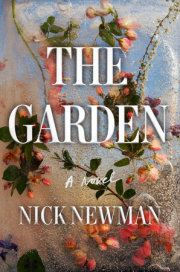
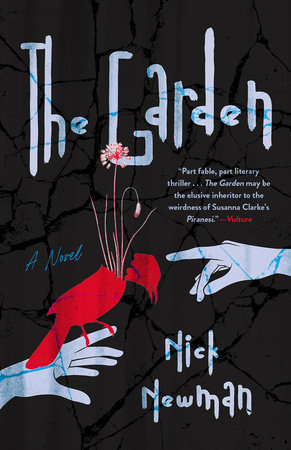
A darkly beautiful, eerie, hypnotic novel about two elderly sisters living alone at the edge of the world.

In a place and time unknown, two elderly sisters live in a walled garden, secluded from the outside world. Evelyn and Lily have only ever known each other. What was before the garden, they have forgotten; what lies beyond it, they do not know. Each day is spent in languid service to their home: tending the bees, planting the crops, and dutifully following the instructions of the almanac written by their mother.

When a nameless boy is found hiding in the boarded house at the center of their isolated grounds, their once-solitary lives are irrevocably disrupted. Who is he? Where did he come from? And most importantly, what does he want?

As suspicions gather and allegiances falter, Evelyn and Lily are forced to confront the dark truths about themselves, the garden, and the world as they’ve known it.
© Robin Christian
Nick Newman is the adult pen-name of Nicholas Bowling, author of several children’s novels including Witchborn and In the Shadow of Heroes, which was shortlisted for the Costa Children's Book Award. He has previously worked as a teacher, musician, and a stand-up comedian and is currently working as a bookseller at Daunt Books in London. View titles by Nick Newman
Available for sale exclusive:
•     Guam
•     Minor Outl.Ins.
•     North Mariana
•     Philippines
•     Puerto Rico
•     Samoa,American
•     US Virgin Is.
•     USA

Available for sale non-exclusive:
•     Afghanistan
•     Aland Islands
•     Albania
•     Algeria
•     Angola
•     Anguilla
•     Antarctica
•     Argentina
•     Armenia
•     Aruba
•     Azerbaijan
•     Bahrain
•     Benin
•     Bhutan
•     Bolivia
•     Bonaire, Saba
•     Bouvet Island
•     Brazil
•     Burkina Faso
•     Burundi
•     Cambodia
•     Cape Verde
•     Centr.Afr.Rep.
•     Chad
•     Chile
•     China
•     Colombia
•     Comoro Is.
•     Congo
•     Cook Islands
•     Costa Rica
•     Cuba
•     Curacao
•     Dem. Rep. Congo
•     Djibouti
•     Dominican Rep.
•     Ecuador
•     El Salvador
•     Equatorial Gui.
•     Eritrea
•     Ethiopia
•     Gabon
•     Guadeloupe
•     Guatemala
•     Guinea Republic
•     Guinea-Bissau
•     Haiti
•     Heard/McDon.Isl
•     Honduras
•     Hong Kong
•     Indonesia
•     Israel
•     Ivory Coast
•     Japan
•     Kazakhstan
•     Kyrgyzstan
•     Laos
•     Lebanon
•     Liberia
•     Libya
•     Macau
•     Madagascar
•     Maldives
•     Mali
•     Marshall island
•     Martinique
•     Mauritania
•     Mayotte
•     Mexico
•     Micronesia
•     Mongolia
•     Montenegro
•     Morocco
•     Myanmar
•     Nepal
•     New Caledonia
•     Nicaragua
•     Niger
•     Niue
•     Norfolk Island
•     North Korea
•     Oman
•     Palau
•     Palestinian Ter
•     Panama
•     Paraguay
•     Peru
•     Qatar
•     Reunion Island
•     Russian Fed.
•     Saint Martin
•     SaoTome Princip
•     Saudi Arabia
•     Senegal
•     Serbia
•     Sint Maarten
•     South Korea
•     South Sudan
•     St Barthelemy
•     St.Pier,Miquel.
•     Sth Terr. Franc
•     Suriname
•     Svalbard
•     Syria
•     Tadschikistan
•     Taiwan
•     Thailand
•     Timor-Leste
•     Togo
•     Tokelau Islands
•     Tunisia
•     Turkmenistan
•     Ukraine
•     Unit.Arab Emir.
•     Uruguay
•     Uzbekistan
•     Venezuela
•     Vietnam
•     Wallis,Futuna
•     West Saharan
•     Yemen

Not available for sale:
•     Andorra
•     Antigua/Barbuda
•     Australia
•     Austria
•     Bahamas
•     Bangladesh
•     Barbados
•     Belarus
•     Belgium
•     Belize
•     Bermuda
•     Bosnia Herzeg.
•     Botswana
•     Brit.Ind.Oc.Ter
•     Brit.Virgin Is.
•     Brunei
•     Bulgaria
•     Cameroon
•     Canada
•     Cayman Islands
•     Christmas Islnd
•     Cocos Islands
•     Croatia
•     Cyprus
•     Czech Republic
•     Denmark
•     Dominica
•     Egypt
•     Estonia
•     Falkland Islnds
•     Faroe Islands
•     Fiji
•     Finland
•     France
•     Fren.Polynesia
•     French Guinea
•     Gambia
•     Georgia
•     Germany
•     Ghana
•     Gibraltar
•     Greece
•     Greenland
•     Grenada
•     Guernsey
•     Guyana
•     Hungary
•     Iceland
•     India
•     Iran
•     Iraq
•     Ireland
•     Isle of Man
•     Italy
•     Jamaica
•     Jersey
•     Jordan
•     Kenya
•     Kiribati
•     Kuwait
•     Latvia
•     Lesotho
•     Liechtenstein
•     Lithuania
•     Luxembourg
•     Macedonia
•     Malawi
•     Malaysia
•     Malta
•     Mauritius
•     Moldavia
•     Monaco
•     Montserrat
•     Mozambique
•     Namibia
•     Nauru
•     Netherlands
•     New Zealand
•     Nigeria
•     Norway
•     Pakistan
•     PapuaNewGuinea
•     Pitcairn Islnds
•     Poland
•     Portugal
•     Romania
•     Rwanda
•     S. Sandwich Ins
•     San Marino
•     Seychelles
•     Sierra Leone
•     Singapore
•     Slovakia
•     Slovenia
•     Solomon Islands
•     Somalia
•     South Africa
•     Spain
•     Sri Lanka
•     St. Helena
•     St. Lucia
•     St. Vincent
•     St.Chr.,Nevis
•     Sudan
•     Swaziland
•     Sweden
•     Switzerland
•     Tanzania
•     Tonga
•     Trinidad,Tobago
•     Turkey
•     Turks&Caicos Is
•     Tuvalu
•     Uganda
•     United Kingdom
•     Vanuatu
•     Vatican City
•     Western Samoa
•     Zambia
•     Zimbabwe

1

Somebody had moved the beehive. Evelyn couldn't understand how it had happened. It was at a slight angle to the others, like it had been shoved, and beneath each of its wooden feet there was a shallow red trench in the earth. An animal? A storm? It couldn't have been. They wouldn't have slept through a storm, and if they had they would now be under a foot of dust, along with the rest of the garden.

Evelyn pushed the hive back into place, clung to it for a moment, caught her breath. She felt the hum of the bees against her ribs. Perhaps they could tell her what had happened? She pressed her ear to the wood, warm and wind-smoothed, and listened. They droned on, not caring whether she was there.

She checked the combs for disease and mites, found the queens and counted the eggs. She tasted a little of the honey on her fingertip. The bees came and went like snatches of conversation. She brushed them from her ears, her hair, the backs of her hands. One of them stung her knuckle and she just nodded.

"I know, I know," she said. "Keep your hair on."

She replaced the roof of the last hive and went up the garden to the house, following the path past the willows, magnolias, rhododendrons. The hydrangeas had started to bloom, their flowers round and heavy like fruit. In the shadow of the house she went to her sister's little vegetable patch and picked rhubarb and blueberries and put them in the pocket of her apron. When she passed the pond, she got to her knees and dipped her swollen finger in the water.

She trailed her hand back and forth among the weeds, noticed, with surprise, the tightness in her brow.

Had she moved the hive and forgotten? She knew her memory was not what it had once been. She was out of practice, remembering. There was no reason to remember anything, not really, not anymore-except when to water the plants, when to refresh the soil, when to check on the bees.

Perhaps Lily had moved it?

No. The hives weren't Lily's responsibility. They always laughed about how scared she was of the bees. And with Lily's joints the way they were, she was in no fit state to be hauling heavy wooden boxes around.

Evelyn's hand was numb now and turning white. The sun had gone behind the vast battlements of the house, the jagged shadow of its many gables and chimneys creeping almost beyond the edge of the lawn. She shivered and flexed her fingers and went inside.

Lily was in the kitchen, chopping potatoes in almost total darkness. Their old windup lamp lit half of her face, the edge of the knife, the pale yellow skins she'd discarded on the work surface. She was wearing their mother's ball gown, and she shimmered like some black and bony fish raised from the deep. Behind her, the rest of the room seemed to go on for miles. It was kitchen, living room, bedroom, and storeroom to both of them, and still felt too large. The darkness echoed each time Lily's knife struck the wooden board.

"Hello," said Evelyn.

Lily turned and smiled. Evelyn went to her, held her, laid her head in the warm curve of her sister's neck and shoulder. She heard Lily's blood humming inside her, like the bees in the beehive.

"Your rhubarb is looking magnificent," she said, taking the red stalks from her apron.

"You sound surprised," said Lily. "I am not completely clueless, you know."

"Blueberries are on the way, too. A bit sharp."

Lily nodded and turned back to her potatoes. She cut a few more slices, then said, without looking up: "What's the matter?"

Of course she'd noticed. She would have felt Evelyn's discomfort before she even entered the house-had registered the slight change in the rhythm of her footfall, the tightness of her breath. She tucked a strand of long silver hair behind one ear, as if to hear Evelyn better.

"Did you move one of the beehives?"

"Me?"

"One of them's moved."

Lily laughed and scraped the potatoes into a dish. "Oh, yes, your little sister up to her old mischief. I hid all the honey, too, so I can guzzle it when you're not looking."

"Really?"

"Of course not! I wouldn't touch those things with a barge pole."

"So you didn't move it."

"I'm surprised you suddenly think me so capable."

"Then who did?"

"You probably did."

"I didn't."

Lily shrugged. "You must have."

And that was that.

Evelyn watched her sister hobble over to the stove and arrange the tinder. She fumbled with the flints for a moment, dropped them, cursed. Evelyn joined her and helped to rake through the cinders. She found the flints and began to strike them herself.

"I can do it," said Lily. As if they were children still and Evelyn was offering to help her with a jigsaw or a drawing.

Lily snatched the flints back and tried again. Her hands shaking. The light from the windup lamp showed every line and knot on her long fingers. They were far more graceful than Evelyn's, or at least they had been. A pianist's hands. A magician's. They were too good to spend their days thrust in the soil, but even so, they had conjured miracles from it. Now they were shaking.

We are old, thought Evelyn, without contemplating much beyond that simple fact.

The matter of the beehive wasn't mentioned again. Of course Lily was right. It must have been Evelyn who had moved it because there was simply no other explanation. She'd moved it and forgotten. It had been silly to imagine anything different.

When the fire was lit, they had to wait some time for the stove to heat. It was a monumental thing-two hobs and four doors, all in cast iron. They had run out of coal a long time ago and heating it with wood required hours of attention and the temperature was wildly inconsistent.

They fried the potatoes with onions and herbs and ate them under a blanket, straight from the pan.

"We should have got something from the icehouse. For a treat."

"You'd eat nothing but treats if you could."

"Guilty as charged." Lily shoveled another mouthful. "Well? It's not too late."

"It is too late. It's nearly your bedtime."

"It's nearly your bedtime."

They fell to eating again.

Evelyn had not visited the icehouse for some time. It was a few moments' walk from the kitchen, a brick dome cool enough for curing and keeping meat all year-round, but she wasn't sure its contents were getting better with age. What did? They hadn't added to their meat store since their mother had gone, and she had been the only one who knew how to preserve things properly. Some of the stuff down there was positively ancient, but Evelyn and Lily still occasionally cut off the leathery strips and chewed at them like dogs. When the seasons conspired against them and the garden was barren, it was almost all they ate.

Lily finished first and licked her fingers.

"Do you remember Mama's bacon and beans?" she said.

"I think so. No idea what the recipe was."

"I suppose I could work it out. Dessert?"

"Always room for dessert."

Lily got up to check on the rhubarb, which they'd left stewing on the hob. It was freezing outside the blanket. She prodded at the pot, tasted a little from the end of the spoon, and added some more honey from their stores. She brought back two bowls, and they both ate it too quickly, "hoohing" and "hahing" and frantically sucking in air to soothe their scalded tongues. They laughed. It didn't stop either of them going back for seconds.

They curled up under the covers in warm, comfortable silence. Lily was snoring before the embers had gone cold, but Evelyn continued to stare into the darkness for a long while afterward, thinking. Her finger was still gently throbbing from where she'd been stung. Outside, the garden sang into the night.

2

Evelyn was up at sunrise to collect eggs. She left Lily under her heap of blankets and went barefoot around the great western wing of the house and the ruins of the sunroom. The chickens were already awake and waiting to be let out. Just three hens now, and an elderly rooster, in the same coops that had stood there for decades. Their father had built the wooden hutches to last, and it seemed they were destined to outlive the chickens' entire lineage. They'd had no chicks for a long time.

She let the hens out and they came down the little wooden ramp and clucked and pecked at the ground uncertainly, every morning exercising the same caution, as if encountering the world for the first time. She left them prowling through the grass and opened the back of the hutch. There were two eggs hidden in the straw, one each for her and her sister. They felt like a pair of large, sun-warmed pebbles in the palms of her hands. She put them into the front pocket of her nightdress and looked up into the cold blue haze and there found most of a full moon hanging where she had not expected to see one. She'd forgotten where the month had got to. She stood and thought, counting the days and nights on her fingers, then went inside.

Back in the kitchen Lily was still asleep. She always rose later than Evelyn. Evelyn didn't particularly mind. It seemed as much Lily's duty to sleep in as it was Evelyn's to collect the eggs.

She stepped quietly over her younger sister and crossed the kitchen floor, the soles of her feet numb from the dew. She placed the eggs carefully in the cast-iron egg tree and then came back to the dresser and opened the topmost drawer. She took out the almanac and laid it open on the table.

"You're back early."

Evelyn turned. Lily was sitting up like one of the hens in her nest of blankets.

"I'm just checking something."

"Checking? Now there's something I never thought I'd hear. First the beehive, now this. You losing your marbles, Evie?"

Evelyn smiled but said nothing and turned back to the pages spread on the tabletop.

The almanac was their mother's work, a large ring-bound diary whose damp and wadded pages contained all that she knew and all that she had instructed her daughters to know. There was not half an inch of blank paper between its covers. The first dozen pages showed a bird's-eye view of the house and the gardens, front and back, with plans of the plots and the beds. At the back was an appendix of recipes and remedies that could be made from the things they grew, a kind of apothecary's miscellany. In between, the lion's share of the almanac was given over to timetables for planting and growing and harvesting. Sections headed Spring, Summer, Autumn, Winter, though these meant little nowadays. The garden kept its own seasons. Each new year seemed overlaid rather than joined consecutively, a jumble of cycles within cycles. It was not unusual for Evelyn to be digging potatoes out of earth that was scattered with apple blossom.

She turned a few of the pages and traced a finger over the minuscule writing. The words had been etched deeply into the paper and were covered with a thin patina of dust, giving each page the appearance of some ancient stone tablet. She found the section headed Autumn, first moon, gibbous, waxing, flattened the almanac, compared her mother's list to the list she held in her head. There was more to do than she had thought.

"I thought that thing was useless, anyway," said Lily.

Evelyn felt the slightest shiver of indignation on their mother's behalf. "Not useless. It's just a little out of step."

"What is it today then?"

"Brassicas. Onions and garlic. More beans."

"More beans? I feel like I should have some say in this since I'm the one doing the cooking."

"They're good for the soil."

Lily didn't reply, but Evelyn knew she was rolling her eyes.

"I think the roses need deadheading."

"Oh! I'll deadhead the roses."

"Mama doesn't mention it, though."

"So?"

"So maybe we shouldn't."

Lily got up from her blankets with a groan and came and put her arms around Evelyn's waist. She pressed her chest against the back of Evelyn's ribs, and Evelyn felt her sister's heart beating through her thin bird-bones.

Lily peered over her shoulder and said, "I don't know why you don't just give up on that and write a new one."

It was not the first time she had said it, not even the hundredth time, but the suggestion still seemed a wild one. Of course the almanac couldn't be replaced. Evelyn wouldn't know where to start. Besides, they had no more paper, and their one pencil belonged to Lily, and Lily didn't like to part with it. It was little more than a nub now, and writing anything so extensive would wear it down to nothing.

"I'll ask Mama about it," said Evelyn. "Later."

Lily went to the back of the kitchen to make their porridge. Evelyn closed the almanac and looked at the cover for a moment. It was curled and liver-spotted and showed another timetable, a daily schedule that did not shift beneath their feet as the seasons did. Lunchtime, teatime, bathtime, bedtime. Beside each entry were numbers that seemed to refer only to themselves rather than any objective measurement of minutes and hours. The handwriting was larger but still recognizably their mother's, the words more forcefully imposed, somehow, than the almanac's contents.

"Oh dear," said Lily, from back in the darkness.

Evelyn returned the almanac to the drawer and looked over at her. "What's oh dear?"

"Just two eggs today?"

"Better than yesterday."

"Not much. How are the old girls?"

"Fine. Bad-tempered."

"Wouldn't you be? Having to live with that cockerel."

The remark was more a ritual than a joke, but they both laughed anyway.

Lily brought over their bowls of porridge and they ate it wordless and smiling. The kitchen door was ajar, and a wedge of yellow sunlight fell across precisely half of the table. Birdsong and bristling leaves outside. Lily's jaw clicked when she ate, and Evelyn liked the sound. She liked all the sounds of her sister's body. They were more in keeping with the other sounds they heard in the garden, she thought; much more so than speaking, which seemed to belong there less and less these days.

Lily pushed her bowl away and got up first, as if steeling herself for something.

"What will you do today?" said Evelyn.

"I shall fetch the water," said Lily. "Then I shall wash the dishes. Then I shall go to the gazebo to practice my steps." She paused. "What about a game after lunch? We haven't played a game for months. Not a proper game."
“This strangely satisfying speculative tale pulls you in quickly and leaves your head spinning.” —USA Today

“A fairy tale which gets you by the throat and doesn’t let go. The Garden is both a horror story and a meditation on love at the end of the world. It’s a testament to Newman’s extraordinary gifts that its creeping dread never overwhelms its tenderness. The cool restraint of the writing only compounds its devastating power." —Emerald Fennell, director of Promising Young Woman and Saltburn

“Part fable, part literary thriller, wholly unmoored from genre convention, The Garden may be the elusive inheritor to the weirdness of Susanna Clarke’s Piranesi.” —Vulture

The Garden by Nick Newman reminds us that the true meaning of postapocalyptic fiction isn’t about how the world ends, but how we live after.” —The Washington Post

“Like [Cormac] McCarthy in The Road, Newman doesn't seem much interested in the causes or details of the apocalypse. . . as with the exploration of vulnerable and often quite affecting characters [as] they try to negotiate strategies of survival between a dark past and a diminished future.” —Locus Magazine

“This climate-change horror story, reminiscent of John Wyndham, combines a bleak message and often brutal action with absolutely exquisite writing.” —Daily Mail

“Gripping yet emotionally suffocating . . . [A] stiflingly beautiful blend of the personal apocalypse of Paul Tremblay’s The Cabin at the End of the World with the mysterious introspection of Susan Fletcher’s The Night in Question.” —Library Journal (starred review)

The Garden is a tender, gentle novel about the bond between two sisters, but is it also . . . a well-crafted gothic story about isolation, catastrophe and fear, with a constant eerie undertone that permeates much of the natural beauty of the garden, as well as the language of the novel.” —Reactor Magazine

“If Emily Bronte had written On the Beach, it might have read something like this . . . I found myself haunted by this dark fable and impressed with the balance between archetype and story.” —Crime Reads

“Just when you think you understand what has happened or will, another part of the picture blooms, rather like figuring out the identity of a flower you didn’t realize you planted. The process is spellbinding.” —Minnesota Star Tribune

“The Garden
is a gorgeous tragedy of a book, highlighting the fear of loneliness and the toll self-sufficiency can take on a family that has no other choice.” —Booklist

“Eerie, slow-burn . . . Part dystopian fantasy, part horror, this book is perfect for fans of Shirley Jackson’s We Have Always Lived in the Castle.” —Reader’s Digest

"
An enigmatic fable . . . This eerie, thought-provoking novel combines sisterly love and end-of-the-world horrors in an unforgettable pairing.” —Shelf Awareness

“[A] chilling speculative fable. . . Newman impresses with his atmospheric prose and sharp exploration of obedience and isolation. This will haunt readers long after they’ve turned the final page.” —Publishers Weekly

“Evelyn and Lily are well drawn as characters while the world around them is blurry and hard to see. . .The late film director David Lynch often compared life to a dream in his works, a dream which fables can help us see more clearly. Beyond our daily structures, personal and social, our memories and fantasies shape the earth of our waking life. As [The] Garden progresses, the brittle structures of ritual and time break up in ways both healthy and otherwise. The movement of life becomes a spiral, returning to the same situations from a higher vantage point. The personal soul, or the observing faculty, is the only constant.” —Chicago Review of Books

“Hypnotic and compelling. . . [A] richly compelling novel with complex characters that is about love and survival. It is wonderful but also tragic at times but the ending is gorgeous.” —The Nameless Zine

“It is an examination of human nature, a tale of survival, a peek into family dynamics through what often seems a dusty window.” —Rated Reads

“A gothic novel of weird sisters in the vein of We Have Always Lived in the Castle, Nick Newman’s alluring debut twists and slithers into its own mysterious, compulsively readable shape. I loved it! —Mason Coile, author of William

“I was enchanted by this spooky, dreamy novel. Expansive and claustrophobic in equal measure, The Garden is an eerie testament to the power of narrative to shape our reality—and the lengths we’ll go to in order to protect what we believe.” —Sara Sligar, author of Vantage Point

"Nick Newman has spun the most haunting, gripping type of apocalyptic story: one that focuses on the fragile bonds of family and the dance between trust and survival. With shades of Shirley Jackson and Susanna Clarke, The Garden is a shapeshifting fable that will stay with you long after you leave it behind." —Sara Flannery Murphy, author of The Wonder State

“Nick Newman’s The Garden is a dreamy, evocative novel that reads like a grown-up fairytale.” —Araminta Hall, author of One of the Good Guys

"The Garden is a seductive modern fairytale that glitters with menace and mystery. Newman writes beautifully about isolation, confinement and contagious fear, while tending a plot that is as tangled and twisty as Evelyn and Lily’s beloved wilderness. This is a gorgeously imagined novel about growth, retreat and the sacrifices we make to protect our beliefs—and the people we love. —Emma Stonex, author of The Lamplighters

About

A darkly beautiful, eerie, hypnotic novel about two elderly sisters living alone at the edge of the world.

In a place and time unknown, two elderly sisters live in a walled garden, secluded from the outside world. Evelyn and Lily have only ever known each other. What was before the garden, they have forgotten; what lies beyond it, they do not know. Each day is spent in languid service to their home: tending the bees, planting the crops, and dutifully following the instructions of the almanac written by their mother.

When a nameless boy is found hiding in the boarded house at the center of their isolated grounds, their once-solitary lives are irrevocably disrupted. Who is he? Where did he come from? And most importantly, what does he want?

As suspicions gather and allegiances falter, Evelyn and Lily are forced to confront the dark truths about themselves, the garden, and the world as they’ve known it.

Creators

© Robin Christian
Nick Newman is the adult pen-name of Nicholas Bowling, author of several children’s novels including Witchborn and In the Shadow of Heroes, which was shortlisted for the Costa Children's Book Award. He has previously worked as a teacher, musician, and a stand-up comedian and is currently working as a bookseller at Daunt Books in London. View titles by Nick Newman

Excerpt

1

Somebody had moved the beehive. Evelyn couldn't understand how it had happened. It was at a slight angle to the others, like it had been shoved, and beneath each of its wooden feet there was a shallow red trench in the earth. An animal? A storm? It couldn't have been. They wouldn't have slept through a storm, and if they had they would now be under a foot of dust, along with the rest of the garden.

Evelyn pushed the hive back into place, clung to it for a moment, caught her breath. She felt the hum of the bees against her ribs. Perhaps they could tell her what had happened? She pressed her ear to the wood, warm and wind-smoothed, and listened. They droned on, not caring whether she was there.

She checked the combs for disease and mites, found the queens and counted the eggs. She tasted a little of the honey on her fingertip. The bees came and went like snatches of conversation. She brushed them from her ears, her hair, the backs of her hands. One of them stung her knuckle and she just nodded.

"I know, I know," she said. "Keep your hair on."

She replaced the roof of the last hive and went up the garden to the house, following the path past the willows, magnolias, rhododendrons. The hydrangeas had started to bloom, their flowers round and heavy like fruit. In the shadow of the house she went to her sister's little vegetable patch and picked rhubarb and blueberries and put them in the pocket of her apron. When she passed the pond, she got to her knees and dipped her swollen finger in the water.

She trailed her hand back and forth among the weeds, noticed, with surprise, the tightness in her brow.

Had she moved the hive and forgotten? She knew her memory was not what it had once been. She was out of practice, remembering. There was no reason to remember anything, not really, not anymore-except when to water the plants, when to refresh the soil, when to check on the bees.

Perhaps Lily had moved it?

No. The hives weren't Lily's responsibility. They always laughed about how scared she was of the bees. And with Lily's joints the way they were, she was in no fit state to be hauling heavy wooden boxes around.

Evelyn's hand was numb now and turning white. The sun had gone behind the vast battlements of the house, the jagged shadow of its many gables and chimneys creeping almost beyond the edge of the lawn. She shivered and flexed her fingers and went inside.

Lily was in the kitchen, chopping potatoes in almost total darkness. Their old windup lamp lit half of her face, the edge of the knife, the pale yellow skins she'd discarded on the work surface. She was wearing their mother's ball gown, and she shimmered like some black and bony fish raised from the deep. Behind her, the rest of the room seemed to go on for miles. It was kitchen, living room, bedroom, and storeroom to both of them, and still felt too large. The darkness echoed each time Lily's knife struck the wooden board.

"Hello," said Evelyn.

Lily turned and smiled. Evelyn went to her, held her, laid her head in the warm curve of her sister's neck and shoulder. She heard Lily's blood humming inside her, like the bees in the beehive.

"Your rhubarb is looking magnificent," she said, taking the red stalks from her apron.

"You sound surprised," said Lily. "I am not completely clueless, you know."

"Blueberries are on the way, too. A bit sharp."

Lily nodded and turned back to her potatoes. She cut a few more slices, then said, without looking up: "What's the matter?"

Of course she'd noticed. She would have felt Evelyn's discomfort before she even entered the house-had registered the slight change in the rhythm of her footfall, the tightness of her breath. She tucked a strand of long silver hair behind one ear, as if to hear Evelyn better.

"Did you move one of the beehives?"

"Me?"

"One of them's moved."

Lily laughed and scraped the potatoes into a dish. "Oh, yes, your little sister up to her old mischief. I hid all the honey, too, so I can guzzle it when you're not looking."

"Really?"

"Of course not! I wouldn't touch those things with a barge pole."

"So you didn't move it."

"I'm surprised you suddenly think me so capable."

"Then who did?"

"You probably did."

"I didn't."

Lily shrugged. "You must have."

And that was that.

Evelyn watched her sister hobble over to the stove and arrange the tinder. She fumbled with the flints for a moment, dropped them, cursed. Evelyn joined her and helped to rake through the cinders. She found the flints and began to strike them herself.

"I can do it," said Lily. As if they were children still and Evelyn was offering to help her with a jigsaw or a drawing.

Lily snatched the flints back and tried again. Her hands shaking. The light from the windup lamp showed every line and knot on her long fingers. They were far more graceful than Evelyn's, or at least they had been. A pianist's hands. A magician's. They were too good to spend their days thrust in the soil, but even so, they had conjured miracles from it. Now they were shaking.

We are old, thought Evelyn, without contemplating much beyond that simple fact.

The matter of the beehive wasn't mentioned again. Of course Lily was right. It must have been Evelyn who had moved it because there was simply no other explanation. She'd moved it and forgotten. It had been silly to imagine anything different.

When the fire was lit, they had to wait some time for the stove to heat. It was a monumental thing-two hobs and four doors, all in cast iron. They had run out of coal a long time ago and heating it with wood required hours of attention and the temperature was wildly inconsistent.

They fried the potatoes with onions and herbs and ate them under a blanket, straight from the pan.

"We should have got something from the icehouse. For a treat."

"You'd eat nothing but treats if you could."

"Guilty as charged." Lily shoveled another mouthful. "Well? It's not too late."

"It is too late. It's nearly your bedtime."

"It's nearly your bedtime."

They fell to eating again.

Evelyn had not visited the icehouse for some time. It was a few moments' walk from the kitchen, a brick dome cool enough for curing and keeping meat all year-round, but she wasn't sure its contents were getting better with age. What did? They hadn't added to their meat store since their mother had gone, and she had been the only one who knew how to preserve things properly. Some of the stuff down there was positively ancient, but Evelyn and Lily still occasionally cut off the leathery strips and chewed at them like dogs. When the seasons conspired against them and the garden was barren, it was almost all they ate.

Lily finished first and licked her fingers.

"Do you remember Mama's bacon and beans?" she said.

"I think so. No idea what the recipe was."

"I suppose I could work it out. Dessert?"

"Always room for dessert."

Lily got up to check on the rhubarb, which they'd left stewing on the hob. It was freezing outside the blanket. She prodded at the pot, tasted a little from the end of the spoon, and added some more honey from their stores. She brought back two bowls, and they both ate it too quickly, "hoohing" and "hahing" and frantically sucking in air to soothe their scalded tongues. They laughed. It didn't stop either of them going back for seconds.

They curled up under the covers in warm, comfortable silence. Lily was snoring before the embers had gone cold, but Evelyn continued to stare into the darkness for a long while afterward, thinking. Her finger was still gently throbbing from where she'd been stung. Outside, the garden sang into the night.

2

Evelyn was up at sunrise to collect eggs. She left Lily under her heap of blankets and went barefoot around the great western wing of the house and the ruins of the sunroom. The chickens were already awake and waiting to be let out. Just three hens now, and an elderly rooster, in the same coops that had stood there for decades. Their father had built the wooden hutches to last, and it seemed they were destined to outlive the chickens' entire lineage. They'd had no chicks for a long time.

She let the hens out and they came down the little wooden ramp and clucked and pecked at the ground uncertainly, every morning exercising the same caution, as if encountering the world for the first time. She left them prowling through the grass and opened the back of the hutch. There were two eggs hidden in the straw, one each for her and her sister. They felt like a pair of large, sun-warmed pebbles in the palms of her hands. She put them into the front pocket of her nightdress and looked up into the cold blue haze and there found most of a full moon hanging where she had not expected to see one. She'd forgotten where the month had got to. She stood and thought, counting the days and nights on her fingers, then went inside.

Back in the kitchen Lily was still asleep. She always rose later than Evelyn. Evelyn didn't particularly mind. It seemed as much Lily's duty to sleep in as it was Evelyn's to collect the eggs.

She stepped quietly over her younger sister and crossed the kitchen floor, the soles of her feet numb from the dew. She placed the eggs carefully in the cast-iron egg tree and then came back to the dresser and opened the topmost drawer. She took out the almanac and laid it open on the table.

"You're back early."

Evelyn turned. Lily was sitting up like one of the hens in her nest of blankets.

"I'm just checking something."

"Checking? Now there's something I never thought I'd hear. First the beehive, now this. You losing your marbles, Evie?"

Evelyn smiled but said nothing and turned back to the pages spread on the tabletop.

The almanac was their mother's work, a large ring-bound diary whose damp and wadded pages contained all that she knew and all that she had instructed her daughters to know. There was not half an inch of blank paper between its covers. The first dozen pages showed a bird's-eye view of the house and the gardens, front and back, with plans of the plots and the beds. At the back was an appendix of recipes and remedies that could be made from the things they grew, a kind of apothecary's miscellany. In between, the lion's share of the almanac was given over to timetables for planting and growing and harvesting. Sections headed Spring, Summer, Autumn, Winter, though these meant little nowadays. The garden kept its own seasons. Each new year seemed overlaid rather than joined consecutively, a jumble of cycles within cycles. It was not unusual for Evelyn to be digging potatoes out of earth that was scattered with apple blossom.

She turned a few of the pages and traced a finger over the minuscule writing. The words had been etched deeply into the paper and were covered with a thin patina of dust, giving each page the appearance of some ancient stone tablet. She found the section headed Autumn, first moon, gibbous, waxing, flattened the almanac, compared her mother's list to the list she held in her head. There was more to do than she had thought.

"I thought that thing was useless, anyway," said Lily.

Evelyn felt the slightest shiver of indignation on their mother's behalf. "Not useless. It's just a little out of step."

"What is it today then?"

"Brassicas. Onions and garlic. More beans."

"More beans? I feel like I should have some say in this since I'm the one doing the cooking."

"They're good for the soil."

Lily didn't reply, but Evelyn knew she was rolling her eyes.

"I think the roses need deadheading."

"Oh! I'll deadhead the roses."

"Mama doesn't mention it, though."

"So?"

"So maybe we shouldn't."

Lily got up from her blankets with a groan and came and put her arms around Evelyn's waist. She pressed her chest against the back of Evelyn's ribs, and Evelyn felt her sister's heart beating through her thin bird-bones.

Lily peered over her shoulder and said, "I don't know why you don't just give up on that and write a new one."

It was not the first time she had said it, not even the hundredth time, but the suggestion still seemed a wild one. Of course the almanac couldn't be replaced. Evelyn wouldn't know where to start. Besides, they had no more paper, and their one pencil belonged to Lily, and Lily didn't like to part with it. It was little more than a nub now, and writing anything so extensive would wear it down to nothing.

"I'll ask Mama about it," said Evelyn. "Later."

Lily went to the back of the kitchen to make their porridge. Evelyn closed the almanac and looked at the cover for a moment. It was curled and liver-spotted and showed another timetable, a daily schedule that did not shift beneath their feet as the seasons did. Lunchtime, teatime, bathtime, bedtime. Beside each entry were numbers that seemed to refer only to themselves rather than any objective measurement of minutes and hours. The handwriting was larger but still recognizably their mother's, the words more forcefully imposed, somehow, than the almanac's contents.

"Oh dear," said Lily, from back in the darkness.

Evelyn returned the almanac to the drawer and looked over at her. "What's oh dear?"

"Just two eggs today?"

"Better than yesterday."

"Not much. How are the old girls?"

"Fine. Bad-tempered."

"Wouldn't you be? Having to live with that cockerel."

The remark was more a ritual than a joke, but they both laughed anyway.

Lily brought over their bowls of porridge and they ate it wordless and smiling. The kitchen door was ajar, and a wedge of yellow sunlight fell across precisely half of the table. Birdsong and bristling leaves outside. Lily's jaw clicked when she ate, and Evelyn liked the sound. She liked all the sounds of her sister's body. They were more in keeping with the other sounds they heard in the garden, she thought; much more so than speaking, which seemed to belong there less and less these days.

Lily pushed her bowl away and got up first, as if steeling herself for something.

"What will you do today?" said Evelyn.

"I shall fetch the water," said Lily. "Then I shall wash the dishes. Then I shall go to the gazebo to practice my steps." She paused. "What about a game after lunch? We haven't played a game for months. Not a proper game."

Praise

“This strangely satisfying speculative tale pulls you in quickly and leaves your head spinning.” —USA Today

“A fairy tale which gets you by the throat and doesn’t let go. The Garden is both a horror story and a meditation on love at the end of the world. It’s a testament to Newman’s extraordinary gifts that its creeping dread never overwhelms its tenderness. The cool restraint of the writing only compounds its devastating power." —Emerald Fennell, director of Promising Young Woman and Saltburn

“Part fable, part literary thriller, wholly unmoored from genre convention, The Garden may be the elusive inheritor to the weirdness of Susanna Clarke’s Piranesi.” —Vulture

The Garden by Nick Newman reminds us that the true meaning of postapocalyptic fiction isn’t about how the world ends, but how we live after.” —The Washington Post

“Like [Cormac] McCarthy in The Road, Newman doesn't seem much interested in the causes or details of the apocalypse. . . as with the exploration of vulnerable and often quite affecting characters [as] they try to negotiate strategies of survival between a dark past and a diminished future.” —Locus Magazine

“This climate-change horror story, reminiscent of John Wyndham, combines a bleak message and often brutal action with absolutely exquisite writing.” —Daily Mail

“Gripping yet emotionally suffocating . . . [A] stiflingly beautiful blend of the personal apocalypse of Paul Tremblay’s The Cabin at the End of the World with the mysterious introspection of Susan Fletcher’s The Night in Question.” —Library Journal (starred review)

The Garden is a tender, gentle novel about the bond between two sisters, but is it also . . . a well-crafted gothic story about isolation, catastrophe and fear, with a constant eerie undertone that permeates much of the natural beauty of the garden, as well as the language of the novel.” —Reactor Magazine

“If Emily Bronte had written On the Beach, it might have read something like this . . . I found myself haunted by this dark fable and impressed with the balance between archetype and story.” —Crime Reads

“Just when you think you understand what has happened or will, another part of the picture blooms, rather like figuring out the identity of a flower you didn’t realize you planted. The process is spellbinding.” —Minnesota Star Tribune

“The Garden
is a gorgeous tragedy of a book, highlighting the fear of loneliness and the toll self-sufficiency can take on a family that has no other choice.” —Booklist

“Eerie, slow-burn . . . Part dystopian fantasy, part horror, this book is perfect for fans of Shirley Jackson’s We Have Always Lived in the Castle.” —Reader’s Digest

"
An enigmatic fable . . . This eerie, thought-provoking novel combines sisterly love and end-of-the-world horrors in an unforgettable pairing.” —Shelf Awareness

“[A] chilling speculative fable. . . Newman impresses with his atmospheric prose and sharp exploration of obedience and isolation. This will haunt readers long after they’ve turned the final page.” —Publishers Weekly

“Evelyn and Lily are well drawn as characters while the world around them is blurry and hard to see. . .The late film director David Lynch often compared life to a dream in his works, a dream which fables can help us see more clearly. Beyond our daily structures, personal and social, our memories and fantasies shape the earth of our waking life. As [The] Garden progresses, the brittle structures of ritual and time break up in ways both healthy and otherwise. The movement of life becomes a spiral, returning to the same situations from a higher vantage point. The personal soul, or the observing faculty, is the only constant.” —Chicago Review of Books

“Hypnotic and compelling. . . [A] richly compelling novel with complex characters that is about love and survival. It is wonderful but also tragic at times but the ending is gorgeous.” —The Nameless Zine

“It is an examination of human nature, a tale of survival, a peek into family dynamics through what often seems a dusty window.” —Rated Reads

“A gothic novel of weird sisters in the vein of We Have Always Lived in the Castle, Nick Newman’s alluring debut twists and slithers into its own mysterious, compulsively readable shape. I loved it! —Mason Coile, author of William

“I was enchanted by this spooky, dreamy novel. Expansive and claustrophobic in equal measure, The Garden is an eerie testament to the power of narrative to shape our reality—and the lengths we’ll go to in order to protect what we believe.” —Sara Sligar, author of Vantage Point

"Nick Newman has spun the most haunting, gripping type of apocalyptic story: one that focuses on the fragile bonds of family and the dance between trust and survival. With shades of Shirley Jackson and Susanna Clarke, The Garden is a shapeshifting fable that will stay with you long after you leave it behind." —Sara Flannery Murphy, author of The Wonder State

“Nick Newman’s The Garden is a dreamy, evocative novel that reads like a grown-up fairytale.” —Araminta Hall, author of One of the Good Guys

"The Garden is a seductive modern fairytale that glitters with menace and mystery. Newman writes beautifully about isolation, confinement and contagious fear, while tending a plot that is as tangled and twisty as Evelyn and Lily’s beloved wilderness. This is a gorgeously imagined novel about growth, retreat and the sacrifices we make to protect our beliefs—and the people we love. —Emma Stonex, author of The Lamplighters
Penguin Random House Comics Retail