Close Modal

Aphrodite in Pieces

Hardcover
6"W x 9"H | 20 oz | 12 per carton
On sale Apr 21, 2026 | 384 Pages | 9780593638972

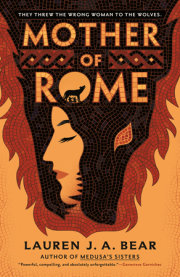
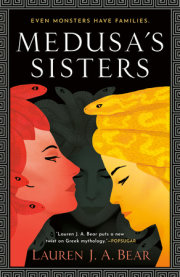
Experience the myth and magic of antiquity's most alluring—and provocative—goddess as never witnessed before, in this gorgeously rendered, unflinching, and deeply vulnerable retelling from the author of Mother of Rome and Medusa's Sisters.

Two hundred years before the common era, Aphrodite surprises an itinerant sculptor with a shocking request: Hear my story, see me for who I truly am, and carve it into stone. Never before has the goddess posed for her likeness, and as the artist works, she shares pieces of herself.

Her greatest triumphs and most grievous mistakes. The truth behind the tales of her beneficence and vengeance. And the one epic romance that slips through her perfect fingers, time and time again.

Part memoir, part fantasy, and all heart, Aphrodite in Pieces begs the eternal, essential questions: what do love and beauty truly mean? And can they last?
© Heidi Leonard
LAUREN J. A. BEAR was born in Boston and raised in Long Beach. After studying English at UCLA, and education at Loyola Marymount University, she worked for a decade as a middle-school teacher focused on literacy and humanities.  Lauren lives in Seattle with her husband and three young children where she enjoys crossword puzzles and being on or near the water without getting wet. She is the author of Medusa's Sisters. View titles by Lauren J. A. Bear
Available for sale exclusive:
•     Canada
•     Guam
•     Minor Outl.Ins.
•     North Mariana
•     Philippines
•     Puerto Rico
•     Samoa,American
•     US Virgin Is.
•     USA

Available for sale non-exclusive:
•     Afghanistan
•     Aland Islands
•     Albania
•     Algeria
•     Andorra
•     Angola
•     Anguilla
•     Antarctica
•     Argentina
•     Armenia
•     Aruba
•     Austria
•     Azerbaijan
•     Bahrain
•     Belarus
•     Belgium
•     Benin
•     Bhutan
•     Bolivia
•     Bonaire, Saba
•     Bosnia Herzeg.
•     Bouvet Island
•     Brazil
•     Bulgaria
•     Burkina Faso
•     Burundi
•     Cambodia
•     Cameroon
•     Cape Verde
•     Centr.Afr.Rep.
•     Chad
•     Chile
•     China
•     Colombia
•     Comoro Is.
•     Congo
•     Cook Islands
•     Costa Rica
•     Croatia
•     Cuba
•     Curacao
•     Czech Republic
•     Dem. Rep. Congo
•     Denmark
•     Djibouti
•     Dominican Rep.
•     Ecuador
•     Egypt
•     El Salvador
•     Equatorial Gui.
•     Eritrea
•     Estonia
•     Ethiopia
•     Faroe Islands
•     Finland
•     France
•     Fren.Polynesia
•     French Guinea
•     Gabon
•     Georgia
•     Germany
•     Greece
•     Greenland
•     Guadeloupe
•     Guatemala
•     Guinea Republic
•     Guinea-Bissau
•     Haiti
•     Heard/McDon.Isl
•     Honduras
•     Hong Kong
•     Hungary
•     Iceland
•     Indonesia
•     Iran
•     Iraq
•     Israel
•     Italy
•     Ivory Coast
•     Japan
•     Jordan
•     Kazakhstan
•     Kuwait
•     Kyrgyzstan
•     Laos
•     Latvia
•     Lebanon
•     Liberia
•     Libya
•     Liechtenstein
•     Lithuania
•     Luxembourg
•     Macau
•     Macedonia
•     Madagascar
•     Maldives
•     Mali
•     Marshall island
•     Martinique
•     Mauritania
•     Mayotte
•     Mexico
•     Micronesia
•     Moldavia
•     Monaco
•     Mongolia
•     Montenegro
•     Morocco
•     Myanmar
•     Nepal
•     Netherlands
•     New Caledonia
•     Nicaragua
•     Niger
•     Niue
•     Norfolk Island
•     North Korea
•     Norway
•     Oman
•     Palau
•     Palestinian Ter
•     Panama
•     Paraguay
•     Peru
•     Poland
•     Portugal
•     Qatar
•     Reunion Island
•     Romania
•     Russian Fed.
•     Rwanda
•     Saint Martin
•     San Marino
•     SaoTome Princip
•     Saudi Arabia
•     Senegal
•     Serbia
•     Singapore
•     Sint Maarten
•     Slovakia
•     Slovenia
•     South Korea
•     South Sudan
•     Spain
•     St Barthelemy
•     St.Pier,Miquel.
•     Sth Terr. Franc
•     Sudan
•     Suriname
•     Svalbard
•     Sweden
•     Switzerland
•     Syria
•     Tadschikistan
•     Taiwan
•     Thailand
•     Timor-Leste
•     Togo
•     Tokelau Islands
•     Tunisia
•     Turkey
•     Turkmenistan
•     Ukraine
•     Unit.Arab Emir.
•     Uruguay
•     Uzbekistan
•     Vatican City
•     Venezuela
•     Vietnam
•     Wallis,Futuna
•     West Saharan
•     Western Samoa
•     Yemen

Not available for sale:
•     Antigua/Barbuda
•     Australia
•     Bahamas
•     Bangladesh
•     Barbados
•     Belize
•     Bermuda
•     Botswana
•     Brit.Ind.Oc.Ter
•     Brit.Virgin Is.
•     Brunei
•     Cayman Islands
•     Christmas Islnd
•     Cocos Islands
•     Cyprus
•     Dominica
•     Falkland Islnds
•     Fiji
•     Gambia
•     Ghana
•     Gibraltar
•     Grenada
•     Guernsey
•     Guyana
•     India
•     Ireland
•     Isle of Man
•     Jamaica
•     Jersey
•     Kenya
•     Kiribati
•     Lesotho
•     Malawi
•     Malaysia
•     Malta
•     Mauritius
•     Montserrat
•     Mozambique
•     Namibia
•     Nauru
•     New Zealand
•     Nigeria
•     Pakistan
•     PapuaNewGuinea
•     Pitcairn Islnds
•     S. Sandwich Ins
•     Seychelles
•     Sierra Leone
•     Solomon Islands
•     Somalia
•     South Africa
•     Sri Lanka
•     St. Helena
•     St. Lucia
•     St. Vincent
•     St.Chr.,Nevis
•     Swaziland
•     Tanzania
•     Tonga
•     Trinidad,Tobago
•     Turks&Caicos Is
•     Tuvalu
•     Uganda
•     United Kingdom
•     Vanuatu
•     Zambia
•     Zimbabwe

1

Milos

Second Century BCE

Just as she was born, the visitor arrives upon the sea, riding the wave-begotten mist to shore. When her sandals touch sand, she pauses to adjust the golden cloak about her shoulders. Her hands continue, traveling down her arms, brushing the tops of her thighs. Checking. Confirming.

All is perfectly dry, all perfectly in order.

All perfect, really.

Entrances matter. She learned that a long time ago.

Standing on the beach, the visitor inhales through her mouth, tasting the air's delicious salt on her tongue, the alchemical combination of light and water and rock. She breathes, her heart beats, a response and recognition. Her soul is also an island, and she has tarried too long on the mainland. Though the ocean is not her domain, it claims her like a childhood home. Do all forms of life internalize their birthplace? she wonders. Do we ever truly leave the place where we were made?

Questions for later. There would be time. For those like her, there always is.

Hood raised, she moves inward, away from the water and toward the town, passing from shadow to shadow, forging a dark and silent path. Her famous face, her infamous body complicate even the simplest of tasks. Yes, even centuries later, her appearance remains an issue, and she cannot be recognized tonight.

There is too much to do.

Too much to say.

If he does not listen, she will have to leave and find another.

She knows the route to her destination because she has done her research. This is no random happenstance, no whimsical decision. She is far more meticulous than others realize. For someone so passionate, she is also intentional. Calculated, her enemies call it, and there are many.

She will speak of them tonight, too.

She quickens her pace.


He, who has less time and does not know of her approach, considers the stone. It arrived only that morning, hauled from port by a yoked team of beasts, entering his home to a cacophony of creaking wheels and snorts and swearing.

And now, with the sweating animals and porters departed, silence. Just him and the stone-not for constructing a pool or building a tomb, but for art.

His previous commission, a statue of the goddess Artemis, had been completed to little fanfare. It hurt to witness a piece he'd obsessed over with the passion and attention of a lover received with a half smile. Didn't the priestess see all the ways he'd made his Artemis distinct? The right arm-her bow arm-more muscled, the respective breast flatter. The calluses on the edges of her draw fingers. Frustrated, he began to enumerate, only to be cut off with a polite nod.

The temple paid its concluding fee without complaint, for the goddess's likeness was serviceable, and it isn't a popular temple. These days, the people of Milos care more about harvesting tuna and the wars between the Roman Republic and Macedonia than worship.

For most artists, completing a piece means celebration. Expensive wine. Cheap lovers. But instead of using the temple's coin to repair the roof or expand his stores, he almost immediately purchases more stone.

"Who are you?" he asks that morning's delivery. "What might you be?"

Will you be as good as the last one? And then, what he cannot say aloud: Could you be my masterpiece?

These questions trouble him during the day, plague him at night. How will he know when he has achieved his best? And could it have already occurred? Might he be on a downward path already, passing his peak to little notice? Are masterpieces claimed in the moment or only in retrospect? If he knew other artists, he would ask, but he has few friends as it is.

He had Timon once.

And with that name he lapses into a melancholic malaise. Art provokes the extremes in him-euphoria and depression, hope and angst-pushing him this way and that, sometimes with only a breath or two of respite between emotions. Volatile, his mother calls it, but that isn't quite right. To him, volatile implies anger. He doesn't feel irate, he feels everything, which subsequently makes him feel beyond understanding.

He is not naturally garrulous like his father, so he speaks through his art. Explaining himself in the choices he makes.

Yet no one listens.

Was he born different? An egg that rolled into the wrong nest? For nobody in this fishing town seems to share his observations or reactions, his penchant for dreaming. Back home, his family used to belittle him for doing nothing-Get up! Eat something! Stop napping!-but his mind was ever at work. Imagining and interrogating.

That night, as an intruder lands on the beach, he lays his cheek against the marble, sending his body heat into its pores, waiting until his warmth is accepted and shared and he feels its returning embrace on his face. To be an artist is to romance the stone-to love it enough to uncover its beauty. This is the first step.

It is a commitment, made firm by an idea. That is the second.

And loving the medium is easier than knowing what to do with it.

Sometimes inspiration is summoned, the fire prodded, the palm sliced and blood drained. Other times, it arrives through careful meditation or prayer, in blessing. And in the most singular circumstances, it knocks at the front door.

Rap, rap, rap.

Three percussive beats. Not timid, but hardly aggressive. Curt, but not rude.

He startles, drawing back from the stone. Nobody visits him. Does he owe the mason more coin? A neighbor checking in? Hardly. He does not dare to hope it is Timon; the disappointment would hurt too much.

But when he opens the door, a woman waits outside, and she is certainly no kin of his.

"Alexandros. Of Antioch on the Maeander."

Her voice is light and breathy, inviting him to lean closer, and when he does, he catches the scent of rose water.

No, not just the essence of a rose, an entire garden. A heady floral universe in every shade: yellow and white, all the pink petals on the path to red. And he thinks, She is springtime.

She stares at him, bemused, for he does not respond, lost as he is in sensory wonder.

"Yes," he stumbles, finally. "Yes, I am him."

"Magnificent."

The woman enters his simple one-room home without invitation, sauntering past the low bed with slow, swaying hips. Her movements linger like a fermata. With preternatural grace, she removes her cloak and tosses it on the worktable, unbothered by the indignant outburst of dust. She is marble, too, formed from alabastrine skin without blemish, uncreased by sun or age. The color of her hair is unique to the natural world, unable to be replicated in dye. He knows because he has tried. What would he call it? Strawberry wine? Crushed coral?

And she is decorated in precious metals. Orichalcum necklaces around her delicate throat and golden bracelets twisting up her arms. Two earrings in each lobe. Although he is a man uninterested in what meets between her legs, he is an artist first and foremost. It is his life's work to notice shadow and form, texture and angle. Her body's softness, the way mauve cloth melts over curve of breast and hip and thigh.

"My timing is impeccable," she purrs, running her ageless hands across the pristine marble, and he wonders which is more perfect. "Parian?"

"Yes."

Only the island of Paros boasts stone this fine-grain, so semitranslucent and pure.

She turns and regards him. Her eyes are striking, an uncanny lavender, framed by feathery dark lashes and set beneath arched brows. "Are you, what they call, a man of few words?" she wonders.

"No." Then he self-corrects. "Maybe."

"Do not be ashamed. Most men talk too much."

He agrees.

She seems to take in everything with those lilac eyes, sweeping and lifting as they itemize his life. The rumpled blankets. The tools necessary to carve stone-clawed chisels and pointed ones, flat chisels and rounded, abrasive powders, and hammers. He considers himself from her point of view. Worn and thin; in truth, gaunt. His tunic a size too big. He does not eat well nor sleep consistently when he's working. He longs to sneak a whiff of himself but is too embarrassed.

"For an artist," she comments, "there is very little beauty in this room."

"The beauty is in here," he counters, tapping at his temple.

"I appreciate that, but"-she sighs-"I do adore lovely things. A few vases, a rug, would make considerable difference."

He should defend his space, but he accepts the truth. He places very little priority on his own convenience, to his detriment, as he has been told. So he shrugs. "I was not expecting a guest."

"Taking care of yourself shouldn't be for others," she chides him, not unkindly. And then: "Can you guess why I am here?"

He shakes his head.

"For art, of course!"

"Art?"

She smiles. "That is what you do, correct? Why you left Antioch on the Maeander?"

Yes, that is why he left. Years have come and gone since he crossed the sea from Anatolia, but the pang of that farewell persists. A tender sore, still open to poke or prod in moments of self-loathing. His sisters' tears, his parents' frustration. They could not comprehend why he would forfeit their comfortable life, but he had to go, to seek style, to observe and expand and suffer.

For art.

"Yes," he replies.

"Magnificent." She claps her hands once and holds them clasped together over her heart. "I so admired your sculpture of Croesus."

That bust, commissioned by the titular aristocrat, was one of his earliest works. He frowns. "Croesus was not a beautiful man."

"Not at all," she agrees. "And you could have made the nose smaller, the jawline more pronounced. It would have improved his face, and yet, you did neither."

"That wasn't who he was."

"You let him be imperfect." She sighs again and does not disguise her longing. "Would you do the same for me?"

He nearly scoffs. "But you are flawless."

She laughs in paradox, light in volume, heavy in tone. "Do not confuse symmetry with perfection. Look again."

So he does. Anew. Inspecting her from crown to toe, removing her accessories with his mind, but also her colors, her aura. And with that focus on the bare, the exposed beneath, he finds it.

"May I?" he asks, stepping forward.

She nods, and he takes her delicate right hand in his calloused one. His thumb traces the nearly invisible line scarring the top. "There," he murmurs.

"Yes," she whispers back, delighted, and she is gazing at him so intently, in such immediate proximity, that he flushes, dropping her hand and moving backward.

"I am not threatened or insulted by your touch, Alexandros of Antioch, for I know you do not desire me."

His cheeks warm. "No, I-"

"And thus," she continues, more gently, "you have no interest in domination or possession, of hiding me or exploiting me or changing me into what most makes you feel like a man. You will reconstruct me as I am."

"Well, I would try."

She beams, a dawn's ray of light-later he would learn how she loathed such comparison, but in that moment, she was the sun-and he might be halfway in love with her regardless of his inclinations, so pleased he is to have pleased her.

"Honesty is the greatest intimacy," she says.

"And you want me to sculpt you," he asks slowly-stupidly-desperate for clarity, "without worship?"

"Yes."

He swallows. "But if I err, or deviate from your vision, will you kill me?"

She raises an eyebrow. "Ah, then you have deduced my identity."

Almost immediately. When she stood at the threshold, he had felt her name in his core, its four syllables like the beat of a drum, invoking images of wet pearls and unmade beds, flowers opening, petals falling. Curses. Tears. Adonis and apples. Golden arrows. Ares.

Everything love, endless beauty.

But he only nods.

"Since you know who I am, you must also understand that you have no control over what happens next. It's decided. I picked you."

Should he be honored or horrified? Both, but also undeserving. Who is he to take on such a commission? An itinerant artist of no real acclaim.

And her?

And yet . . .

Is this how it feels when the Muses sing to you? Do those others feel they have no choice but to answer their call?

The idea-she-has arrived.

His next piece will be Aphrodite.

About

Experience the myth and magic of antiquity's most alluring—and provocative—goddess as never witnessed before, in this gorgeously rendered, unflinching, and deeply vulnerable retelling from the author of Mother of Rome and Medusa's Sisters.

Two hundred years before the common era, Aphrodite surprises an itinerant sculptor with a shocking request: Hear my story, see me for who I truly am, and carve it into stone. Never before has the goddess posed for her likeness, and as the artist works, she shares pieces of herself.

Her greatest triumphs and most grievous mistakes. The truth behind the tales of her beneficence and vengeance. And the one epic romance that slips through her perfect fingers, time and time again.

Part memoir, part fantasy, and all heart, Aphrodite in Pieces begs the eternal, essential questions: what do love and beauty truly mean? And can they last?

Creators

© Heidi Leonard
LAUREN J. A. BEAR was born in Boston and raised in Long Beach. After studying English at UCLA, and education at Loyola Marymount University, she worked for a decade as a middle-school teacher focused on literacy and humanities.  Lauren lives in Seattle with her husband and three young children where she enjoys crossword puzzles and being on or near the water without getting wet. She is the author of Medusa's Sisters. View titles by Lauren J. A. Bear

Excerpt

1

Milos

Second Century BCE

Just as she was born, the visitor arrives upon the sea, riding the wave-begotten mist to shore. When her sandals touch sand, she pauses to adjust the golden cloak about her shoulders. Her hands continue, traveling down her arms, brushing the tops of her thighs. Checking. Confirming.

All is perfectly dry, all perfectly in order.

All perfect, really.

Entrances matter. She learned that a long time ago.

Standing on the beach, the visitor inhales through her mouth, tasting the air's delicious salt on her tongue, the alchemical combination of light and water and rock. She breathes, her heart beats, a response and recognition. Her soul is also an island, and she has tarried too long on the mainland. Though the ocean is not her domain, it claims her like a childhood home. Do all forms of life internalize their birthplace? she wonders. Do we ever truly leave the place where we were made?

Questions for later. There would be time. For those like her, there always is.

Hood raised, she moves inward, away from the water and toward the town, passing from shadow to shadow, forging a dark and silent path. Her famous face, her infamous body complicate even the simplest of tasks. Yes, even centuries later, her appearance remains an issue, and she cannot be recognized tonight.

There is too much to do.

Too much to say.

If he does not listen, she will have to leave and find another.

She knows the route to her destination because she has done her research. This is no random happenstance, no whimsical decision. She is far more meticulous than others realize. For someone so passionate, she is also intentional. Calculated, her enemies call it, and there are many.

She will speak of them tonight, too.

She quickens her pace.


He, who has less time and does not know of her approach, considers the stone. It arrived only that morning, hauled from port by a yoked team of beasts, entering his home to a cacophony of creaking wheels and snorts and swearing.

And now, with the sweating animals and porters departed, silence. Just him and the stone-not for constructing a pool or building a tomb, but for art.

His previous commission, a statue of the goddess Artemis, had been completed to little fanfare. It hurt to witness a piece he'd obsessed over with the passion and attention of a lover received with a half smile. Didn't the priestess see all the ways he'd made his Artemis distinct? The right arm-her bow arm-more muscled, the respective breast flatter. The calluses on the edges of her draw fingers. Frustrated, he began to enumerate, only to be cut off with a polite nod.

The temple paid its concluding fee without complaint, for the goddess's likeness was serviceable, and it isn't a popular temple. These days, the people of Milos care more about harvesting tuna and the wars between the Roman Republic and Macedonia than worship.

For most artists, completing a piece means celebration. Expensive wine. Cheap lovers. But instead of using the temple's coin to repair the roof or expand his stores, he almost immediately purchases more stone.

"Who are you?" he asks that morning's delivery. "What might you be?"

Will you be as good as the last one? And then, what he cannot say aloud: Could you be my masterpiece?

These questions trouble him during the day, plague him at night. How will he know when he has achieved his best? And could it have already occurred? Might he be on a downward path already, passing his peak to little notice? Are masterpieces claimed in the moment or only in retrospect? If he knew other artists, he would ask, but he has few friends as it is.

He had Timon once.

And with that name he lapses into a melancholic malaise. Art provokes the extremes in him-euphoria and depression, hope and angst-pushing him this way and that, sometimes with only a breath or two of respite between emotions. Volatile, his mother calls it, but that isn't quite right. To him, volatile implies anger. He doesn't feel irate, he feels everything, which subsequently makes him feel beyond understanding.

He is not naturally garrulous like his father, so he speaks through his art. Explaining himself in the choices he makes.

Yet no one listens.

Was he born different? An egg that rolled into the wrong nest? For nobody in this fishing town seems to share his observations or reactions, his penchant for dreaming. Back home, his family used to belittle him for doing nothing-Get up! Eat something! Stop napping!-but his mind was ever at work. Imagining and interrogating.

That night, as an intruder lands on the beach, he lays his cheek against the marble, sending his body heat into its pores, waiting until his warmth is accepted and shared and he feels its returning embrace on his face. To be an artist is to romance the stone-to love it enough to uncover its beauty. This is the first step.

It is a commitment, made firm by an idea. That is the second.

And loving the medium is easier than knowing what to do with it.

Sometimes inspiration is summoned, the fire prodded, the palm sliced and blood drained. Other times, it arrives through careful meditation or prayer, in blessing. And in the most singular circumstances, it knocks at the front door.

Rap, rap, rap.

Three percussive beats. Not timid, but hardly aggressive. Curt, but not rude.

He startles, drawing back from the stone. Nobody visits him. Does he owe the mason more coin? A neighbor checking in? Hardly. He does not dare to hope it is Timon; the disappointment would hurt too much.

But when he opens the door, a woman waits outside, and she is certainly no kin of his.

"Alexandros. Of Antioch on the Maeander."

Her voice is light and breathy, inviting him to lean closer, and when he does, he catches the scent of rose water.

No, not just the essence of a rose, an entire garden. A heady floral universe in every shade: yellow and white, all the pink petals on the path to red. And he thinks, She is springtime.

She stares at him, bemused, for he does not respond, lost as he is in sensory wonder.

"Yes," he stumbles, finally. "Yes, I am him."

"Magnificent."

The woman enters his simple one-room home without invitation, sauntering past the low bed with slow, swaying hips. Her movements linger like a fermata. With preternatural grace, she removes her cloak and tosses it on the worktable, unbothered by the indignant outburst of dust. She is marble, too, formed from alabastrine skin without blemish, uncreased by sun or age. The color of her hair is unique to the natural world, unable to be replicated in dye. He knows because he has tried. What would he call it? Strawberry wine? Crushed coral?

And she is decorated in precious metals. Orichalcum necklaces around her delicate throat and golden bracelets twisting up her arms. Two earrings in each lobe. Although he is a man uninterested in what meets between her legs, he is an artist first and foremost. It is his life's work to notice shadow and form, texture and angle. Her body's softness, the way mauve cloth melts over curve of breast and hip and thigh.

"My timing is impeccable," she purrs, running her ageless hands across the pristine marble, and he wonders which is more perfect. "Parian?"

"Yes."

Only the island of Paros boasts stone this fine-grain, so semitranslucent and pure.

She turns and regards him. Her eyes are striking, an uncanny lavender, framed by feathery dark lashes and set beneath arched brows. "Are you, what they call, a man of few words?" she wonders.

"No." Then he self-corrects. "Maybe."

"Do not be ashamed. Most men talk too much."

He agrees.

She seems to take in everything with those lilac eyes, sweeping and lifting as they itemize his life. The rumpled blankets. The tools necessary to carve stone-clawed chisels and pointed ones, flat chisels and rounded, abrasive powders, and hammers. He considers himself from her point of view. Worn and thin; in truth, gaunt. His tunic a size too big. He does not eat well nor sleep consistently when he's working. He longs to sneak a whiff of himself but is too embarrassed.

"For an artist," she comments, "there is very little beauty in this room."

"The beauty is in here," he counters, tapping at his temple.

"I appreciate that, but"-she sighs-"I do adore lovely things. A few vases, a rug, would make considerable difference."

He should defend his space, but he accepts the truth. He places very little priority on his own convenience, to his detriment, as he has been told. So he shrugs. "I was not expecting a guest."

"Taking care of yourself shouldn't be for others," she chides him, not unkindly. And then: "Can you guess why I am here?"

He shakes his head.

"For art, of course!"

"Art?"

She smiles. "That is what you do, correct? Why you left Antioch on the Maeander?"

Yes, that is why he left. Years have come and gone since he crossed the sea from Anatolia, but the pang of that farewell persists. A tender sore, still open to poke or prod in moments of self-loathing. His sisters' tears, his parents' frustration. They could not comprehend why he would forfeit their comfortable life, but he had to go, to seek style, to observe and expand and suffer.

For art.

"Yes," he replies.

"Magnificent." She claps her hands once and holds them clasped together over her heart. "I so admired your sculpture of Croesus."

That bust, commissioned by the titular aristocrat, was one of his earliest works. He frowns. "Croesus was not a beautiful man."

"Not at all," she agrees. "And you could have made the nose smaller, the jawline more pronounced. It would have improved his face, and yet, you did neither."

"That wasn't who he was."

"You let him be imperfect." She sighs again and does not disguise her longing. "Would you do the same for me?"

He nearly scoffs. "But you are flawless."

She laughs in paradox, light in volume, heavy in tone. "Do not confuse symmetry with perfection. Look again."

So he does. Anew. Inspecting her from crown to toe, removing her accessories with his mind, but also her colors, her aura. And with that focus on the bare, the exposed beneath, he finds it.

"May I?" he asks, stepping forward.

She nods, and he takes her delicate right hand in his calloused one. His thumb traces the nearly invisible line scarring the top. "There," he murmurs.

"Yes," she whispers back, delighted, and she is gazing at him so intently, in such immediate proximity, that he flushes, dropping her hand and moving backward.

"I am not threatened or insulted by your touch, Alexandros of Antioch, for I know you do not desire me."

His cheeks warm. "No, I-"

"And thus," she continues, more gently, "you have no interest in domination or possession, of hiding me or exploiting me or changing me into what most makes you feel like a man. You will reconstruct me as I am."

"Well, I would try."

She beams, a dawn's ray of light-later he would learn how she loathed such comparison, but in that moment, she was the sun-and he might be halfway in love with her regardless of his inclinations, so pleased he is to have pleased her.

"Honesty is the greatest intimacy," she says.

"And you want me to sculpt you," he asks slowly-stupidly-desperate for clarity, "without worship?"

"Yes."

He swallows. "But if I err, or deviate from your vision, will you kill me?"

She raises an eyebrow. "Ah, then you have deduced my identity."

Almost immediately. When she stood at the threshold, he had felt her name in his core, its four syllables like the beat of a drum, invoking images of wet pearls and unmade beds, flowers opening, petals falling. Curses. Tears. Adonis and apples. Golden arrows. Ares.

Everything love, endless beauty.

But he only nods.

"Since you know who I am, you must also understand that you have no control over what happens next. It's decided. I picked you."

Should he be honored or horrified? Both, but also undeserving. Who is he to take on such a commission? An itinerant artist of no real acclaim.

And her?

And yet . . .

Is this how it feels when the Muses sing to you? Do those others feel they have no choice but to answer their call?

The idea-she-has arrived.

His next piece will be Aphrodite.
Penguin Random House Comics Retail