Close Modal

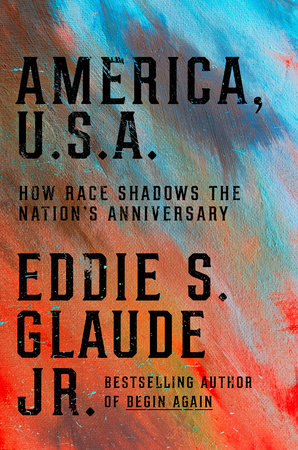
America, U.S.A.

How Race Shadows the Nation's Anniversaries

Look inside
Hardcover
6.41"W x 9.41"H x 1.01"D   | 16 oz | 12 per carton
On sale May 26, 2026 | 288 Pages | 9780593239803

NEW YORK TIMES BESTSELLER • The New York Times bestselling author of Begin Again confronts America’s unfinished story in this blistering reassessment of race, freedom, and the myths that bind us.

“A thoughtful, insightful, beautifully written book that is timely and welcomed in these perilous times.”—Bryan Stevenson, #1 New York Times bestselling author of Just Mercy


“Eddie S. Glaude Jr. opens a necessary conversation as we reflect on the meaning of our country’s 250th anniversary.”—Annette Gordon-Reed, Pulitzer Prize– and National Book Award–winning author of The Hemingses of Monticello

Celebrated public intellectual Eddie S. Glaude, Jr. presents a groundbreaking analysis of the vicious cycles of American history and the country’s enduring refusal to face its true nature—especially at the moments when national anniversaries steer us back toward the mythology meant to disguise the truth.

America, U.S.A., deliberately formulated and beautifully written, details a heart-wrenching exploration of America’s legacy. It is a magnificently complex combination of lessons and voices—from W.E.B. DuBois and John Dos Passos to Herman Melville and Martin Luther King, Jr.—that, together, paint a sprawling and honest tableau of the United States, its complicated past, and ever more tenuous future. Glaude’s is a powerful voice of conscience in our tumultuous world. He pulls no punches, calling on us to interrogate our conceptions of innocence and freedom and the stories we tell ourselves about our past and present.

Centered around the major celebrations of America’s milestone birthdays across 250 years of history, the book offers a riveting look at the battles over who has a stake in writing the American story. Devastatingly candid, profoundly moving, and deeply reflective, America, U.S.A. is a shining meditation on how we must reckon with a grim past in order to strive for the better angels of our future.
© Sameer A. Khan
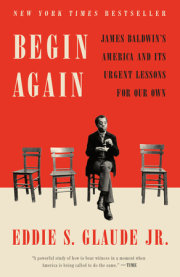
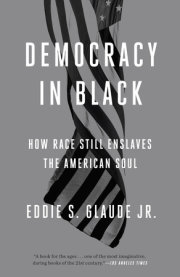
Eddie S. Glaude, Jr. is the James S. McDonnell Distinguished University Professor at Princeton University and author of New York Times bestselling Begin Again and Democracy in Black. View titles by Eddie S. Glaude Jr.
Available for sale exclusive:
•     Afghanistan
•     Aland Islands
•     Albania
•     Algeria
•     Andorra
•     Angola
•     Anguilla
•     Antarctica
•     Antigua/Barbuda
•     Argentina
•     Armenia
•     Aruba
•     Australia
•     Austria
•     Azerbaijan
•     Bahamas
•     Bahrain
•     Bangladesh
•     Barbados
•     Belarus
•     Belgium
•     Belize
•     Benin
•     Bermuda
•     Bhutan
•     Bolivia
•     Bonaire, Saba
•     Bosnia Herzeg.
•     Botswana
•     Bouvet Island
•     Brazil
•     Brit.Ind.Oc.Ter
•     Brit.Virgin Is.
•     Brunei
•     Bulgaria
•     Burkina Faso
•     Burundi
•     Cambodia
•     Cameroon
•     Canada
•     Cape Verde
•     Cayman Islands
•     Centr.Afr.Rep.
•     Chad
•     Chile
•     China
•     Christmas Islnd
•     Cocos Islands
•     Colombia
•     Comoro Is.
•     Congo
•     Cook Islands
•     Costa Rica
•     Croatia
•     Cuba
•     Curacao
•     Cyprus
•     Czech Republic
•     Dem. Rep. Congo
•     Denmark
•     Djibouti
•     Dominica
•     Dominican Rep.
•     Ecuador
•     Egypt
•     El Salvador
•     Equatorial Gui.
•     Eritrea
•     Estonia
•     Ethiopia
•     Falkland Islnds
•     Faroe Islands
•     Fiji
•     Finland
•     France
•     Fren.Polynesia
•     French Guinea
•     Gabon
•     Gambia
•     Georgia
•     Germany
•     Ghana
•     Gibraltar
•     Greece
•     Greenland
•     Grenada
•     Guadeloupe
•     Guam
•     Guatemala
•     Guernsey
•     Guinea Republic
•     Guinea-Bissau
•     Guyana
•     Haiti
•     Heard/McDon.Isl
•     Honduras
•     Hong Kong
•     Hungary
•     Iceland
•     India
•     Indonesia
•     Iran
•     Iraq
•     Ireland
•     Isle of Man
•     Israel
•     Italy
•     Ivory Coast
•     Jamaica
•     Japan
•     Jersey
•     Jordan
•     Kazakhstan
•     Kenya
•     Kiribati
•     Kuwait
•     Kyrgyzstan
•     Laos
•     Latvia
•     Lebanon
•     Lesotho
•     Liberia
•     Libya
•     Liechtenstein
•     Lithuania
•     Luxembourg
•     Macau
•     Macedonia
•     Madagascar
•     Malawi
•     Malaysia
•     Maldives
•     Mali
•     Malta
•     Marshall island
•     Martinique
•     Mauritania
•     Mauritius
•     Mayotte
•     Mexico
•     Micronesia
•     Minor Outl.Ins.
•     Moldavia
•     Monaco
•     Mongolia
•     Montenegro
•     Montserrat
•     Morocco
•     Mozambique
•     Myanmar
•     Namibia
•     Nauru
•     Nepal
•     Netherlands
•     New Caledonia
•     New Zealand
•     Nicaragua
•     Niger
•     Nigeria
•     Niue
•     Norfolk Island
•     North Korea
•     North Mariana
•     Norway
•     Oman
•     Pakistan
•     Palau
•     Palestinian Ter
•     Panama
•     PapuaNewGuinea
•     Paraguay
•     Peru
•     Philippines
•     Pitcairn Islnds
•     Poland
•     Portugal
•     Puerto Rico
•     Qatar
•     Reunion Island
•     Romania
•     Russian Fed.
•     Rwanda
•     S. Sandwich Ins
•     Saint Martin
•     Samoa,American
•     San Marino
•     SaoTome Princip
•     Saudi Arabia
•     Senegal
•     Serbia
•     Seychelles
•     Sierra Leone
•     Singapore
•     Sint Maarten
•     Slovakia
•     Slovenia
•     Solomon Islands
•     Somalia
•     South Africa
•     South Korea
•     South Sudan
•     Spain
•     Sri Lanka
•     St Barthelemy
•     St. Helena
•     St. Lucia
•     St. Vincent
•     St.Chr.,Nevis
•     St.Pier,Miquel.
•     Sth Terr. Franc
•     Sudan
•     Suriname
•     Svalbard
•     Swaziland
•     Sweden
•     Switzerland
•     Syria
•     Tadschikistan
•     Taiwan
•     Tanzania
•     Thailand
•     Timor-Leste
•     Togo
•     Tokelau Islands
•     Tonga
•     Trinidad,Tobago
•     Tunisia
•     Turkey
•     Turkmenistan
•     Turks&Caicos Is
•     Tuvalu
•     US Virgin Is.
•     USA
•     Uganda
•     Ukraine
•     Unit.Arab Emir.
•     United Kingdom
•     Uruguay
•     Uzbekistan
•     Vanuatu
•     Vatican City
•     Venezuela
•     Vietnam
•     Wallis,Futuna
•     West Saharan
•     Western Samoa
•     Yemen
•     Zambia
•     Zimbabwe

Chapter One

Freedom Is the White Man’s Gift

On the back of his copy of the manumission papers for Moses Gordon, issued in 1776, John Parrish, a Quaker abolitionist in Philadelphia, scribbled a sentence about Gordon’s death two decades later. Gordon chose, Parrish wrote, to “drown himself rather than being Sold from his connections.” An offhand note. A reminder of the all-too-human stakes of the fight against slavery.

Moses had been captured as a fugitive under the terms of the Fugitive Slave Act of 1793. For a little over ten years, he had lived in Philadelphia as a free man, attended church (perhaps at the African Episcopal Church of St. Thomas on the corner of what was then Fifth and Adelphi Streets, pastored by Absalom Jones, the first African American to be ordained an Episcopalian priest), met and married the love of his life, and, with her, raised four children. He worked hard to secure his family’s needs and found himself a part of a vibrant community of Black people, some of whom, like himself, had escaped slavery.

His life in Philadelphia, of course, was haunted by the specter of the peculiar institution. Not only by the fact of slavery in the South—that some Black people suffered as the property of others—but by the hard reality that even if you escaped slavery, even if you managed to build a life uniquely your own, you would be forever condemned to look over your shoulder for the four horsemen who wanted to drag you back to hell. This was by design. The Constitution made it so that people like Moses Gordon could not feel secure in their freedom, even in a so-called free state. Forty-eight years after Moses was captured, Frederick Douglass described that world in his 1845 autobiography:

Let him be a fugitive in a strange land—a land given up to be the hunting-ground for slaveholders—whose inhabitants are legalized kidnappers—where he is every moment subjected to the terrible liability of being seized upon by his fellow men . . . I say, let him place himself in my situation . . . among fellow men, yet feeling in the midst of wild beasts.

In Philadelphia, no matter the life he lived, Moses remained stolen property. He was a thief in “the contorted sense” that he had stolen himself. He could only be made free by white men, and his life proved that just as easily as white men can make you free, they can take it away. Article IV, Section 2, Clause 3 of the Constitution guaranteed to slave owners the right to reclaim escaped slaves, and the Fugitive Slave Act of 1793 gave license to the hunt.

Moses’s life in Philadelphia was not his first experience of freedom. Caleb Trueblood, a slaveholding North Carolina Quaker, had come to believe that slavery was a sin against God, and in November 1776, just three months after the signing of the Declaration of Independence, he released Moses from bondage. It was a radical act. Colonial North Carolina had passed a law that strictly forbade “masters from liberating their slaves . . . except for meritorious service.” The law was necessary, some argued, because Quakers like Trueblood threatened the foundations of the institution; increasing the size of the free Black population unsettled the assumptions underlying slavery itself. What is a Black slave to think when she sees free Black people living among her? Slaveholders, no matter how hard they tried, could not escape the paranoia that came with holding others in bondage, even as they argued that slaves were loyal and content with their status. The existence of fugitives and the free suggested otherwise. Both sounded a note of dread in the hearts of slaveholders.

Four months after Caleb Trueblood freed Moses Gordon, the North Carolina legislature passed another law. The preamble to the statute made clear the crime manumission represented: “divers evil-minded persons, intending to disturb the peace, did liberate and set free their slaves.” No matter the ardor surrounding the ideas of liberty and freedom so central to the American Revolution, North Carolina legislators—and they were not alone—continued to defend and expand slavery. The law ordered those manumitted illegally to be captured and “sold to the highest bidder.” Moses had been free for two and half years when he was arrested by the sheriff and sold in July 1779 to William Skinner, a brigadier general in the North Carolina militia. Skinner served as a judge until 1789 and owned forty-seven people. Imagine the broken heart and the rage that accompanied Moses as he was placed in chains and handed over to another white man. To taste freedom and to lose it, against the backdrop of declarations of liberty and freedom, must have been a bitter pill to swallow.

For the next six years Moses Gordon harbored freedom dreams. He eventually escaped Skinner’s grasp under the cover of morning darkness in October 1785. Soon he was hundreds of miles away. But Skinner never relented. Moses had stolen his property. Skinner offered a reward for Moses’s return.

Ten Silver Dollars Reward

Will be paid for apprehending and delivering to me, my negro man, named Moses, who, after being detected of some villainy, ran away this morning about four o’clock; or, I will give five times the sum to any person that make due proof of his being killed, and never ask a question to know by whom it was done.

Wanted dead or alive, ultimately, for a villainy of wanting to be free. Skinner’s reward had no expiration date. It announced, no matter what needed to be done or how long it took, that Moses Gordon belonged to him.

Moses was captured finally and jailed in 1797, over ten years after his escape, and many years after having created a new life with a family and in a beloved community. When faced with the propsect of living once again as a slave, he chose death by his own hand.

Skinner had the power of the law behind him. The Fugitive Slave Clause in the Constitution and the Fugitive Slave Act of 1793 empowered slave owners to seek “rendition of [their] property in federal or state court. The law also imposed a fine on anyone who ‘knowingly and willingly’ obstructed the return of a runaway.” These were the results of the maddening compromises that paved the way for the founding of the nation. Just five years after the ratification of the Constitution, lawmakers felt no need to end slavery or the slave trade; instead they decided to secure the rights of those who owned slaves. As the historian Ira Berlin puts it, “The Declaration of Independence made equality normative, leaving only one logical rationale for denying freedom to any people: namely, that they were not human.” That lie made it possible for Black people who dared to steal their freedom to be hunted down like dogs.

The “resolution” of the problem of believing in equality and holding people as slaves, if one can call it that, required holding in the balance two contradictory positions: that ours was a country committed to both freedom and unfreedom—that slavery could sit, however uneasily, alongside the developing myth of America as a city on a hill or as the “Redeemer Nation.” Everyone touched by the peculiar institution was complicit. This was America, U.S.A. The fact that Black people were held in bondage or relegated to second-class status mattered little in the nation’s redemptive mission of spreading freedom and democracy around the world. The American future was, and would be, unburdened by its failures. America, slaveholding or not, was a divinely sanctioned project, and that consensus myth secured our national virtue despite the divisions that threatened to crack the country wide open.

The divided soul of the country was not simply a failure to live up to stated ideals, nor was it an abstraction—it had concrete effects, felt in the lives of those who bore the brunt of it. America, U.S.A., was split between its commitments to liberty and equality and to the idea of white superiority. In one moment, the country could embrace the idea of liberty and freedom for all—that could include Black people, and it did, for some and for a brief time during the Revolution. And then, as quickly as storm clouds can hide the sun, the mood darkened and that freedom could be snatched away. The act was especially cruel—a repetition of the evil and hubris at the heart of slavery and the slave trade itself: these traffickers of human beings would arrogate to themselves, as if they were gods, who could be free or not, and could easily change their minds. Black people were swept up as profit and prejudice collided with justice and virtue. People like Moses Gordon knew this intimately. What might freedom mean here, in this place, where so many languished in chains and so many claimed freedom as their possession? What might it mean for the nation when the measure of freedom is found in white men?
“No one understands the excruciating interiors of our ‘original sin’ better than Eddie Glaude. His scholarship extends into the darkest corners of our past. His insight offers fragments of a map leading to higher ground.”—Ken Burns

“Intriguing . . . Perfectly timed [and] refreshingly honest . . . Despite his despair, Glaude concludes that ‘the past still offers resources for us to freedom-dream.’ So, too, does this book.”The New York Times

America, U.S.A. is a bracing and elegant analysis of the contradiction at the heart of the American experiment: a country that claims to be committed to equality also adheres to white supremacy. Glaude opens a necessary conversation as we reflect on the meaning of our country’s 250th anniversary.”—Annette Gordon-Reed, Harvard University, Pulitzer Prize– and National Book Award–winning author of The Hemingses of Monticello

“Eddie Glaude reckons with the power of our stated values—liberty, freedom, equality, and independence—in the dim light of our actual unwillingness to share, sacrifice, yield, and prosper for the national good. Glaude is honest, bracing, and devastatingly brilliant.”—Min Jin Lee, author of Free Food for Millionaires and Pachinko, a National Book Award Finalist

“This is a thoughtful, insightful, beautifully written book that is timely and welcomed in these perilous times.”—Bryan Stevenson, #1 New York Times bestselling author of Just Mercy

“With exquisite prose, stunning moral clarity, abundant heart and soul, and utter genius, yet again Eddie Glaude proves why he is so often referred to as the conscience of the nation. It makes the stakes of America’s complex, anguished, and beautiful story clear as a bell.”—Imani Perry, Harvard University, National Book Award–winning author of South to America

“Glaude at once anticipates and rues the tumult of 2026, in a divided America whose reckoning with race and history remains woefully unfinished.”—Jill Lepore, Harvard University, New York Times bestselling author of This America

“Glaude provides a diagnosis of our current national shame, of our most bitter contradictions between promises and disappointments, and a vision of how real hope is born in a deep, transcendent sense of tragedy.”—David W. Blight, Yale University, Pulitzer Prize-winning author of Frederick Douglass: Prophet of Freedom

“As we approach the semi-quincentennial of American independence, Glaude has gifted us with a guide to understanding the history of our current moment and offers us ideas on how we can, in truth, forge a more perfect union.”—Henry Louis Gates, Jr., Harvard University, New York Times bestselling author of The Black Church

“Glaude offers a forceful counternarrative to the official commemoration of America’s 250th anniversary by surveying the horrors attendant to some of the nation’s previous anniversaries.”Publishers Weekly, starred review

“A charged renunciation of American unfreedom that could not be timelier.”Kirkus Reviews

About

NEW YORK TIMES BESTSELLER • The New York Times bestselling author of Begin Again confronts America’s unfinished story in this blistering reassessment of race, freedom, and the myths that bind us.

“A thoughtful, insightful, beautifully written book that is timely and welcomed in these perilous times.”—Bryan Stevenson, #1 New York Times bestselling author of Just Mercy


“Eddie S. Glaude Jr. opens a necessary conversation as we reflect on the meaning of our country’s 250th anniversary.”—Annette Gordon-Reed, Pulitzer Prize– and National Book Award–winning author of The Hemingses of Monticello

Celebrated public intellectual Eddie S. Glaude, Jr. presents a groundbreaking analysis of the vicious cycles of American history and the country’s enduring refusal to face its true nature—especially at the moments when national anniversaries steer us back toward the mythology meant to disguise the truth.

America, U.S.A., deliberately formulated and beautifully written, details a heart-wrenching exploration of America’s legacy. It is a magnificently complex combination of lessons and voices—from W.E.B. DuBois and John Dos Passos to Herman Melville and Martin Luther King, Jr.—that, together, paint a sprawling and honest tableau of the United States, its complicated past, and ever more tenuous future. Glaude’s is a powerful voice of conscience in our tumultuous world. He pulls no punches, calling on us to interrogate our conceptions of innocence and freedom and the stories we tell ourselves about our past and present.

Centered around the major celebrations of America’s milestone birthdays across 250 years of history, the book offers a riveting look at the battles over who has a stake in writing the American story. Devastatingly candid, profoundly moving, and deeply reflective, America, U.S.A. is a shining meditation on how we must reckon with a grim past in order to strive for the better angels of our future.

Creators

© Sameer A. Khan
Eddie S. Glaude, Jr. is the James S. McDonnell Distinguished University Professor at Princeton University and author of New York Times bestselling Begin Again and Democracy in Black. View titles by Eddie S. Glaude Jr.

Excerpt

Chapter One

Freedom Is the White Man’s Gift

On the back of his copy of the manumission papers for Moses Gordon, issued in 1776, John Parrish, a Quaker abolitionist in Philadelphia, scribbled a sentence about Gordon’s death two decades later. Gordon chose, Parrish wrote, to “drown himself rather than being Sold from his connections.” An offhand note. A reminder of the all-too-human stakes of the fight against slavery.

Moses had been captured as a fugitive under the terms of the Fugitive Slave Act of 1793. For a little over ten years, he had lived in Philadelphia as a free man, attended church (perhaps at the African Episcopal Church of St. Thomas on the corner of what was then Fifth and Adelphi Streets, pastored by Absalom Jones, the first African American to be ordained an Episcopalian priest), met and married the love of his life, and, with her, raised four children. He worked hard to secure his family’s needs and found himself a part of a vibrant community of Black people, some of whom, like himself, had escaped slavery.

His life in Philadelphia, of course, was haunted by the specter of the peculiar institution. Not only by the fact of slavery in the South—that some Black people suffered as the property of others—but by the hard reality that even if you escaped slavery, even if you managed to build a life uniquely your own, you would be forever condemned to look over your shoulder for the four horsemen who wanted to drag you back to hell. This was by design. The Constitution made it so that people like Moses Gordon could not feel secure in their freedom, even in a so-called free state. Forty-eight years after Moses was captured, Frederick Douglass described that world in his 1845 autobiography:

Let him be a fugitive in a strange land—a land given up to be the hunting-ground for slaveholders—whose inhabitants are legalized kidnappers—where he is every moment subjected to the terrible liability of being seized upon by his fellow men . . . I say, let him place himself in my situation . . . among fellow men, yet feeling in the midst of wild beasts.

In Philadelphia, no matter the life he lived, Moses remained stolen property. He was a thief in “the contorted sense” that he had stolen himself. He could only be made free by white men, and his life proved that just as easily as white men can make you free, they can take it away. Article IV, Section 2, Clause 3 of the Constitution guaranteed to slave owners the right to reclaim escaped slaves, and the Fugitive Slave Act of 1793 gave license to the hunt.

Moses’s life in Philadelphia was not his first experience of freedom. Caleb Trueblood, a slaveholding North Carolina Quaker, had come to believe that slavery was a sin against God, and in November 1776, just three months after the signing of the Declaration of Independence, he released Moses from bondage. It was a radical act. Colonial North Carolina had passed a law that strictly forbade “masters from liberating their slaves . . . except for meritorious service.” The law was necessary, some argued, because Quakers like Trueblood threatened the foundations of the institution; increasing the size of the free Black population unsettled the assumptions underlying slavery itself. What is a Black slave to think when she sees free Black people living among her? Slaveholders, no matter how hard they tried, could not escape the paranoia that came with holding others in bondage, even as they argued that slaves were loyal and content with their status. The existence of fugitives and the free suggested otherwise. Both sounded a note of dread in the hearts of slaveholders.

Four months after Caleb Trueblood freed Moses Gordon, the North Carolina legislature passed another law. The preamble to the statute made clear the crime manumission represented: “divers evil-minded persons, intending to disturb the peace, did liberate and set free their slaves.” No matter the ardor surrounding the ideas of liberty and freedom so central to the American Revolution, North Carolina legislators—and they were not alone—continued to defend and expand slavery. The law ordered those manumitted illegally to be captured and “sold to the highest bidder.” Moses had been free for two and half years when he was arrested by the sheriff and sold in July 1779 to William Skinner, a brigadier general in the North Carolina militia. Skinner served as a judge until 1789 and owned forty-seven people. Imagine the broken heart and the rage that accompanied Moses as he was placed in chains and handed over to another white man. To taste freedom and to lose it, against the backdrop of declarations of liberty and freedom, must have been a bitter pill to swallow.

For the next six years Moses Gordon harbored freedom dreams. He eventually escaped Skinner’s grasp under the cover of morning darkness in October 1785. Soon he was hundreds of miles away. But Skinner never relented. Moses had stolen his property. Skinner offered a reward for Moses’s return.

Ten Silver Dollars Reward

Will be paid for apprehending and delivering to me, my negro man, named Moses, who, after being detected of some villainy, ran away this morning about four o’clock; or, I will give five times the sum to any person that make due proof of his being killed, and never ask a question to know by whom it was done.

Wanted dead or alive, ultimately, for a villainy of wanting to be free. Skinner’s reward had no expiration date. It announced, no matter what needed to be done or how long it took, that Moses Gordon belonged to him.

Moses was captured finally and jailed in 1797, over ten years after his escape, and many years after having created a new life with a family and in a beloved community. When faced with the propsect of living once again as a slave, he chose death by his own hand.

Skinner had the power of the law behind him. The Fugitive Slave Clause in the Constitution and the Fugitive Slave Act of 1793 empowered slave owners to seek “rendition of [their] property in federal or state court. The law also imposed a fine on anyone who ‘knowingly and willingly’ obstructed the return of a runaway.” These were the results of the maddening compromises that paved the way for the founding of the nation. Just five years after the ratification of the Constitution, lawmakers felt no need to end slavery or the slave trade; instead they decided to secure the rights of those who owned slaves. As the historian Ira Berlin puts it, “The Declaration of Independence made equality normative, leaving only one logical rationale for denying freedom to any people: namely, that they were not human.” That lie made it possible for Black people who dared to steal their freedom to be hunted down like dogs.

The “resolution” of the problem of believing in equality and holding people as slaves, if one can call it that, required holding in the balance two contradictory positions: that ours was a country committed to both freedom and unfreedom—that slavery could sit, however uneasily, alongside the developing myth of America as a city on a hill or as the “Redeemer Nation.” Everyone touched by the peculiar institution was complicit. This was America, U.S.A. The fact that Black people were held in bondage or relegated to second-class status mattered little in the nation’s redemptive mission of spreading freedom and democracy around the world. The American future was, and would be, unburdened by its failures. America, slaveholding or not, was a divinely sanctioned project, and that consensus myth secured our national virtue despite the divisions that threatened to crack the country wide open.

The divided soul of the country was not simply a failure to live up to stated ideals, nor was it an abstraction—it had concrete effects, felt in the lives of those who bore the brunt of it. America, U.S.A., was split between its commitments to liberty and equality and to the idea of white superiority. In one moment, the country could embrace the idea of liberty and freedom for all—that could include Black people, and it did, for some and for a brief time during the Revolution. And then, as quickly as storm clouds can hide the sun, the mood darkened and that freedom could be snatched away. The act was especially cruel—a repetition of the evil and hubris at the heart of slavery and the slave trade itself: these traffickers of human beings would arrogate to themselves, as if they were gods, who could be free or not, and could easily change their minds. Black people were swept up as profit and prejudice collided with justice and virtue. People like Moses Gordon knew this intimately. What might freedom mean here, in this place, where so many languished in chains and so many claimed freedom as their possession? What might it mean for the nation when the measure of freedom is found in white men?

Praise

“No one understands the excruciating interiors of our ‘original sin’ better than Eddie Glaude. His scholarship extends into the darkest corners of our past. His insight offers fragments of a map leading to higher ground.”—Ken Burns

“Intriguing . . . Perfectly timed [and] refreshingly honest . . . Despite his despair, Glaude concludes that ‘the past still offers resources for us to freedom-dream.’ So, too, does this book.”The New York Times

America, U.S.A. is a bracing and elegant analysis of the contradiction at the heart of the American experiment: a country that claims to be committed to equality also adheres to white supremacy. Glaude opens a necessary conversation as we reflect on the meaning of our country’s 250th anniversary.”—Annette Gordon-Reed, Harvard University, Pulitzer Prize– and National Book Award–winning author of The Hemingses of Monticello

“Eddie Glaude reckons with the power of our stated values—liberty, freedom, equality, and independence—in the dim light of our actual unwillingness to share, sacrifice, yield, and prosper for the national good. Glaude is honest, bracing, and devastatingly brilliant.”—Min Jin Lee, author of Free Food for Millionaires and Pachinko, a National Book Award Finalist

“This is a thoughtful, insightful, beautifully written book that is timely and welcomed in these perilous times.”—Bryan Stevenson, #1 New York Times bestselling author of Just Mercy

“With exquisite prose, stunning moral clarity, abundant heart and soul, and utter genius, yet again Eddie Glaude proves why he is so often referred to as the conscience of the nation. It makes the stakes of America’s complex, anguished, and beautiful story clear as a bell.”—Imani Perry, Harvard University, National Book Award–winning author of South to America

“Glaude at once anticipates and rues the tumult of 2026, in a divided America whose reckoning with race and history remains woefully unfinished.”—Jill Lepore, Harvard University, New York Times bestselling author of This America

“Glaude provides a diagnosis of our current national shame, of our most bitter contradictions between promises and disappointments, and a vision of how real hope is born in a deep, transcendent sense of tragedy.”—David W. Blight, Yale University, Pulitzer Prize-winning author of Frederick Douglass: Prophet of Freedom

“As we approach the semi-quincentennial of American independence, Glaude has gifted us with a guide to understanding the history of our current moment and offers us ideas on how we can, in truth, forge a more perfect union.”—Henry Louis Gates, Jr., Harvard University, New York Times bestselling author of The Black Church

“Glaude offers a forceful counternarrative to the official commemoration of America’s 250th anniversary by surveying the horrors attendant to some of the nation’s previous anniversaries.”Publishers Weekly, starred review

“A charged renunciation of American unfreedom that could not be timelier.”Kirkus Reviews
Penguin Random House Comics Retail