Close Modal

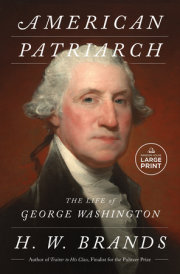
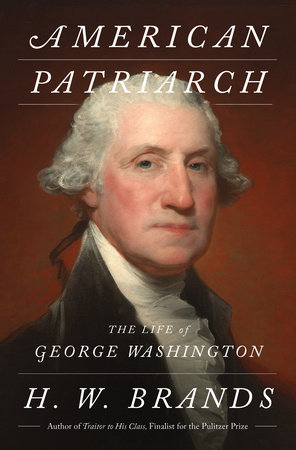
American Patriarch

The Life of George Washington

Hardcover
6-1/8"W x 9-1/4"H | 31 oz | 12 per carton
On sale May 12, 2026 | 640 Pages | 9780385551557

See Additional Formats
From historian and Pulitzer Prize finalist H. W. Brands comes an inspiring portrait of George Washington that examines his unrivaled leadership in the birth of America.

“With this masterly volume, Brands has further solidified his standing as one of our nation’s greatest historians. American Patriarch is by turns brilliant and bold. ”
—Justin Vaughn, founder and director of the Presidential Greatness Project


From his early military career and role among the Virginia gentry, to his leadership during the American Revolution and reluctant return to public service as the first president of the United States, American Patriarch brings to life the man who was called on time and again by his peers to lead. 

With a dazzling cast of characters—from the French and Indians on the Ohio frontier; to the Marquis de Lafayette, Benedict Arnold, and Baron von Steuben on the revolutionary battlefield; to Thomas Jefferson and Alexander Hamilton locked in conflict during his presidency—American Patriarch casts Washington as the icon of American virtue who wrested America free from British control, gave credibility to the Constitution, and crafted the norms that would steady America as a nation for generations to follow.

Arriving in time for the 250th anniversary of American independence, this is a masterful portrait of Washington as the unrivaled leader of his times.
© University of Texas
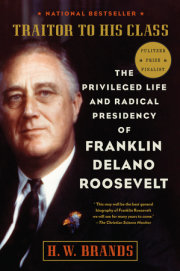
H. W. BRANDS holds the Jack S. Blanton Sr. Chair in History at the University of Texas at Austin. He has written more than a dozen biographies and histories, including The General vs. the President, a New York Times bestseller. Two of his biographies, The First American and Traitor to His Class, were finalists for the Pulitzer Prize. View titles by H. W. Brands
Available for sale exclusive:
•     Afghanistan
•     Aland Islands
•     Albania
•     Algeria
•     Andorra
•     Angola
•     Anguilla
•     Antarctica
•     Antigua/Barbuda
•     Argentina
•     Armenia
•     Aruba
•     Australia
•     Austria
•     Azerbaijan
•     Bahamas
•     Bahrain
•     Bangladesh
•     Barbados
•     Belarus
•     Belgium
•     Belize
•     Benin
•     Bermuda
•     Bhutan
•     Bolivia
•     Bonaire, Saba
•     Bosnia Herzeg.
•     Botswana
•     Bouvet Island
•     Brazil
•     Brit.Ind.Oc.Ter
•     Brit.Virgin Is.
•     Brunei
•     Bulgaria
•     Burkina Faso
•     Burundi
•     Cambodia
•     Cameroon
•     Canada
•     Cape Verde
•     Cayman Islands
•     Centr.Afr.Rep.
•     Chad
•     Chile
•     China
•     Christmas Islnd
•     Cocos Islands
•     Colombia
•     Comoro Is.
•     Congo
•     Cook Islands
•     Costa Rica
•     Croatia
•     Cuba
•     Curacao
•     Cyprus
•     Czech Republic
•     Dem. Rep. Congo
•     Denmark
•     Djibouti
•     Dominica
•     Dominican Rep.
•     Ecuador
•     Egypt
•     El Salvador
•     Equatorial Gui.
•     Eritrea
•     Estonia
•     Ethiopia
•     Falkland Islnds
•     Faroe Islands
•     Fiji
•     Finland
•     France
•     Fren.Polynesia
•     French Guinea
•     Gabon
•     Gambia
•     Georgia
•     Germany
•     Ghana
•     Gibraltar
•     Greece
•     Greenland
•     Grenada
•     Guadeloupe
•     Guam
•     Guatemala
•     Guernsey
•     Guinea Republic
•     Guinea-Bissau
•     Guyana
•     Haiti
•     Heard/McDon.Isl
•     Honduras
•     Hong Kong
•     Hungary
•     Iceland
•     India
•     Indonesia
•     Iran
•     Iraq
•     Ireland
•     Isle of Man
•     Israel
•     Italy
•     Ivory Coast
•     Jamaica
•     Japan
•     Jersey
•     Jordan
•     Kazakhstan
•     Kenya
•     Kiribati
•     Kuwait
•     Kyrgyzstan
•     Laos
•     Latvia
•     Lebanon
•     Lesotho
•     Liberia
•     Libya
•     Liechtenstein
•     Lithuania
•     Luxembourg
•     Macau
•     Macedonia
•     Madagascar
•     Malawi
•     Malaysia
•     Maldives
•     Mali
•     Malta
•     Marshall island
•     Martinique
•     Mauritania
•     Mauritius
•     Mayotte
•     Mexico
•     Micronesia
•     Minor Outl.Ins.
•     Moldavia
•     Monaco
•     Mongolia
•     Montenegro
•     Montserrat
•     Morocco
•     Mozambique
•     Myanmar
•     Namibia
•     Nauru
•     Nepal
•     Netherlands
•     New Caledonia
•     New Zealand
•     Nicaragua
•     Niger
•     Nigeria
•     Niue
•     Norfolk Island
•     North Korea
•     North Mariana
•     Norway
•     Oman
•     Pakistan
•     Palau
•     Palestinian Ter
•     Panama
•     PapuaNewGuinea
•     Paraguay
•     Peru
•     Philippines
•     Pitcairn Islnds
•     Poland
•     Portugal
•     Puerto Rico
•     Qatar
•     Reunion Island
•     Romania
•     Russian Fed.
•     Rwanda
•     S. Sandwich Ins
•     Saint Martin
•     Samoa,American
•     San Marino
•     SaoTome Princip
•     Saudi Arabia
•     Senegal
•     Serbia
•     Seychelles
•     Sierra Leone
•     Singapore
•     Sint Maarten
•     Slovakia
•     Slovenia
•     Solomon Islands
•     Somalia
•     South Africa
•     South Korea
•     South Sudan
•     Spain
•     Sri Lanka
•     St Barthelemy
•     St. Helena
•     St. Lucia
•     St. Vincent
•     St.Chr.,Nevis
•     St.Pier,Miquel.
•     Sth Terr. Franc
•     Sudan
•     Suriname
•     Svalbard
•     Swaziland
•     Sweden
•     Switzerland
•     Syria
•     Tadschikistan
•     Taiwan
•     Tanzania
•     Thailand
•     Timor-Leste
•     Togo
•     Tokelau Islands
•     Tonga
•     Trinidad,Tobago
•     Tunisia
•     Turkey
•     Turkmenistan
•     Turks&Caicos Is
•     Tuvalu
•     US Virgin Is.
•     USA
•     Uganda
•     Ukraine
•     Unit.Arab Emir.
•     United Kingdom
•     Uruguay
•     Uzbekistan
•     Vanuatu
•     Vatican City
•     Venezuela
•     Vietnam
•     Wallis,Futuna
•     West Saharan
•     Western Samoa
•     Yemen
•     Zambia
•     Zimbabwe

1

In 1705, Robert Beverley published The History and Present State of Virginia. The colony was almost a century old, and the author thought the world required an account of its origins. He told of the voyage of Walter Raleigh to America in 1584 and the marvelous description the English soldier-statesman-adventurer and his companions brought back to London of what they had seen. The land was portrayed as fertile, the climate sweet and wholesome, the plants and trees abundant and fruitful. The local population was said to be affable, innocent and eager to be instructed. “They represented it as a scene laid open for the good and gracious Queen Elizabeth to propagate the Gospel in and extend her dominions over, as if purposely reserved for her Majesty by a peculiar direction of Providence,” wrote Beverley.

Elizabeth was delighted, the more so when Raleigh and his associates proposed to establish a colony in this blessed place. “Her Majesty accordingly took the hint and espoused the project, as far as her present engagements in war with Spain would let her, being so well pleased with the account given that, as the greatest mark of honour she could do the discovery, she called the country by the name of Virginia, as well for that it was first discovered in her reign, a Virgin Queen, as that it did still seem to retain the virgin purity and plenty of the first creation and the people their primitive innocence.”

The bloom was long off the Virginia rose by the time of Beverley’s writing. The first colony planted by Raleigh’s company, at Roanoke in modern North Carolina, failed, its inhabitants vanishing into the wilderness. A second attempt, at Jamestown, killed nearly half the colonists in the first two years and for a decade barely clung to existence. Only then did the colonists discover their salvation in tobacco. Yet salvation required hard work, by the principals themselves and by the indentured servants and African slaves they imported. The indigenes, of the Powhatan and other tribes, proved less than affable after European diseases ravaged their villages and the Europeans stole their land. The Virginians fell out among themselves, bickering over land rights and other aspects of governance.

The English government occasionally took notice. In 1624 the crown revoked the company charter under which Jamestown had been established and made Virginia a royal colony. But the English government itself was consumed by conflict, most notably a civil war that started in the early 1640s, included the beheading of Charles I and briefly refashioned England into a republic. During the decade of this convulsion, Virginia and the other English colonies that had been established in America were left largely to their own devices. The colonists liked the independence.

Even after the civil war ended with the restoration of the monarchy under Charles II, politics in England remained unsettled. Not until the installation of William of Orange as English king in 1689 did the home country set any kind of model for stability.

The Virginians badly needed it. A rebellion led by Nathaniel Bacon racked the colony in the 1670s. A dispute over Indian policy was the proximate cause of the armed challenge to the authority of Governor William Berkeley. Bacon and his followers wanted Berkeley and the Virginia government to expel the remaining Indian tribes from the colony. But other issues, including taxes and the role of former indentured servants in Virginia politics, added fervor to the dispute. Amid the fighting, Bacon’s rebels burned Jamestown. This proved a last gasp for the uprising, for Bacon died of dysentery and the rebels dispersed.

As disturbing as the Bacon rebellion was to the peace of mind of Virginians, they took comfort that it wasn’t nearly as bloody as an almost simultaneous outbreak of violence in New England. The second permanent English colony on the coast of North America was established in 1620 at Plymouth, in modern Massachusetts. The Pilgrim founders hadn’t intended to settle so far north, but ill winds blew them off course. Having learned from the Virginia colonists, they came prepared for hard times. Even so, nearly half of them died during the first winter.

The Plymouth colony fell into the shadow of the Massachusetts Bay colony, which drew twenty thousand immigrants from England during the 1630s. Eventually Plymouth was absorbed by its more numerous neighbor. In the meantime, both colonies, plus Connecticut and Rhode Island, had to deal with the Indian tribes they displaced. As in Virginia, indigenes and colonists sometimes got along, but periods of peace simply postponed a larger reckoning. What the Indians had, namely land, the colonists wanted. As the colonial population grew, so did the likelihood the colonists would get it.

In the 1670s a Wampanoag chief named Metacomet, called King Philip by the English, worked to unite other tribes in New England to drive the colonists out. The colonists resisted, and war ensued. The Indians had the better of the early fighting, wiping out dozens of settlements along the frontier and killing hundreds of the English. The English gradually gained the upper hand, burning villages, killing many hundreds of Indians and essentially destroying the Wampanoags and their allies the Narragansetts.

2

John Washington was a child of the English civil war and a survivor, barely, of the Bacon rebellion. Born in the early 1630s in Essex, John was a boy when the civil war forced his father, Lawrence Washington, to take sides in the struggle between the crown and its enemies. Lawrence, an Anglican cleric well positioned at Oxford University, chose the crown. The decision cost him his job and deprived his son of the education the father planned for him. John entered commerce, first as apprentice and then as agent of a trading house that dealt in Virginia tobacco, among other goods.

On a trip to America his ship ran aground in the Potomac River. The delay for repairs gave John time to appreciate Virginia and its people, including a young woman named Anne Pope. Her father, Nathaniel Pope, a planter, liked the English trader and encouraged a match. John and Anne married, and he began to make a name for himself in his new home. He expanded the seven hundred acres the couple received as a wedding gift from her father into holdings of several thousand acres. He became a justice of the peace and joined the militia, rising through the ranks to lieutenant colonel. He was elected to the house of burgesses.

When Bacon’s rebellion broke out, John Washington took the side of Governor Berkeley. For his loyalty his estate was attacked and plundered. He died months later, in his early forties. Anne had predeceased him. They left behind three surviving children, including their eldest, Lawrence, named for the child’s grandfather.

This Lawrence Washington received the formal English education his father missed. Being sent to England for school wasn’t unusual for the son of a well-to-do Virginia family, but it nonetheless marked Lawrence as a young man of parts. Another mark came when his father died and bequeathed him two plantations on the Potomac, one at Mattox Creek and the other at Little Hunting Creek.

Lawrence participated in the public life of Westmoreland County and of Virginia. He served as justice of the peace and sheriff. He represented the county in the Virginia house of burgesses. He was elected colonel of the county militia.

He married Mildred Warner, who brought property to the marriage. The couple had three children. The middle child, Augustine, was four years old at the time of his father’s death at thirty-eight.

Augustine Washington’s mother remarried, to an English merchant. She moved to England and took the three children with her. She died and the children, after a custody battle, returned to Virginia, where they were raised by a Washington cousin.

Upon attaining legal majority, Augustine claimed his inheritance, chiefly a plantation on Bridges Creek. He purchased additional property, including the Hunting Creek plantation from his sister. He married Jane Butler, who brought land to the marriage.

They had four children, of whom two, Lawrence and Augustine Jr., survived to adulthood. Jane died, and Augustine remarried, to Mary Ball. She had six children with him. The oldest, born in 1732 and christened after the patron saint of soldiers and of England, with a name shared by the ruling British monarch, was a boy, George.

3

I should be glad to hear that you live in harmony and good fellowship with the family at Belvoir, as it is in their power to be very serviceable upon many occasions to us as young beginners,” George Washington wrote at twenty-three to his younger brother John Augustine, called Jack. “To that family I am under many obligations, particularly to the old gentleman.”

The family was the Fairfaxes, and the obligations George Washington spoke of were those of a young man finding his way forward in Virginia society. The old gentleman was William Fairfax, the master of Belvoir, a plantation on the western bank of the tidewater Potomac. William Fairfax was a cousin of Thomas Fairfax, who became Lord Fairfax upon his father’s death. Besides inheriting the title, Thomas Fairfax inherited five million acres of land in Virginia between the Potomac and the Rappahannock Rivers. He didn’t get around to visiting his American property for nearly two decades, and he relocated to Virginia only in 1747. Until then William Fairfax acted as his agent and the Virginia representative of the family.

William Fairfax and his wife had a son, George William Fairfax, and two daughters, Anne and Sarah. George Washington’s older half brother Lawrence married Anne, giving Washington a reason to spend time at Belvoir. George William Fairfax, eight years older than Washington, became a kind of extra brother. George’s wife, Sarah Cary Fairfax, called Sally, was two years older than Washington and became something between a sister and a sweetheart.

The Fairfaxes sat at the apex of Virginia society. No other family boasted a baron in residence. Yet other families did their best to re-create the life of the English aristocracy, adjusted for conditions in America.

The Virginia gentry took time to emerge from the struggles and confusion of the decades after the colony’s first settlement. Ambitious men accumulated land via royal grants, treaties with Indians and strategic marriages. This last mode of accumulation proceeded more rapidly in Virginia than in England, due to the high mortality rate. Women often died in childbirth, and men died from illness or accident, giving the surviving spouses new opportunities to pair off and multiply landholdings. It was by this means that George Washington’s father and grandfather became land rich. Washington himself married but once, yet to a wealthy widow.

The English practice of primogeniture, by which the eldest son inherited all or most of his father’s estate, was adopted by the Virginians, keeping the accumulations from being dissipated. A family once wealthy stayed wealthy, at least the part headed by the eldest son. He became the new patriarch, supporting the others and serving as the public face of the family.

The Virginia gentry differed from the English gentry in distinctive ways. They were more acquisitive, largely because there was more to acquire. The land in England was already claimed, making land transfers a zero-sum game. Much of the land in Virginia was not claimed in any sense the English colonists felt obliged to honor. Where disease hadn’t depopulated land occupied by Indians, armed violence did. Land titles were created for the now empty land, tracts were surveyed, and lots were sold, providing cash for the sellers, who often kept the best tracts for themselves.

In England the gentry lived on land rents, payments from the men and women who worked the land. In Virginia land was rented, but much remained under the direct control of the planter, who was so called for operating a plantation. This wasn’t entirely by the choice of the planter, instead reflecting a crucial demographic difference between England and America. In England, land was scarce and people plenty. In America, land was plenty and people scarce. In England, the landless had little opportunity to acquire land, which scarcity made expensive. They had no choice but to rent or work for pay. In America, the landless could more easily acquire land, it being cheap. They might rent or work for pay for a time, but many more than in England made the transition to ownership.

This created a labor problem for the gentry. They had far more land than they could work themselves. Anyway, they considered physical labor demeaning. Attempts to enlist Indians were unavailing. Pay meant little to the Indians, and attempts to enslave them failed from the ease of escape to their homes and people.

Indentured service provided an alternative. English men and women who sought to emigrate to America but lacked the price of passage agreed to work for several years in exchange for transport. Indentured service, including apprenticeships, had been practiced in England for centuries and thus was clearly defined in law and custom.

Indentured service worked well in Virginia during the sixteenth century. Most laborers—indeed most immigrants of any kind—arrived by this means. But the system had drawbacks. First, it never satisfied the demand for labor. Not enough English men and women wanted to come. Second, indentured laborers tended to die, which was one reason not enough wanted to come. The same diseases that killed so many of the first colonists in Jamestown still killed newcomers. Third, the limited terms of the indentures meant that laborers had to be replaced regularly.
“With this masterly volume, Brands has further solidified his standing as one of our nation’s greatest historians. American Patriarch is by turns brilliant and bold. Brands demonstrates compellingly that Washington’s greatness was as visible in the moment as it has been to scholars across the two centuries since. Read today, in a moment of both historical commemoration and national soul-searching, Brands documents just how extraordinary—and essential—George Washington was and remains.”
—Justin Vaughn, founder and director of the Presidential Greatness Project

“In American Patriarch, Brands deftly weaves into his narrative extensive excerpts from diaries, letters, speeches and publications, providing unequaled insight into what Washington saw, heard, read, thought and did during crucial points in his life and the life of the new nation he did more than anyone else to create.”
—George R. Goethals, University of Richmond professor emeritus

"The prolific historian takes on the first among equals of the Founding Fathers. . . . The one biography of Washington to read in this semiquicentennial year."
Kirkus Reviews (starred review)

"[An] immersive biography. . . . This detailed character study reveals a Washington who manifested his own myth."
Publishers Weekly

About

From historian and Pulitzer Prize finalist H. W. Brands comes an inspiring portrait of George Washington that examines his unrivaled leadership in the birth of America.

“With this masterly volume, Brands has further solidified his standing as one of our nation’s greatest historians. American Patriarch is by turns brilliant and bold. ”
—Justin Vaughn, founder and director of the Presidential Greatness Project


From his early military career and role among the Virginia gentry, to his leadership during the American Revolution and reluctant return to public service as the first president of the United States, American Patriarch brings to life the man who was called on time and again by his peers to lead. 

With a dazzling cast of characters—from the French and Indians on the Ohio frontier; to the Marquis de Lafayette, Benedict Arnold, and Baron von Steuben on the revolutionary battlefield; to Thomas Jefferson and Alexander Hamilton locked in conflict during his presidency—American Patriarch casts Washington as the icon of American virtue who wrested America free from British control, gave credibility to the Constitution, and crafted the norms that would steady America as a nation for generations to follow.

Arriving in time for the 250th anniversary of American independence, this is a masterful portrait of Washington as the unrivaled leader of his times.

Creators

© University of Texas
H. W. BRANDS holds the Jack S. Blanton Sr. Chair in History at the University of Texas at Austin. He has written more than a dozen biographies and histories, including The General vs. the President, a New York Times bestseller. Two of his biographies, The First American and Traitor to His Class, were finalists for the Pulitzer Prize. View titles by H. W. Brands

Excerpt

1

In 1705, Robert Beverley published The History and Present State of Virginia. The colony was almost a century old, and the author thought the world required an account of its origins. He told of the voyage of Walter Raleigh to America in 1584 and the marvelous description the English soldier-statesman-adventurer and his companions brought back to London of what they had seen. The land was portrayed as fertile, the climate sweet and wholesome, the plants and trees abundant and fruitful. The local population was said to be affable, innocent and eager to be instructed. “They represented it as a scene laid open for the good and gracious Queen Elizabeth to propagate the Gospel in and extend her dominions over, as if purposely reserved for her Majesty by a peculiar direction of Providence,” wrote Beverley.

Elizabeth was delighted, the more so when Raleigh and his associates proposed to establish a colony in this blessed place. “Her Majesty accordingly took the hint and espoused the project, as far as her present engagements in war with Spain would let her, being so well pleased with the account given that, as the greatest mark of honour she could do the discovery, she called the country by the name of Virginia, as well for that it was first discovered in her reign, a Virgin Queen, as that it did still seem to retain the virgin purity and plenty of the first creation and the people their primitive innocence.”

The bloom was long off the Virginia rose by the time of Beverley’s writing. The first colony planted by Raleigh’s company, at Roanoke in modern North Carolina, failed, its inhabitants vanishing into the wilderness. A second attempt, at Jamestown, killed nearly half the colonists in the first two years and for a decade barely clung to existence. Only then did the colonists discover their salvation in tobacco. Yet salvation required hard work, by the principals themselves and by the indentured servants and African slaves they imported. The indigenes, of the Powhatan and other tribes, proved less than affable after European diseases ravaged their villages and the Europeans stole their land. The Virginians fell out among themselves, bickering over land rights and other aspects of governance.

The English government occasionally took notice. In 1624 the crown revoked the company charter under which Jamestown had been established and made Virginia a royal colony. But the English government itself was consumed by conflict, most notably a civil war that started in the early 1640s, included the beheading of Charles I and briefly refashioned England into a republic. During the decade of this convulsion, Virginia and the other English colonies that had been established in America were left largely to their own devices. The colonists liked the independence.

Even after the civil war ended with the restoration of the monarchy under Charles II, politics in England remained unsettled. Not until the installation of William of Orange as English king in 1689 did the home country set any kind of model for stability.

The Virginians badly needed it. A rebellion led by Nathaniel Bacon racked the colony in the 1670s. A dispute over Indian policy was the proximate cause of the armed challenge to the authority of Governor William Berkeley. Bacon and his followers wanted Berkeley and the Virginia government to expel the remaining Indian tribes from the colony. But other issues, including taxes and the role of former indentured servants in Virginia politics, added fervor to the dispute. Amid the fighting, Bacon’s rebels burned Jamestown. This proved a last gasp for the uprising, for Bacon died of dysentery and the rebels dispersed.

As disturbing as the Bacon rebellion was to the peace of mind of Virginians, they took comfort that it wasn’t nearly as bloody as an almost simultaneous outbreak of violence in New England. The second permanent English colony on the coast of North America was established in 1620 at Plymouth, in modern Massachusetts. The Pilgrim founders hadn’t intended to settle so far north, but ill winds blew them off course. Having learned from the Virginia colonists, they came prepared for hard times. Even so, nearly half of them died during the first winter.

The Plymouth colony fell into the shadow of the Massachusetts Bay colony, which drew twenty thousand immigrants from England during the 1630s. Eventually Plymouth was absorbed by its more numerous neighbor. In the meantime, both colonies, plus Connecticut and Rhode Island, had to deal with the Indian tribes they displaced. As in Virginia, indigenes and colonists sometimes got along, but periods of peace simply postponed a larger reckoning. What the Indians had, namely land, the colonists wanted. As the colonial population grew, so did the likelihood the colonists would get it.

In the 1670s a Wampanoag chief named Metacomet, called King Philip by the English, worked to unite other tribes in New England to drive the colonists out. The colonists resisted, and war ensued. The Indians had the better of the early fighting, wiping out dozens of settlements along the frontier and killing hundreds of the English. The English gradually gained the upper hand, burning villages, killing many hundreds of Indians and essentially destroying the Wampanoags and their allies the Narragansetts.

2

John Washington was a child of the English civil war and a survivor, barely, of the Bacon rebellion. Born in the early 1630s in Essex, John was a boy when the civil war forced his father, Lawrence Washington, to take sides in the struggle between the crown and its enemies. Lawrence, an Anglican cleric well positioned at Oxford University, chose the crown. The decision cost him his job and deprived his son of the education the father planned for him. John entered commerce, first as apprentice and then as agent of a trading house that dealt in Virginia tobacco, among other goods.

On a trip to America his ship ran aground in the Potomac River. The delay for repairs gave John time to appreciate Virginia and its people, including a young woman named Anne Pope. Her father, Nathaniel Pope, a planter, liked the English trader and encouraged a match. John and Anne married, and he began to make a name for himself in his new home. He expanded the seven hundred acres the couple received as a wedding gift from her father into holdings of several thousand acres. He became a justice of the peace and joined the militia, rising through the ranks to lieutenant colonel. He was elected to the house of burgesses.

When Bacon’s rebellion broke out, John Washington took the side of Governor Berkeley. For his loyalty his estate was attacked and plundered. He died months later, in his early forties. Anne had predeceased him. They left behind three surviving children, including their eldest, Lawrence, named for the child’s grandfather.

This Lawrence Washington received the formal English education his father missed. Being sent to England for school wasn’t unusual for the son of a well-to-do Virginia family, but it nonetheless marked Lawrence as a young man of parts. Another mark came when his father died and bequeathed him two plantations on the Potomac, one at Mattox Creek and the other at Little Hunting Creek.

Lawrence participated in the public life of Westmoreland County and of Virginia. He served as justice of the peace and sheriff. He represented the county in the Virginia house of burgesses. He was elected colonel of the county militia.

He married Mildred Warner, who brought property to the marriage. The couple had three children. The middle child, Augustine, was four years old at the time of his father’s death at thirty-eight.

Augustine Washington’s mother remarried, to an English merchant. She moved to England and took the three children with her. She died and the children, after a custody battle, returned to Virginia, where they were raised by a Washington cousin.

Upon attaining legal majority, Augustine claimed his inheritance, chiefly a plantation on Bridges Creek. He purchased additional property, including the Hunting Creek plantation from his sister. He married Jane Butler, who brought land to the marriage.

They had four children, of whom two, Lawrence and Augustine Jr., survived to adulthood. Jane died, and Augustine remarried, to Mary Ball. She had six children with him. The oldest, born in 1732 and christened after the patron saint of soldiers and of England, with a name shared by the ruling British monarch, was a boy, George.

3

I should be glad to hear that you live in harmony and good fellowship with the family at Belvoir, as it is in their power to be very serviceable upon many occasions to us as young beginners,” George Washington wrote at twenty-three to his younger brother John Augustine, called Jack. “To that family I am under many obligations, particularly to the old gentleman.”

The family was the Fairfaxes, and the obligations George Washington spoke of were those of a young man finding his way forward in Virginia society. The old gentleman was William Fairfax, the master of Belvoir, a plantation on the western bank of the tidewater Potomac. William Fairfax was a cousin of Thomas Fairfax, who became Lord Fairfax upon his father’s death. Besides inheriting the title, Thomas Fairfax inherited five million acres of land in Virginia between the Potomac and the Rappahannock Rivers. He didn’t get around to visiting his American property for nearly two decades, and he relocated to Virginia only in 1747. Until then William Fairfax acted as his agent and the Virginia representative of the family.

William Fairfax and his wife had a son, George William Fairfax, and two daughters, Anne and Sarah. George Washington’s older half brother Lawrence married Anne, giving Washington a reason to spend time at Belvoir. George William Fairfax, eight years older than Washington, became a kind of extra brother. George’s wife, Sarah Cary Fairfax, called Sally, was two years older than Washington and became something between a sister and a sweetheart.

The Fairfaxes sat at the apex of Virginia society. No other family boasted a baron in residence. Yet other families did their best to re-create the life of the English aristocracy, adjusted for conditions in America.

The Virginia gentry took time to emerge from the struggles and confusion of the decades after the colony’s first settlement. Ambitious men accumulated land via royal grants, treaties with Indians and strategic marriages. This last mode of accumulation proceeded more rapidly in Virginia than in England, due to the high mortality rate. Women often died in childbirth, and men died from illness or accident, giving the surviving spouses new opportunities to pair off and multiply landholdings. It was by this means that George Washington’s father and grandfather became land rich. Washington himself married but once, yet to a wealthy widow.

The English practice of primogeniture, by which the eldest son inherited all or most of his father’s estate, was adopted by the Virginians, keeping the accumulations from being dissipated. A family once wealthy stayed wealthy, at least the part headed by the eldest son. He became the new patriarch, supporting the others and serving as the public face of the family.

The Virginia gentry differed from the English gentry in distinctive ways. They were more acquisitive, largely because there was more to acquire. The land in England was already claimed, making land transfers a zero-sum game. Much of the land in Virginia was not claimed in any sense the English colonists felt obliged to honor. Where disease hadn’t depopulated land occupied by Indians, armed violence did. Land titles were created for the now empty land, tracts were surveyed, and lots were sold, providing cash for the sellers, who often kept the best tracts for themselves.

In England the gentry lived on land rents, payments from the men and women who worked the land. In Virginia land was rented, but much remained under the direct control of the planter, who was so called for operating a plantation. This wasn’t entirely by the choice of the planter, instead reflecting a crucial demographic difference between England and America. In England, land was scarce and people plenty. In America, land was plenty and people scarce. In England, the landless had little opportunity to acquire land, which scarcity made expensive. They had no choice but to rent or work for pay. In America, the landless could more easily acquire land, it being cheap. They might rent or work for pay for a time, but many more than in England made the transition to ownership.

This created a labor problem for the gentry. They had far more land than they could work themselves. Anyway, they considered physical labor demeaning. Attempts to enlist Indians were unavailing. Pay meant little to the Indians, and attempts to enslave them failed from the ease of escape to their homes and people.

Indentured service provided an alternative. English men and women who sought to emigrate to America but lacked the price of passage agreed to work for several years in exchange for transport. Indentured service, including apprenticeships, had been practiced in England for centuries and thus was clearly defined in law and custom.

Indentured service worked well in Virginia during the sixteenth century. Most laborers—indeed most immigrants of any kind—arrived by this means. But the system had drawbacks. First, it never satisfied the demand for labor. Not enough English men and women wanted to come. Second, indentured laborers tended to die, which was one reason not enough wanted to come. The same diseases that killed so many of the first colonists in Jamestown still killed newcomers. Third, the limited terms of the indentures meant that laborers had to be replaced regularly.

Praise

“With this masterly volume, Brands has further solidified his standing as one of our nation’s greatest historians. American Patriarch is by turns brilliant and bold. Brands demonstrates compellingly that Washington’s greatness was as visible in the moment as it has been to scholars across the two centuries since. Read today, in a moment of both historical commemoration and national soul-searching, Brands documents just how extraordinary—and essential—George Washington was and remains.”
—Justin Vaughn, founder and director of the Presidential Greatness Project

“In American Patriarch, Brands deftly weaves into his narrative extensive excerpts from diaries, letters, speeches and publications, providing unequaled insight into what Washington saw, heard, read, thought and did during crucial points in his life and the life of the new nation he did more than anyone else to create.”
—George R. Goethals, University of Richmond professor emeritus

"The prolific historian takes on the first among equals of the Founding Fathers. . . . The one biography of Washington to read in this semiquicentennial year."
Kirkus Reviews (starred review)

"[An] immersive biography. . . . This detailed character study reveals a Washington who manifested his own myth."
Publishers Weekly
Penguin Random House Comics Retail