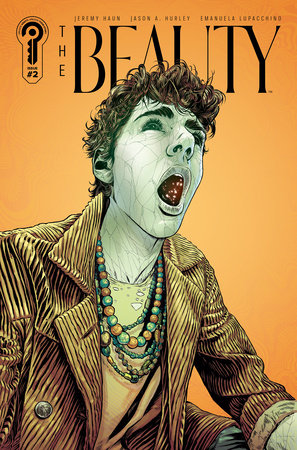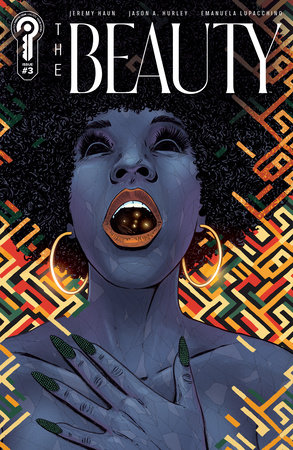


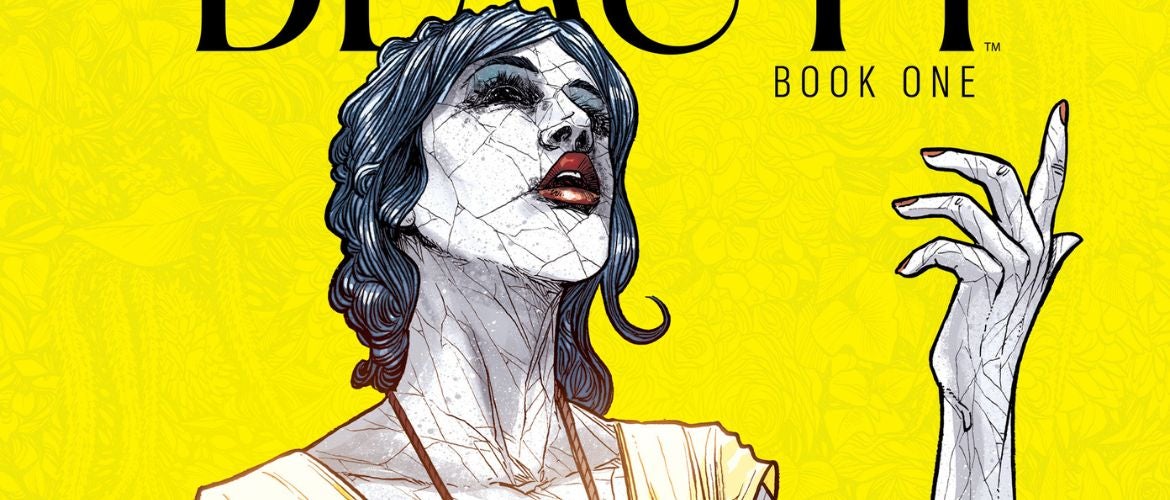
The buzz around the new upcoming tv series, “The Beauty”, has framed its premise as a provocation: how far would you go to be beautiful? But that question only grazes the surface. What the story is really asking, and what the FX adaptation brings into sharp focus, is something more intimate: what is the price of belonging?
Sci-fi and dystopian stories don’t manufacture new anxieties so much as sharpen the ones already shaping everyday life. Comic readers have long understood this, treating speculative worlds not as escapes, but as working models of reality. The Beauty, co-created by Jermy Haun and Jason A. Hurley, sits firmly within that tradition. With the live-action story, this recognition will take hold more broadly: our insatiable obsession with aesthetics is not a distant fantasy, but a reframing of cultural dynamics already in motion.
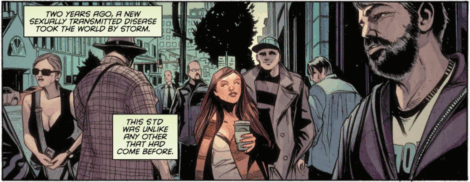
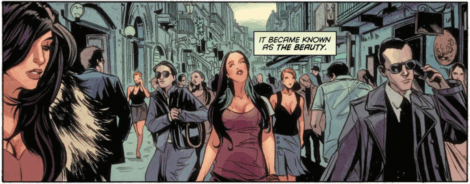
Interiors from The Beauty, by Jeremy Haun and Jason A. Hurley, with art by Haun, Mike Huddleston, Brett Weldele, and Stephen Green (2025).
At the center of the story is a mediation on social value and the ways we increasingly commodify our most basic human needs. Beauty is not merely aesthetic; it operates as a proxy for visibility, access, and legitimacy. To be beautiful is to be included, while its absence risks exclusion. The fear animating the narrative is not vanity, but irrelevance.
In this sense, The Beauty globalizes the vision of the 2024 hit film, “The Substance” (starring Demi Moore and Maragaret Qualley), where a model uses a chemical “fix” to return to her younger and thus “more beautiful” self. Together, the two stories speak to our shared anxieties around obsolescence and the lengths we will go in pursuit of beauty – even if that ultimately means deformity and death. In this way, The Beauty is not a warning, so much a mirror held closer to our own faces.
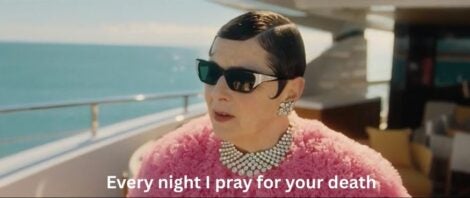
Isabella Rossellini in The Beauty (FX, 2026)
Among the many unique facets of The Beauty is how its central “infection” spreads. While it can be taken as an injection, it is also transmitted through sexual encounters. Sexual encounters are not incidental plot devices, but the most intimate social exchanges we have where vulnerability, desire, and value converge. By transforming those encounters for vectors for perfection, the story exposes how even intimacy is optimized in today’s culture. Connection must produce a result; desire must justify itself through improvement. What The Beauty ultimately critiques are not surface level obsessions, but the broader shift in how bodies and relationships are managed as social economies.
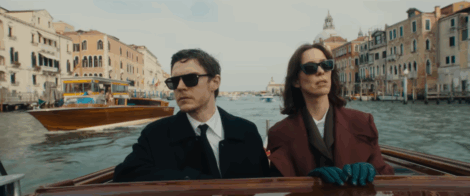
Evan Peters and Rebecca Hall (The Beauty by FX, 2026)
The translation from comic to screen is especially effective in how Murphy and Hodgson use water as texture and metaphor. Because contracting the Beauty produces the side effect of persistent fevers – ranging from discomfort to fatal overheating, bodies are at risk for burning from the inside out. The live-action adaptation leans heavily on water as both relief and spectacle showing how scarcity quickly follows commodification. Fights erupt over water bottles. The Corporation moves effortlessly through Venice’s canals. Bella Hadid’s now iconic moment bathing in the public fountain blurs thirst, desire, and excess. Together these scenes frame luxury not simply as abundance, but as internal imbalance. These images are part of the story’s internal logic, first articulated through Haun and Hurley’s precise, unsettling vision.
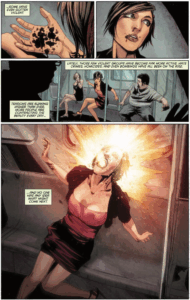
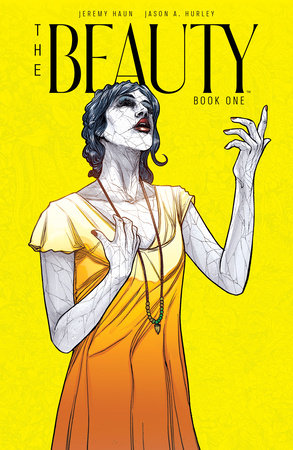
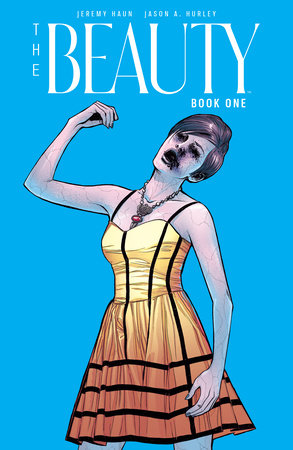
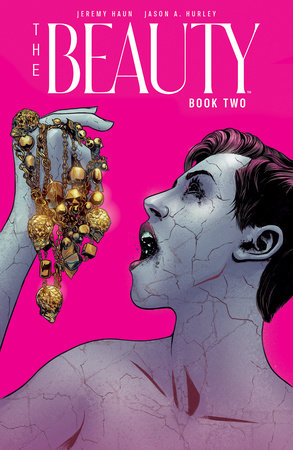
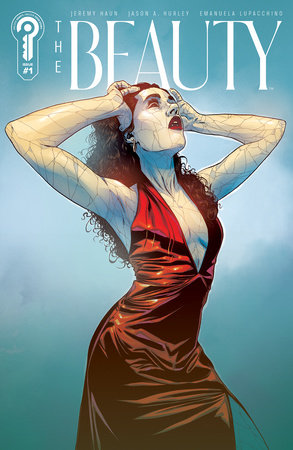
As fans begin watching the series, many will be looking for go-to companion readers that deepen the experience. Ignition Press is poised to meet that demand by timing its 2025 comic series to continue alongside the TV adaptation, giving viewers an on-ramp back to the source material. In addition, The Beauty: Book One hits shelves ahead of the FX premiere (see Haun showing off the print embellishments of an advance copy of Book One) collecting the first 11 issues. Retailers should plan to stock both single issues and collected editions to meet a range of reader behaviors – from fans combing the comics for narrative clues to those looking to grapple more methodically with the series’ deeply unsettling critique of visual culture. Because The Beauty examines power and surveillance so thoroughly, readers will want as many takes, in as many formats, as they can get. Comic retailers will also continue to have access to the DM edition (9781968063009) shown directly below.
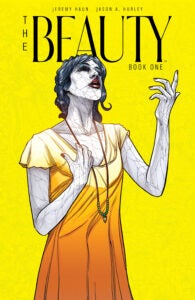
The Beauty belongs alongside dystopian sci-fi, crime narratives, and socially conscious genre that refuses easy conclusions. As it reaches a wider audience, more will encounter the uncomfortable proximity between its speculative world and the one we inhabit every day. As that distance narrows, Book One remains the place readers can turn to both tarry in the wake of the story’s unsettling truths, while offering the strange comfort that comes from seeing those truths articulated so brazenly.