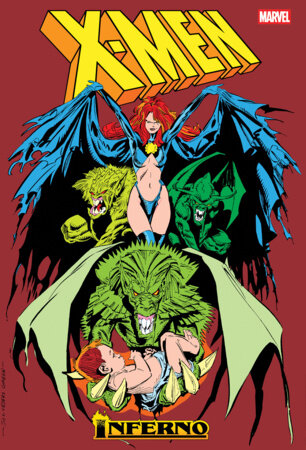
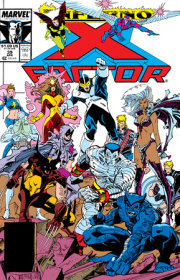
Writer and editor Louise Simonson launched Power Pack and Web of Spider-Man and wrote memorable runs on New Mutants and X-Factor — helping map out the “Mutant Massacre,” “Inferno” and “X-Tinction Agenda” crossovers. Her major editorial credits include Star Wars and Uncanny X-Men. At DC, she wrote multiple Superman titles and became one of the main creative forces behind the “Death of Superman” saga; her scripts also appeared in Detective Comics, New Titans and more. She returned to Marvel to write the Galactus the Devourer limited series and 1999-2000’s Warlock, starring characters from New Mutants. Her later Marvel work includes the limited series Jean Grey and Power Pack: Into the Storm.
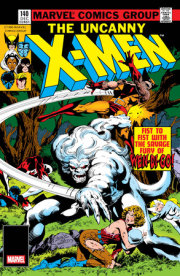
Industry legend Chris Claremont is best known for his epic sixteen-year run on Uncanny X-Men. Claremont’s focus on the themes of prejudice and tolerance struck at the hearts of comics fans, and he built an unparalleled following during the next three decades. Under his pen, the X-Men franchise spawned a vast array of spin-offs, many of them written by Claremont himself. His other credits include Iron Fist, Ms. Marvel, Power Man and Spider-Woman. Claremont has returned to the X-Men universe in New Exiles, GeNext, X-Men Forever, Chaos War: X-Men and Nightcrawler.
Jon Bogdanove began as the penciler, and eventually became the writer, of Power Pack. He also illustrated the acclaimed Fantastic Four vs. the X-Men miniseries and contributed to several other X-comics before migrating to DC in the early 1990s and beginning a lengthy run on Superman: The Man of Steel.
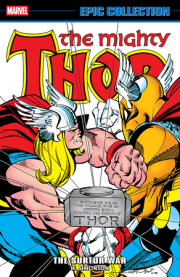
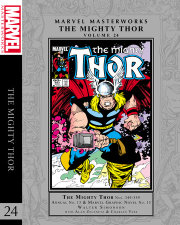
After achieving industry acclaim for DC’s award-winning “Manhunter” feature in Detective Comics, Walter Simonson moved to Marvel where he introduced multiple characters and concepts from both myth and outer space during his revered run scripting and penciling Thor. He collaborated with his wife, Louise, on both X-Factor and Wildstorm’s World of Warcraft, later returning to Marvel to illustrate Brian Michael Bendis’ Avengers.
Steve Englehart’s history-making contributions to the Marvel Universe began with the Beast’s solo feature in Amazing Adventures, in which the eloquent X-Man first assumed furry form. As Avengers writer, he masterminded such major events as “The Avengers/Defenders War” (in both teams’ titles) and “The Celestial Madonna Saga.” In Captain America, he identified and solved the “mystery” of the 1950s Captain America (later revived by Ed Brubaker), and gave the true Cap the alternate identity of Nomad. Englehart’s Dr. Strange storyline in Marvel Premiere established the character as Sorcerer Supreme and covered the creation of the universe itself. At DC, he helped revamp Batman, Green Lantern, Superman and other major heroes for the 1970s. Back at Marvel, he wrote the first few years of West Coast Avengers and Silver Surfer. His published novels include Countdown to Flight, Hellstorm (part of the TALON Force series), Majorca, The Point Man and, with wife Terry Beach, books in the DNAgers young-adult series. Englehart has also written TV episodes and designed video games.
After beginning his writing career on DC horror titles, David Michelinie moved to Marvel. He and co-writer/inker Bob Layton established Iron Man’s battle with alcoholism, use of specialized armor variants and vendetta against Doctor Doom, as well as other aspects of the character that endure to this day. Michelinie’s unique blend of action, suspense and humor distinguished not only Iron Man, but also Amazing Spider-Man. With artist Todd McFarlane, he introduced the vicious vigilante Venom; he also wrote the first Venom limited series, Lethal Protector. Michelinie’s run as Amazing writer was second in length only to that of Stan Lee himself, while he also authored tie-in titles Spectacular Spider-Man, Web of Spider-Man and Spider-Man. He moved from Marvel’s flagship character to DC’s with a stint on Superman’s Action Comics, later returning to the world of Tony Stark for writing collaborations with Bob Layton on Iron Man: Legacy of Doom and Iron Man: The End.
Gerry Conway wrote Daredevil, Incredible Hulk, Iron Man and others. He was instrumental in Marvel’s 1970s horror boom with work on Man-Thing, Tomb of Dracula and Werewolf by Night. His years on Amazing Spider-Man yielded such historic highlights as the groundbreaking death of Gwen Stacy and the debut of the Punisher. He also wrote DC’s Batman, Superman, Wonder Woman and Legion of Super-Heroes. For TV, he has written and produced episodes of Diagnosis: Murder, Hercules: The Legendary Journeys, Huntress and Matlock.
Journalist, editor, filmmaker and more, Ann Nocenti has a long history in comics, both as a writer and an editor. As an editor at Marvel, she oversaw such titles as New Mutants and Uncanny X-Men. As a writer, she has worked for both Marvel (Longshot, Spectacular Spider-Man, Wolverine) and DC (Batman, Kid Eternity, Green Arrow, Catwoman), but is probably best known for her groundbreaking run with John Romita Jr. on Daredevil.
Terry Austin won Eagle, Inkpot and Comics Buyer’s Guide Fan Awards for ink work on Chris Claremont and John Byrne’s legendary Uncanny X-Men run. Elsewhere in the mutant franchise, he penciled New Mutants and wrote occasional stories for various X-Men titles, along with Cloak and Dagger. At DC, he reunited with John Byrne to ink Superman; he also embellished Green Lantern, Justice League America and 66 issues of Superman Adventures, and penciled half the Camelot 3000 miniseries.
After achieving industry acclaim for DC’s award-winning “Manhunter” feature in Detective Comics, Walter Simonson moved to Marvel where he introduced multiple characters and concepts from both myth and outer space during his revered run scripting and penciling Thor. He collaborated with his wife, Louise, on both X-Factor and Wildstorm’s World of Warcraft, later returning to Marvel to illustrate Brian Michael Bendis’ Avengers.
In addition to illustrating annuals for New Mutants, X-Factor and X-Force, Terry Shoemaker helped conclude the “Heroes Reborn” version of Iron Man and contributed to the armored Avenger’s subsequent relaunch. He also penciled Tales of the Legion of Super-Heroes for DC, CyberRad for Continuity and Zealot for Image, as well as several Wildstorm stories.
Reimagining New Mutants into X-Force was only the start for Rob Liefeld, one of the leaders of the 1990s comics revolution. After introducing both Cable and Deadpool, he launched an even bigger collaboration as one of the founders of Image Comics with his original property Youngblood. In 1996, he participated in Marvel’s multi-title Heroes Reborn event. Liefeld returned to Marvel fo an X-Force limited series and then revisited Heroes Reborn in Onslaught Reborn. Liefeld returned to his most famous co-creation with the graphic novel Deadpool: Bad Blood, its limited series sequel Deadpool: Badder Blood and the blockbuster Deadpool Team-Up, and introduced a new sensation in Major X.
Jon Bogdanove began as the penciler, and eventually became the writer, of Power Pack. He also illustrated the acclaimed Fantastic Four vs. the X-Men miniseries and contributed to several other X-comics before migrating to DC in the early 1990s and beginning a lengthy run on Superman: The Man of Steel.
Industry giant Marc Silvestri entered the upper echelon of comics innovators in the late ’80s during fan-favorite, record-breaking runs on Uncanny X-Men and Wolverine. Silvestri left Marvel in 1992 to co-found Image Comics; his imprint, Top Cow, is one of its four longstanding autonomous studios. At Image, Silvestri created some of today’s most popular properties — including Cyberforce, Witchblade, Weapon Zero and The Darkness. Silvestri has returned to the world of Marvel’s mutants on New X-Men and X-Men: Messiah Complex.
Two-time Emmy Award-winner Bret Blevins’ early Marvel work included adaptations of films such as The Dark Crystal, Krull and The Last Starfighter. Moving into the Marvel Universe, he drew Strange Tales’ Cloak and Dagger feature, and penciled much of Louise Simonson’s New Mutants run. In 1996, he moved into TV animation, storyboarding for Batman Beyond, Justice League and New Batman/Superman Adventures. He now divides time between oil painting and freelance storyboarding.
Sal Velluto penciled several issues of Marc Spector: Moon Knight and most of Christopher Priest’s Black Panther run, the latter with his friend and frequent collaborator Bob Almond on inks; later, he contributed to the limited series Doctor Voodoo. At DC, he drew Firebrand and Justice League Task Force. His additional work includes Acclaim's Bloodshot, Continuity's Armor, Now's Green Hornet and Penny-Farthing's Captain Gravity.
John Buscema (1927-2002) literally wrote the book on being a Marvel artist — namely, How To Draw Comics the Marvel Way — and few were better qualified. His career dated back to the Timely/Atlas era of the late ’40s and early ’50s. Soon after beginning the Marvel Age of Comics, Stan Lee recruited Buscema from the advertising field to the Marvel Bullpen. Buscema followed a long run on Avengers with the long-anticipated first Silver Surfer series. He subsequently succeeded Jack Kirby on Fantastic Four, Thor and other titles. By the time of his retirement in 1996, Buscema had penciled nearly every Marvel title — including his personal favorite, Conan the Barbarian.
Keith Pollard drew simultaneous runs on three of Marvel’s longest-running titles: Amazing Spider-Man, Fantastic Four and Thor, including Roy Thomas and Mark Gruenwald’s “Eternals Saga.” During the 1990s, he singlehandedly penciled hundreds of characters for the Official Handbook of the Marvel Universe: Master Edition.
After a stint on Incredible Hulk with writer Peter David, artist Todd McFarlane moved to Amazing Spider-Man, where he and writer David Michelinie introduced Venom. Achieving a devoted following with his then-experimental style of unconventional panel layouts, extreme close-ups and other innovations, McFarlane became both writer and artist on a new series, titled simply Spider-Man. He later joined several fellow industry prodigies to form Image Comics. McFarlane’s major contribution was Spawn, the demonic mercenary whose first-issue sales of 1.7 million copies remain a benchmark for an independent. His other industry credits include DC’s Infinity Inc. and “Batman: Year Two” in Detective Comics. He has earned the Inkpot Award, the National Cartoonists Society’s Award for Best Comic Book and the NFL’s Artist of the Year Award for designing the Baltimore Ravens’ program covers. In addition to the Image subsidiary Todd McFarlane Productions, he heads McFarlane Toys and Todd McFarlane Entertainment, and is producer of a Spawn film and an award-winning animated series.
After a start as inker to his older brother John, Sal Buscema penciled Captain America, Defenders, Incredible Hulk and more. Famed for his ability to meet tight deadlines, he spread his talents across multiple genres. His 1970s work ranged from Ms. Marvel and Nova to Sub-Mariner and Spider-Woman’s first appearance in Marvel Spotlight. He was the uninterrupted artist on Spectacular Spider-Man for more than a hundred issues and penciled the web-slinger’s adventures in Marvel Team-Up, in which he and writer Bill Mantlo introduced Captain Jean DeWolff. After handling more team-ups in the Thing’s Marvel Two-in-One, he reunited with brother John on Steve Englehart’s Fantastic Four. He later provided inks for Tom DeFalco’s Spider-Girl titles and Thunderstrike miniseries.
Alex Saviuk established himself as a major Marvel artist with a seven-year run on Web of Spider-Man. He also worked on the animated-series tie-in Spider-Man Adventures and drew the Amazing Spider-Man comic strip from scripts by Stan Lee and Larry Lieber. At DC, he penciled and inked Flash, Green Lantern, Superman and other titles.
John Romita Jr. is a modern-day comic-art master, following in his legendary father’s footsteps. Timeless runs on Iron Man, Uncanny X-Men, Amazing Spider-Man and Daredevil established him as his own man artistically, and his work on Wolverine and World War Hulk is among the most explosive comic art of the 21st century. In addition to Eternals with writer Neil Gaiman, JRJR teamed with Mark Millar on the creator-owned Kick-Ass, later developed into a blockbuster feature film starring Nicolas Cage. Spidey fans rejoiced at the artist’s return to Amazing Spider-Man with the “Brand New Day” storylines “New Ways To Die” and “Character Assassination.” He later helped relaunch Avengers with writer Brian Michael Bendis and Captain America with Rick Remender, and contributed to the blockbuster crossover Avengers vs. X-Men. For DC Comics, he drew big-name characters such as Superman, Batman and the Suicide Squad before making a welcome return home to Marvel and Amazing Spider-Man.
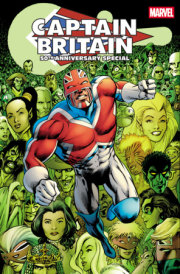
The career of British-born artist Alan Davis took off like a rocket after his humble beginnings at Marvel UK, where he impressed with an acclaimed run on Captain Britain. Davis broke into U.S. comics with runs on Batman and the Outsiders and Detective Comics. Hired by Marvel U.S. in 1986, Davis launched Excalibur with Chris Claremont, and the book quickly became one of mutantdom’s most unique and humorous titles. When Davis took over as writer, he continued many plot threads from his Captain Britain run. After a lengthy arc writing and drawing X-Men, Davis illustrated writer Brian Michael Bendis’ Avengers Prime and contributed to the status-quo-changing X-Men: Schism.
Mike Vosburg’s career at Marvel started in the now-rare black-and-white magazines of the 1970s, including Deadly Hands of Kung Fu and Vampire Tales. He was the regular penciler for Savage She-Hulk, Cloak and Dagger and other series, also doing work in the Epic and New Universe lines. Vosburg is equally at home in horror and romance genres; his later work includes art for Acclaim, Caliber and Hamster Press.