Close Modal

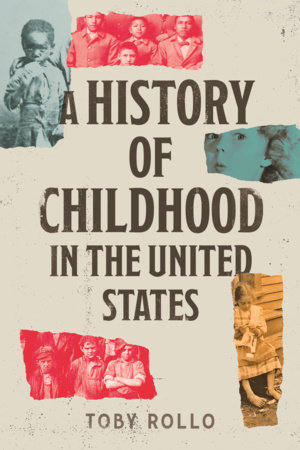
A History of Childhood in the United States

A 400-year history of America shaped by the labor, exploitation, and resistance of children

Author Toby Rollo
Hardcover
6"W x 9"H | 20 oz | 12 per carton
On sale Mar 09, 2027 | 256 Pages | 9780807022566

This book blows the lid off the sentimental mythology about protecting children and exposes the dark underbelly of adult ambition for the last four hundred years

The first book on the four hundred year formation of the US told from the perspective of children, Dr. Rollo argues that US history cannot be understood without recognizing how deeply it depended on the domination and exploitation of children. From the earliest settler colonies to modern schooling, children’s labor, obedience, and discipline were central to economic growth, political order, and nation-building. The United States was not only built on stolen land and enslaved labor, but also on the systematic use of children as workers, dependents, and instruments of adult ambition. Rollo observes how farms, factories, mines, and households relied on children’s labor, while myths of independence and self-reliance erased that dependence from national memory.

Divided into four separate parts, Rollo illustrates how as industrial capitalism expanded, competing adult groups—parents, industrialists, workers, and reformers—fought over control of children, each claiming to act in their and the nation’s interest. He compares the gentle, more nurturing methods of Indigenous child-rearing against the stern, disciplinarian tactics of settler colonists that later became the norm, and moves through time to touch on Black childhood during Reconstruction and the later Progressive Era “saving” of white children; compulsory schooling as a new way to discipline and prepare children for economic roles after the Industrial Era; the containment and classification of disabled children during the eugenics movement; and other topics all the way to today's parental rights movements. In doing so, he highlights how our systems were profoundly shaped by race, with Black, Indigenous, immigrant, poor, and disabled children subjected to harsher control, exclusion, and violence.

Rollo documents that despite all these aggressions, children resisted exploitation and mistreatment through work slowdowns, strikes, defiance, and protest. From the 1836 mill girls strike in Lowell, Massachusetts, and the Newsboys' Strike in 1899 in New York City, to the high school anti-war movements of the 1960s and 1970s and the increasing visibility of youth at the forefront of today's environmental justice crusades, he documents their revolt and resilience from below and how today’s youth movements continue this tradition, challenging a society that professes to protect them, while sacrificing their futures. A History of Childhood in the United States blows the lid off the sentimental mythology we’ve imbibed about protecting children and exposes the dark underbelly of adult ambition.

Dr. Toby Rollo is an Associate Professor of Political Science at Lakehead University in Canada where he researches and teaches on Political Theory and Law. His research centers on the democratic promises and failures of modern political institutions, specifically the exclusion of children. His work has been published in journals including Contemporary Political Theory, European Journal of Political Theory, Settler Colonial Studies, and the Journal of Black Studies.
Available for sale exclusive:
•     Afghanistan
•     Aland Islands
•     Albania
•     Algeria
•     Andorra
•     Angola
•     Anguilla
•     Antarctica
•     Antigua/Barbuda
•     Argentina
•     Armenia
•     Aruba
•     Australia
•     Austria
•     Azerbaijan
•     Bahamas
•     Bahrain
•     Bangladesh
•     Barbados
•     Belarus
•     Belgium
•     Belize
•     Benin
•     Bermuda
•     Bhutan
•     Bolivia
•     Bonaire, Saba
•     Bosnia Herzeg.
•     Botswana
•     Bouvet Island
•     Brazil
•     Brit.Ind.Oc.Ter
•     Brit.Virgin Is.
•     Brunei
•     Bulgaria
•     Burkina Faso
•     Burundi
•     Cambodia
•     Cameroon
•     Canada
•     Cape Verde
•     Cayman Islands
•     Centr.Afr.Rep.
•     Chad
•     Chile
•     China
•     Christmas Islnd
•     Cocos Islands
•     Colombia
•     Comoro Is.
•     Congo
•     Cook Islands
•     Costa Rica
•     Croatia
•     Cuba
•     Curacao
•     Cyprus
•     Czech Republic
•     Dem. Rep. Congo
•     Denmark
•     Djibouti
•     Dominica
•     Dominican Rep.
•     Ecuador
•     Egypt
•     El Salvador
•     Equatorial Gui.
•     Eritrea
•     Estonia
•     Ethiopia
•     Falkland Islnds
•     Faroe Islands
•     Fiji
•     Finland
•     France
•     Fren.Polynesia
•     French Guinea
•     Gabon
•     Gambia
•     Georgia
•     Germany
•     Ghana
•     Gibraltar
•     Greece
•     Greenland
•     Grenada
•     Guadeloupe
•     Guam
•     Guatemala
•     Guernsey
•     Guinea Republic
•     Guinea-Bissau
•     Guyana
•     Haiti
•     Heard/McDon.Isl
•     Honduras
•     Hong Kong
•     Hungary
•     Iceland
•     India
•     Indonesia
•     Iran
•     Iraq
•     Ireland
•     Isle of Man
•     Israel
•     Italy
•     Ivory Coast
•     Jamaica
•     Japan
•     Jersey
•     Jordan
•     Kazakhstan
•     Kenya
•     Kiribati
•     Kuwait
•     Kyrgyzstan
•     Laos
•     Latvia
•     Lebanon
•     Lesotho
•     Liberia
•     Libya
•     Liechtenstein
•     Lithuania
•     Luxembourg
•     Macau
•     Macedonia
•     Madagascar
•     Malawi
•     Malaysia
•     Maldives
•     Mali
•     Malta
•     Marshall island
•     Martinique
•     Mauritania
•     Mauritius
•     Mayotte
•     Mexico
•     Micronesia
•     Minor Outl.Ins.
•     Moldavia
•     Monaco
•     Mongolia
•     Montenegro
•     Montserrat
•     Morocco
•     Mozambique
•     Myanmar
•     Namibia
•     Nauru
•     Nepal
•     Netherlands
•     New Caledonia
•     New Zealand
•     Nicaragua
•     Niger
•     Nigeria
•     Niue
•     Norfolk Island
•     North Korea
•     North Mariana
•     Norway
•     Oman
•     Pakistan
•     Palau
•     Palestinian Ter
•     Panama
•     PapuaNewGuinea
•     Paraguay
•     Peru
•     Philippines
•     Pitcairn Islnds
•     Poland
•     Portugal
•     Puerto Rico
•     Qatar
•     Reunion Island
•     Romania
•     Russian Fed.
•     Rwanda
•     S. Sandwich Ins
•     Saint Martin
•     Samoa,American
•     San Marino
•     SaoTome Princip
•     Saudi Arabia
•     Senegal
•     Serbia
•     Seychelles
•     Sierra Leone
•     Singapore
•     Sint Maarten
•     Slovakia
•     Slovenia
•     Solomon Islands
•     Somalia
•     South Africa
•     South Korea
•     South Sudan
•     Spain
•     Sri Lanka
•     St Barthelemy
•     St. Helena
•     St. Lucia
•     St. Vincent
•     St.Chr.,Nevis
•     St.Pier,Miquel.
•     Sth Terr. Franc
•     Sudan
•     Suriname
•     Svalbard
•     Swaziland
•     Sweden
•     Switzerland
•     Syria
•     Tadschikistan
•     Taiwan
•     Tanzania
•     Thailand
•     Timor-Leste
•     Togo
•     Tokelau Islands
•     Tonga
•     Trinidad,Tobago
•     Tunisia
•     Turkey
•     Turkmenistan
•     Turks&Caicos Is
•     Tuvalu
•     US Virgin Is.
•     USA
•     Uganda
•     Ukraine
•     Unit.Arab Emir.
•     United Kingdom
•     Uruguay
•     Uzbekistan
•     Vanuatu
•     Vatican City
•     Venezuela
•     Vietnam
•     Wallis,Futuna
•     West Saharan
•     Western Samoa
•     Yemen
•     Zambia
•     Zimbabwe

A History of Childhood in the United States matters because it forces a truth American history has long evaded: You cannot understand the making of this country without examining how it was built, not only through the exploitation of labor, land, and bodies but through the exploitation of children. From colonial households to plantations, factories, and classrooms, children were disciplined, worked, and shaped to sustain the American project. By centering childhood as a site of power and extraction, Toby Rollo forces an honest reckoning with how freedom for some has always depended on the repression of the young.”
—Stacey Patton, author of Strung Up: How White America Learned to Lynch Black Children

About

This book blows the lid off the sentimental mythology about protecting children and exposes the dark underbelly of adult ambition for the last four hundred years

The first book on the four hundred year formation of the US told from the perspective of children, Dr. Rollo argues that US history cannot be understood without recognizing how deeply it depended on the domination and exploitation of children. From the earliest settler colonies to modern schooling, children’s labor, obedience, and discipline were central to economic growth, political order, and nation-building. The United States was not only built on stolen land and enslaved labor, but also on the systematic use of children as workers, dependents, and instruments of adult ambition. Rollo observes how farms, factories, mines, and households relied on children’s labor, while myths of independence and self-reliance erased that dependence from national memory.

Divided into four separate parts, Rollo illustrates how as industrial capitalism expanded, competing adult groups—parents, industrialists, workers, and reformers—fought over control of children, each claiming to act in their and the nation’s interest. He compares the gentle, more nurturing methods of Indigenous child-rearing against the stern, disciplinarian tactics of settler colonists that later became the norm, and moves through time to touch on Black childhood during Reconstruction and the later Progressive Era “saving” of white children; compulsory schooling as a new way to discipline and prepare children for economic roles after the Industrial Era; the containment and classification of disabled children during the eugenics movement; and other topics all the way to today's parental rights movements. In doing so, he highlights how our systems were profoundly shaped by race, with Black, Indigenous, immigrant, poor, and disabled children subjected to harsher control, exclusion, and violence.

Rollo documents that despite all these aggressions, children resisted exploitation and mistreatment through work slowdowns, strikes, defiance, and protest. From the 1836 mill girls strike in Lowell, Massachusetts, and the Newsboys' Strike in 1899 in New York City, to the high school anti-war movements of the 1960s and 1970s and the increasing visibility of youth at the forefront of today's environmental justice crusades, he documents their revolt and resilience from below and how today’s youth movements continue this tradition, challenging a society that professes to protect them, while sacrificing their futures. A History of Childhood in the United States blows the lid off the sentimental mythology we’ve imbibed about protecting children and exposes the dark underbelly of adult ambition.

Creators

Dr. Toby Rollo is an Associate Professor of Political Science at Lakehead University in Canada where he researches and teaches on Political Theory and Law. His research centers on the democratic promises and failures of modern political institutions, specifically the exclusion of children. His work has been published in journals including Contemporary Political Theory, European Journal of Political Theory, Settler Colonial Studies, and the Journal of Black Studies.

Praise

A History of Childhood in the United States matters because it forces a truth American history has long evaded: You cannot understand the making of this country without examining how it was built, not only through the exploitation of labor, land, and bodies but through the exploitation of children. From colonial households to plantations, factories, and classrooms, children were disciplined, worked, and shaped to sustain the American project. By centering childhood as a site of power and extraction, Toby Rollo forces an honest reckoning with how freedom for some has always depended on the repression of the young.”
—Stacey Patton, author of Strung Up: How White America Learned to Lynch Black Children
Penguin Random House Comics Retail